Years of formation
of Paul Jacquet
1883-1919
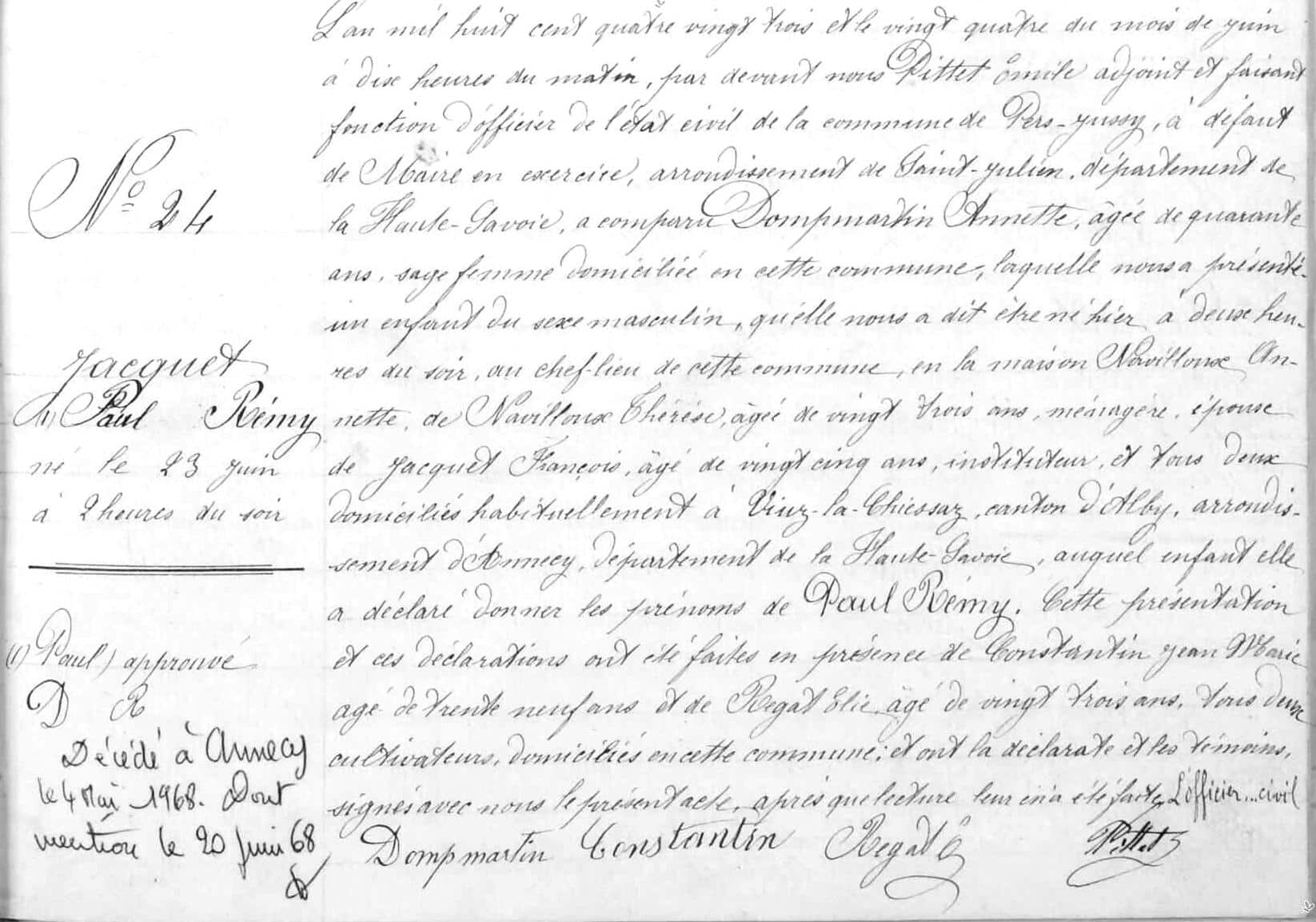
Paul Rémy Jacquet was born on 23 June 1883 in Pers-Jussy, Haute-Savoie. His father François Jacquet is a teacher and Thérèse Nagilloux, her mother, a housewife. They remain in Viuz-la-Chiessaz, about fifteen kilometers from Annecy. (his birth certificate) Here)
Teacher, a family vocation
There is no trace of his childhood or adolescence, except as can be read in the various files concerning him, from national education to military service.
He is a rather tall man for the average period (1m75), with brown hair that combs an elongated face illuminated by grey eyes.
Described as a worker, with a medium intelligence turned to science, it is also of fragile health.
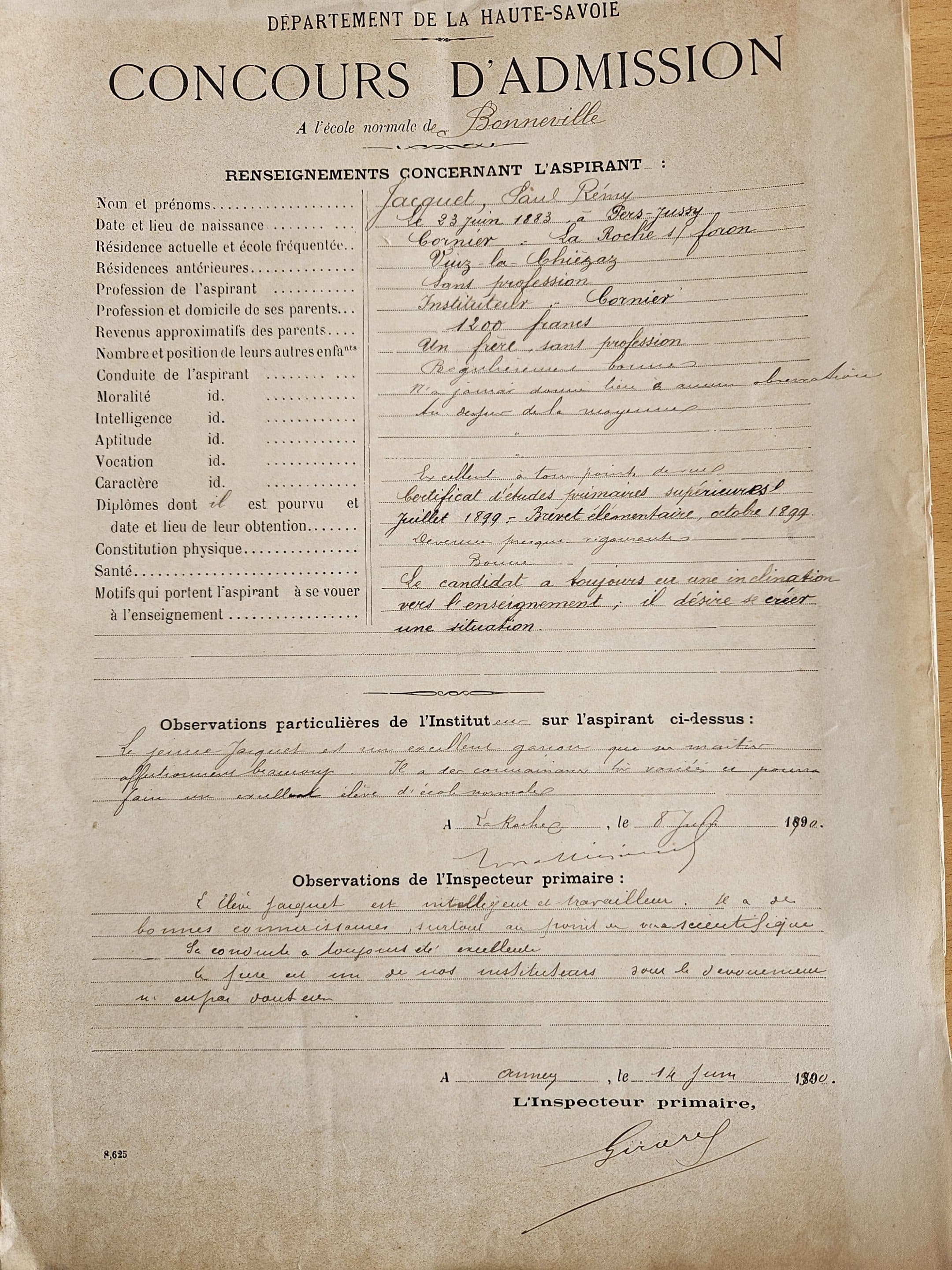
He continued his studies in the paternal path, obtained his elementary patent at the age of 16, and was admitted to the school.Ecole Normale de Bonneville The following year in 1900, his father was a jury member.
Two years later, he confirmed his vocation, signed a 10-year commitment to reimburse advanced expenses, and obtained the Higher Patent for Public Education in July 1903, ranked 6th with an overall score of 14 out of 20. He is then 20 years old.
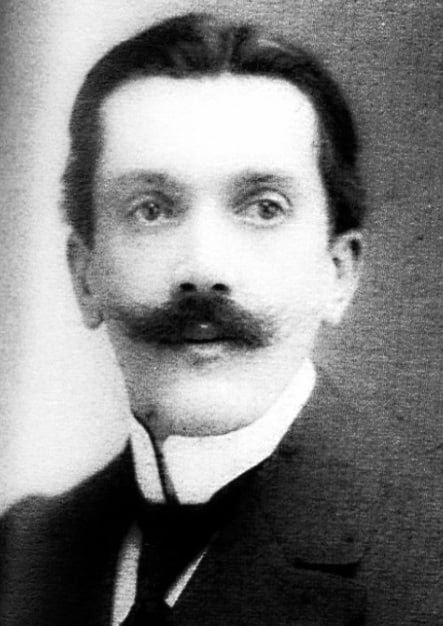
Portrait of Paul Jacquet
around 1910
That same year, like the other men of his age class, Paul Jacquet presented himself to fulfil his obligations before the nation in the canton of La Roche-sur-Foron. It will be postponed for two consecutive years, then finally classified in auxiliary services in 1906 for "general weakness", and paid into the reserve of the active army the following year, with licence to drive the motor vehicles.
He became a teacher intern in Pers-Jussy, where he obtained the Certificate of Pedagogical Aptitude, and then practised in Cluses in 1906, before obtaining a position as an incumbent in the Grand-Bornand.
Just before taking up his post, between October 1906 and March 1907, he requested and obtained a leave of 6 months with an alternate at his expense, to attend drawing classes at the Ecole des Beaux-Arts in Geneva, in order to obtain a drawing teacher.
In July 1907, he addressed the inspector of the academy of Annecy for a change of post and residence, following the 6 months spent in Geneva, for which he will not obtain the expected diploma:
« I only got a half-success in the exams I took. In the Grand Bornand, where I am deprived of models and masters, I expose myself to losing the fruit of my work. For this reason I would very much wish to be appointed Assistant Instituter at Annecy, finding everything in hand, where I could continue to work while fulfilling my professional duties ».
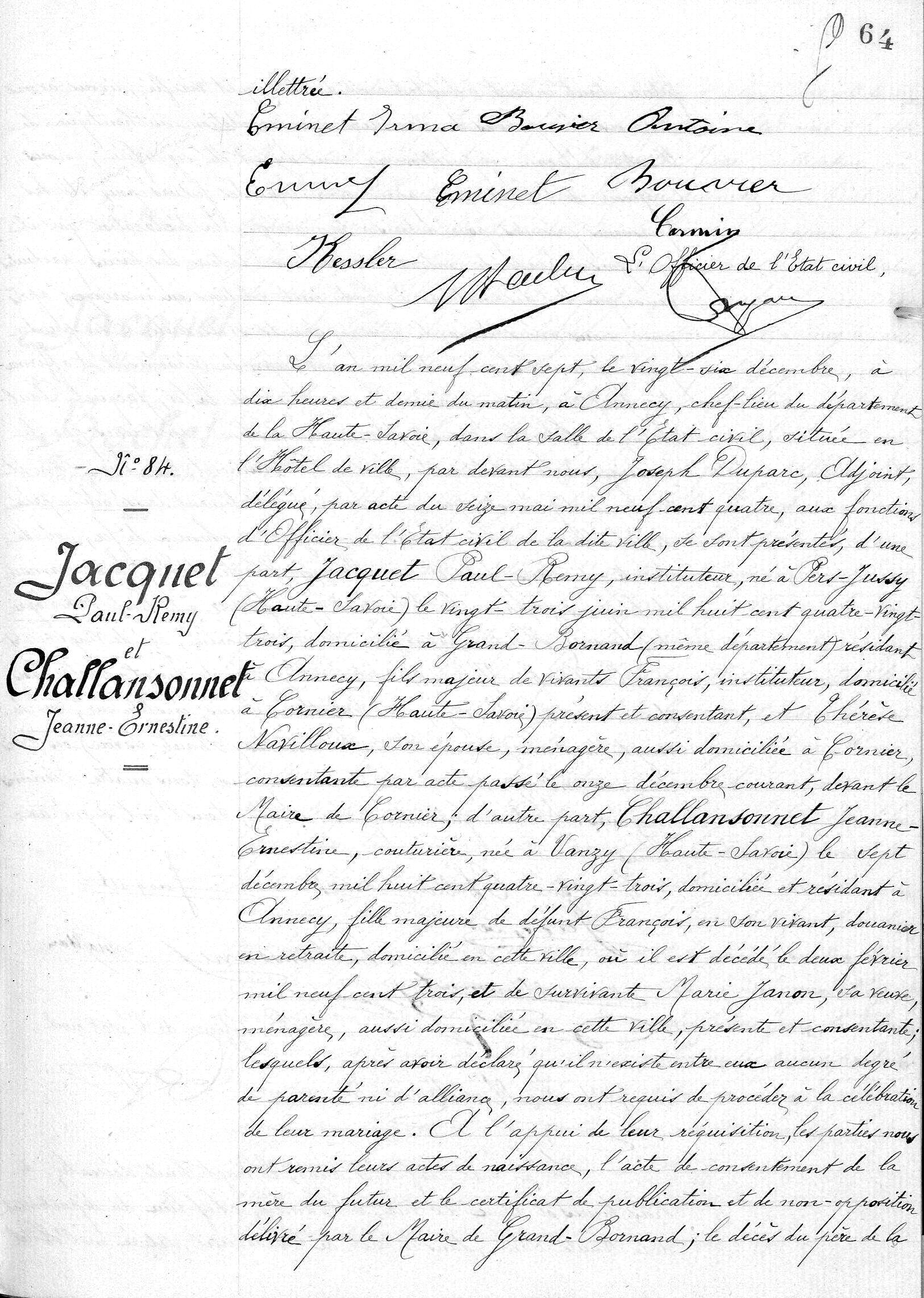
A favor that will be granted since he changed at the beginning of 1907, with a Balmette teacher in Annecy. He's married in December with Jeanne Ernestine Challansonnet, seamstress of her condition.
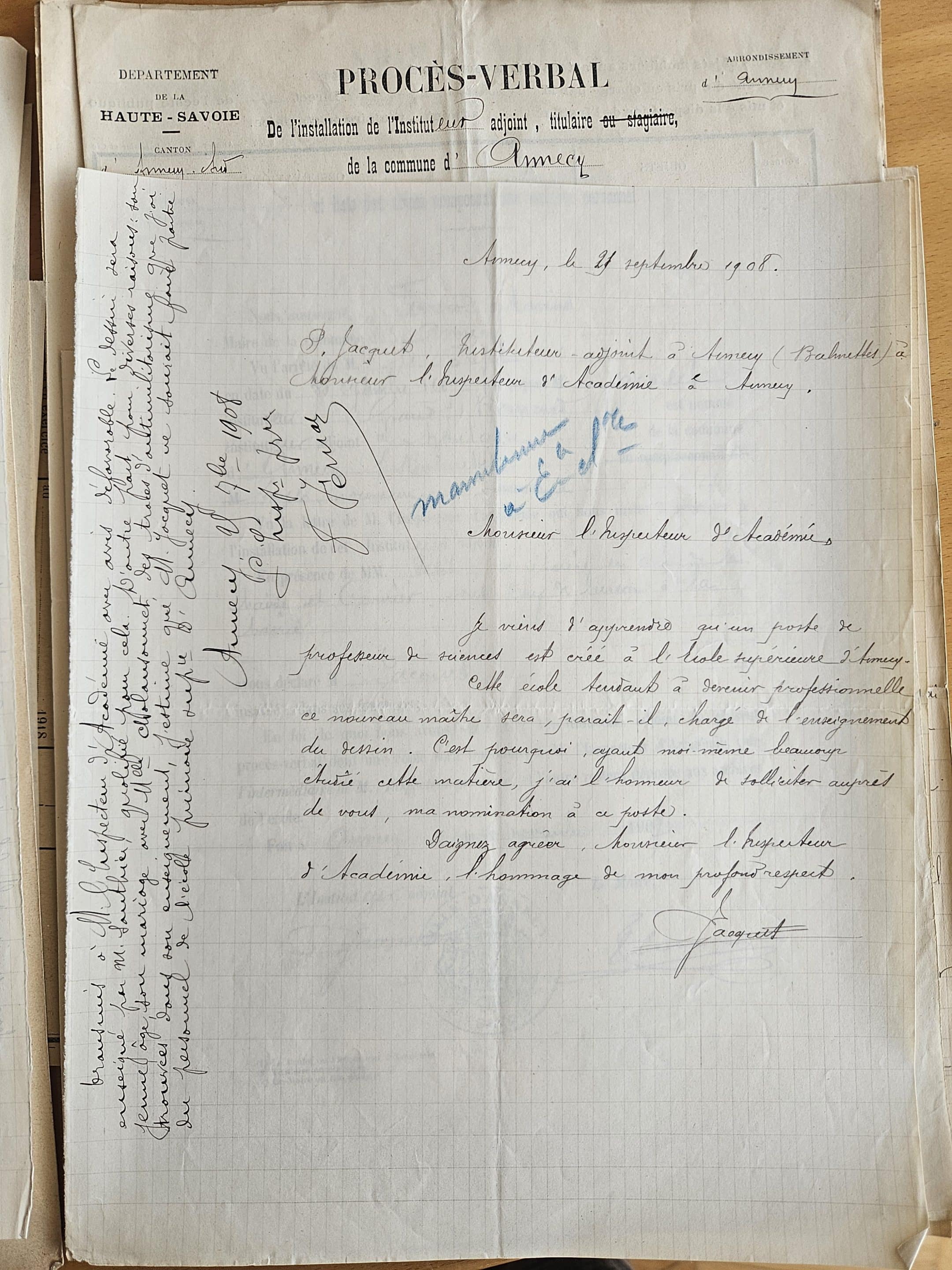
In September 1908 Paul Jacquet applied to the Inspector of the Academy for the post of professor of science and drawing newly created at the Ecole Supérieure d'Annecy. He receives an unfavourable opinion with this mention: « Young age, marriage, traces of antimilitarism found in his teaching ». (see Here)
The year later, he obtained the Certificate of Aptitude to the Teaching of Drawing in the Normal and Higher Primary Schools, and the following year, he was appointed as an associate teacher delegated to the Ecole Primaire Supérieure of Annecy, for science and drawing.
Paul Jacquet integrates the local artistic and cultural community
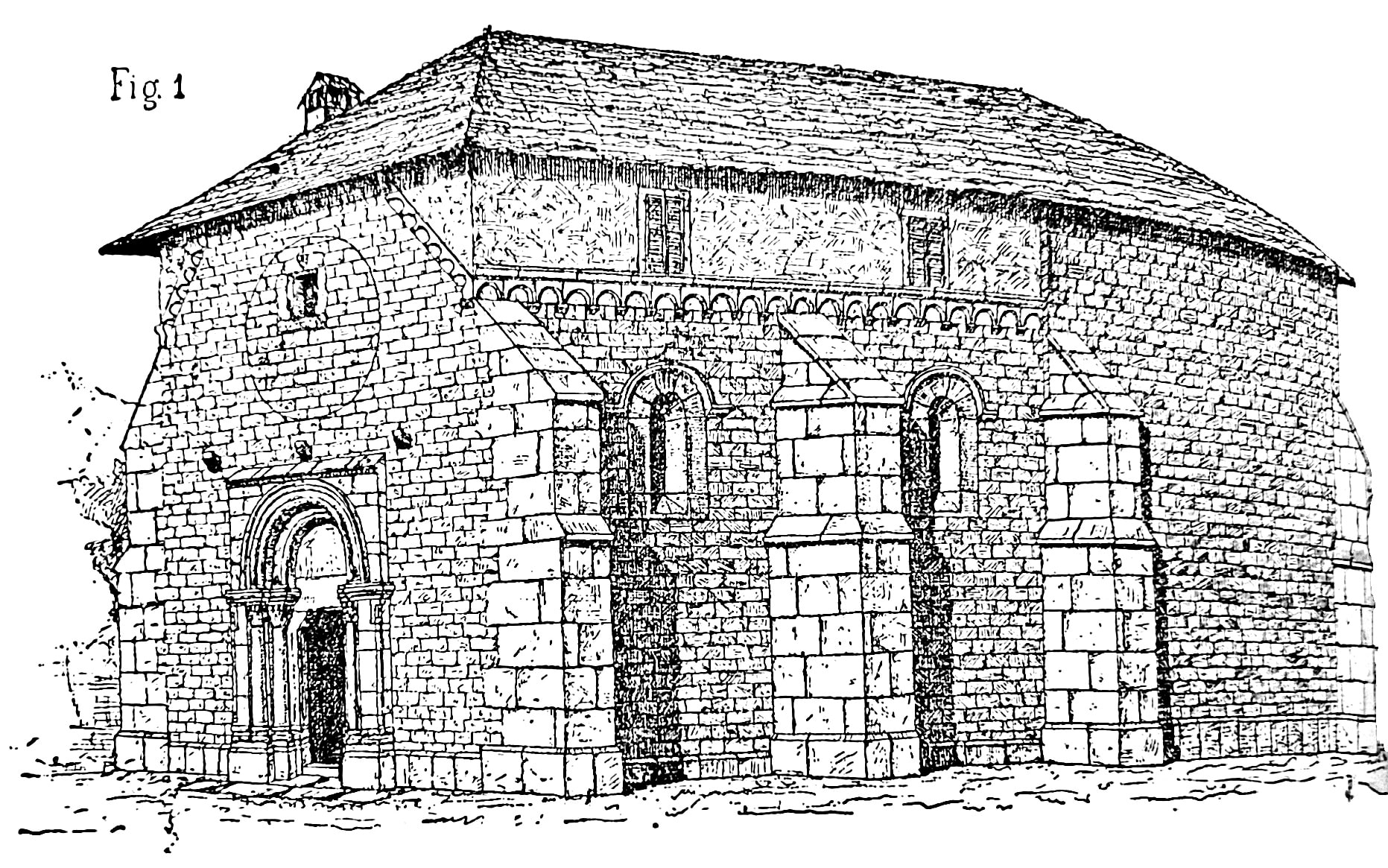
The Chapel of Moussy, drawing by Paul Jacquet
In 1910 he published in the Revue Savoisienne of la Société Florimontane, an annecene scholarly society, an article on the history and architecture of the Chapel of Moussy (read Here).
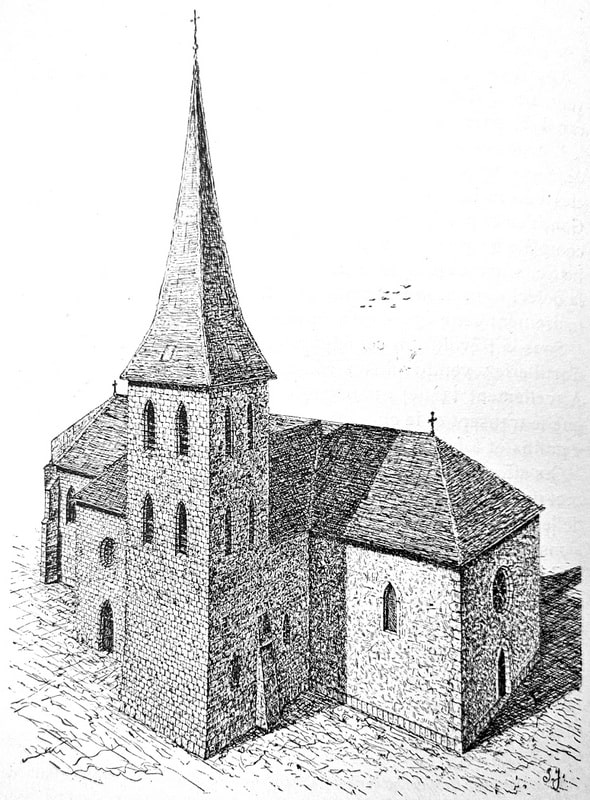
Church of Saint Sepulchre (Annecy) by Paul Jacquet
The following year, he wrote a second article (read Here) on the church of the Holy Sepulchre of Annecy.
His two publications are embellished with numerous black and white sketches and drawings signed with his monogram PJ.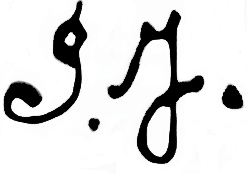
This 1911 article mentions for the first time his interest in a pottery workshop.
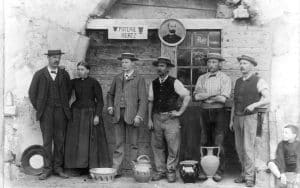
Hertz Pottery – Coll. Museums of Annecy
In fact, this building has been home to at the time and since 1861 the Hertz family pottery which was destroyed in 1966 when the gymnasium of Gabriel Fauré high school was built. He later entrusted a journalist to start the pottery in 1910, working and cooking a few pieces at the Tripp pottery in Annecy.
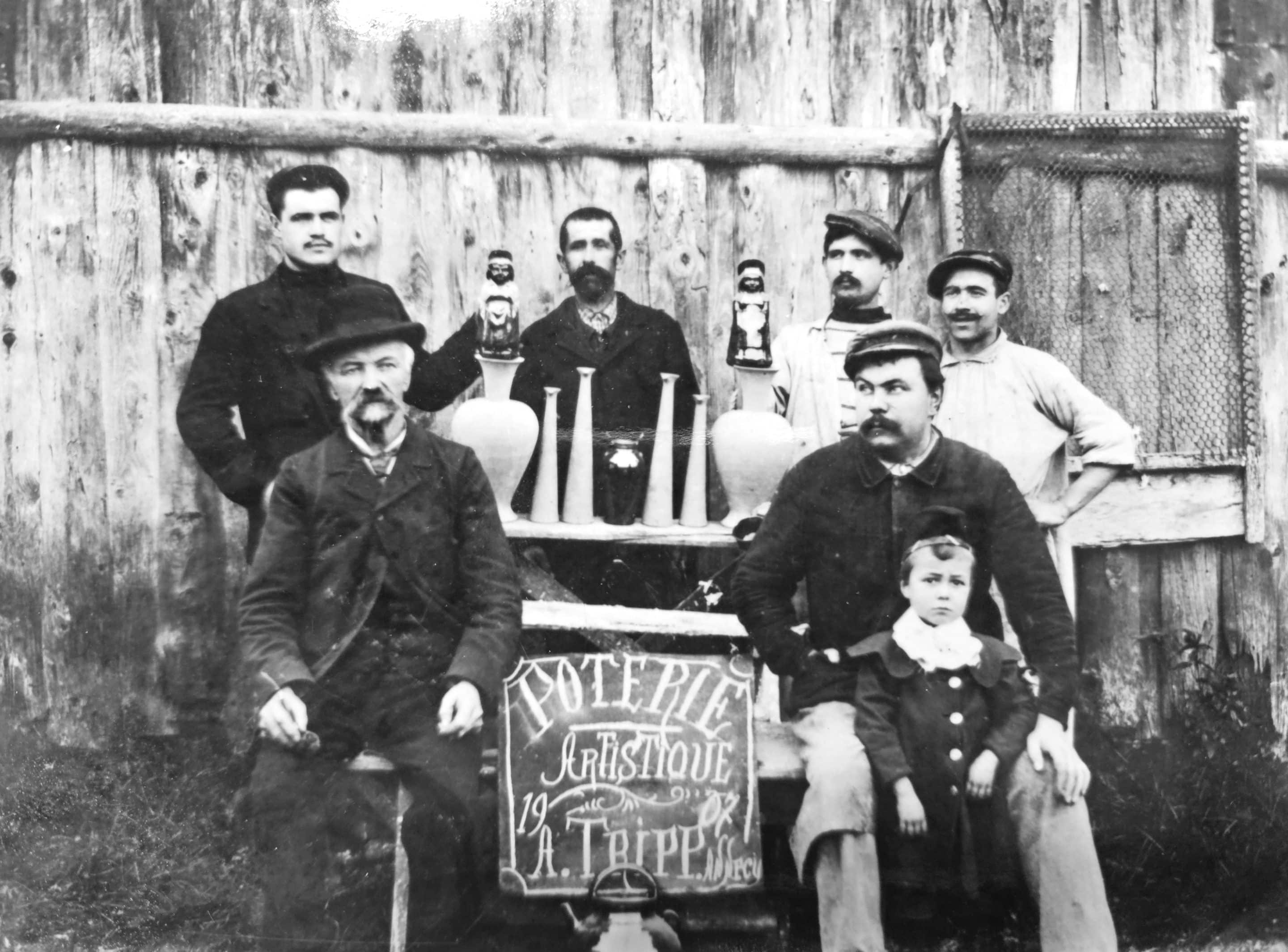
Tripp Pottery – Coll. Museums of Annecy
That same year 1911, Jacquet made an application for enrolment in the drawing professorate in the Ecoles Normales et lycées et collèges du 1and degree.
The following year he joined the Société des Beaux Arts de Haute-Savoie as a member of the Steering Committee.
First ceramics
The first ceramic works found to date and signed by his name are dated 1913: a vase with carp in the japonizing taste, a vase with cyclamen and another of a smaller size with Japanese apple blossom decoration.
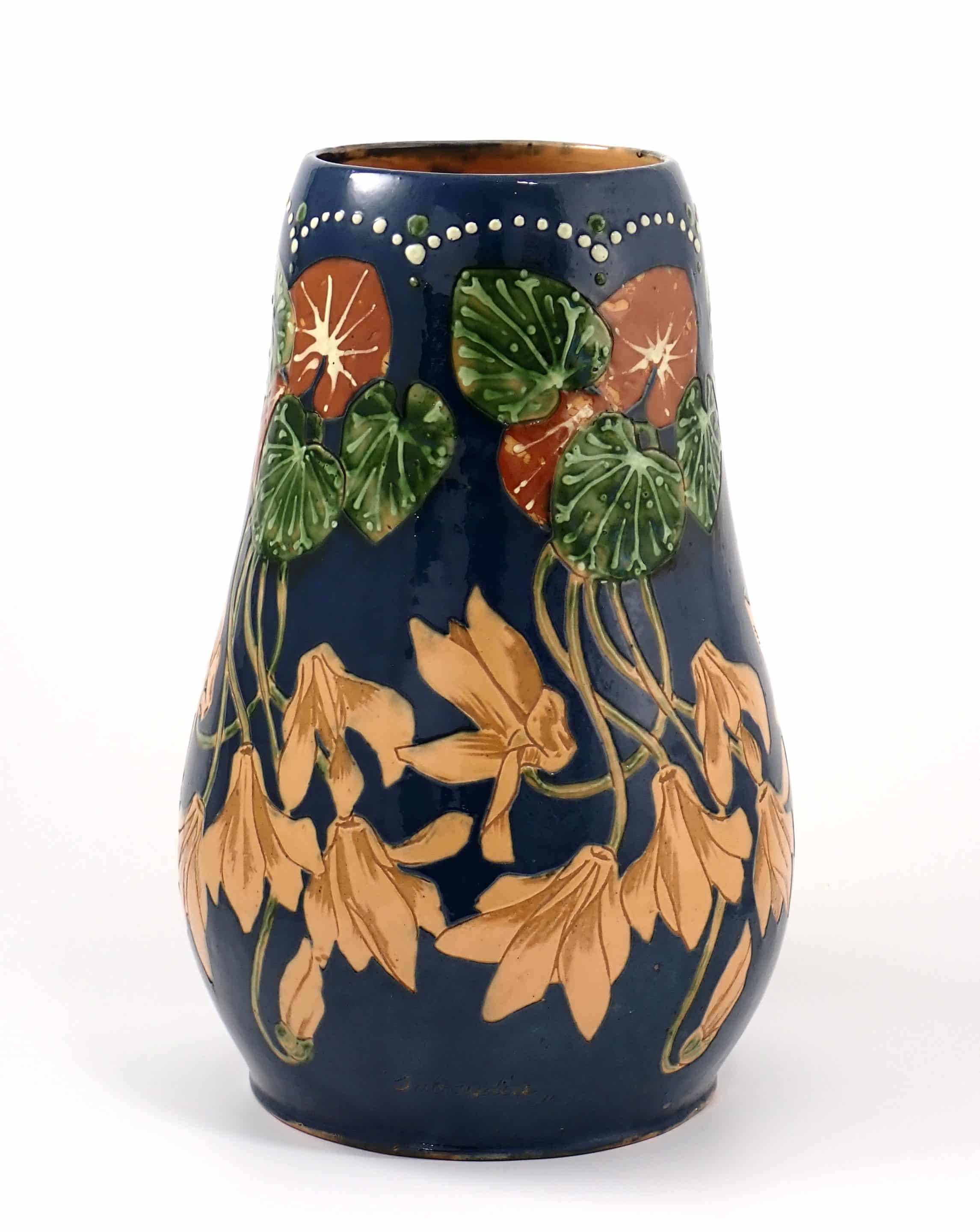
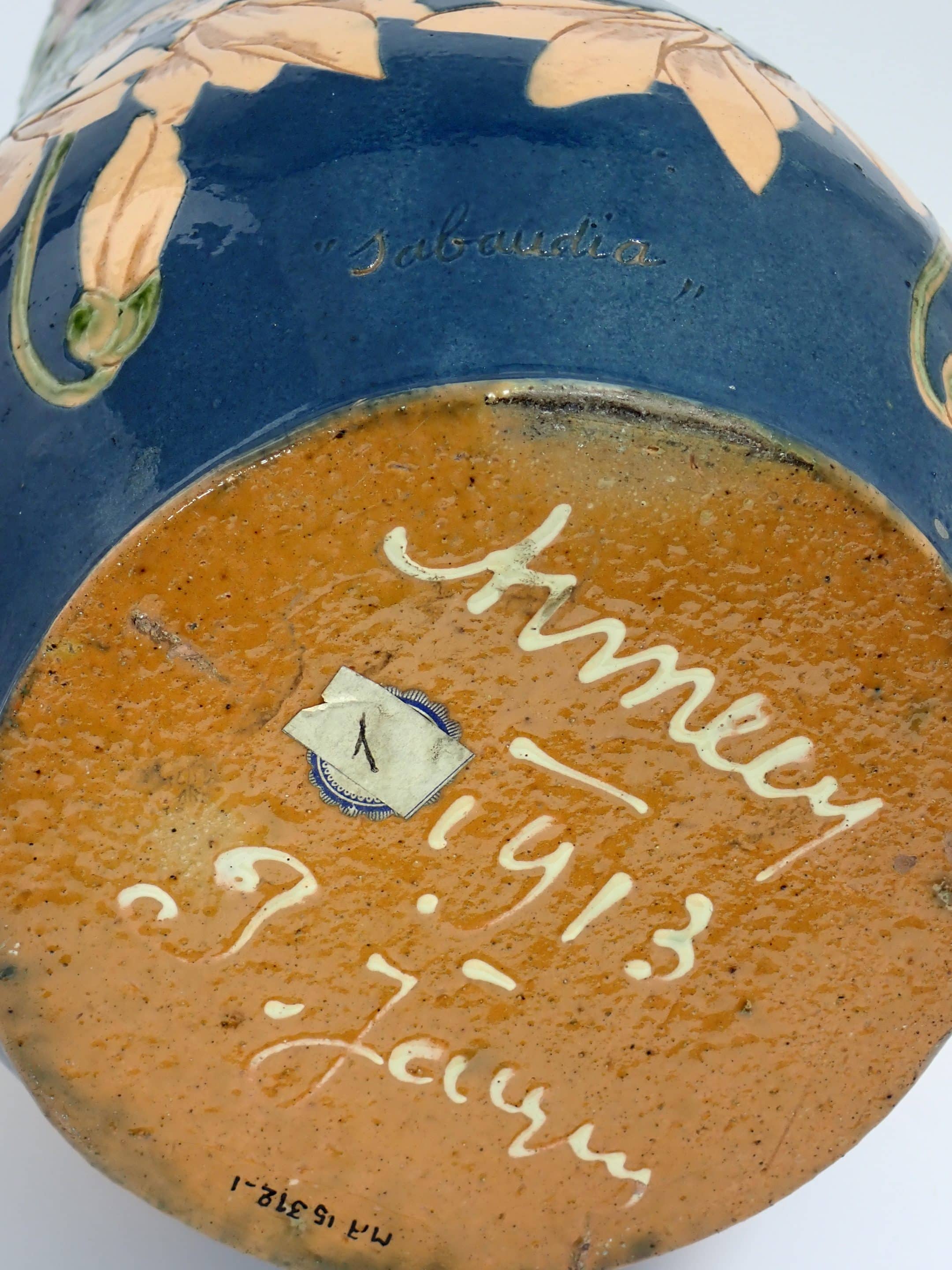
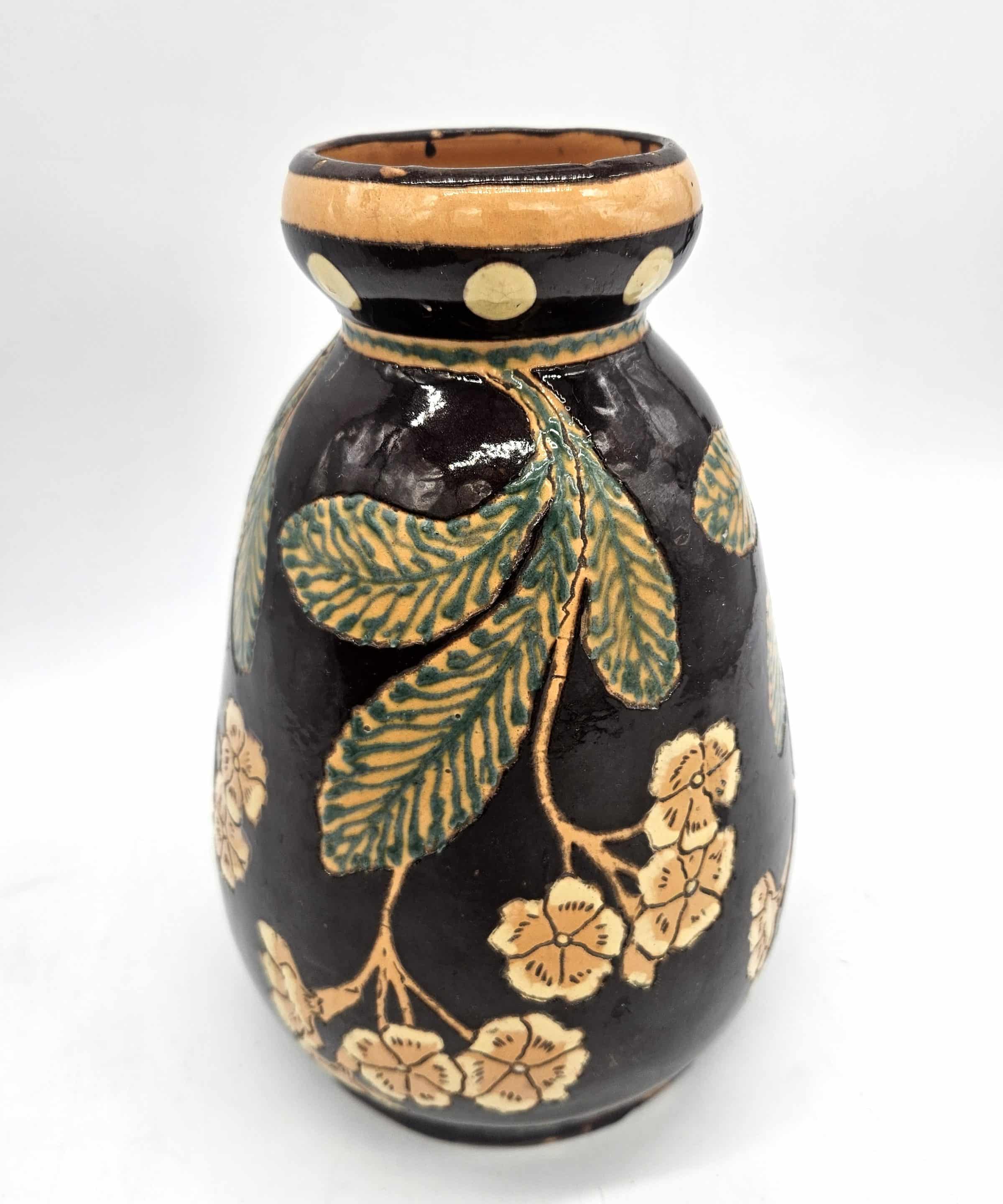
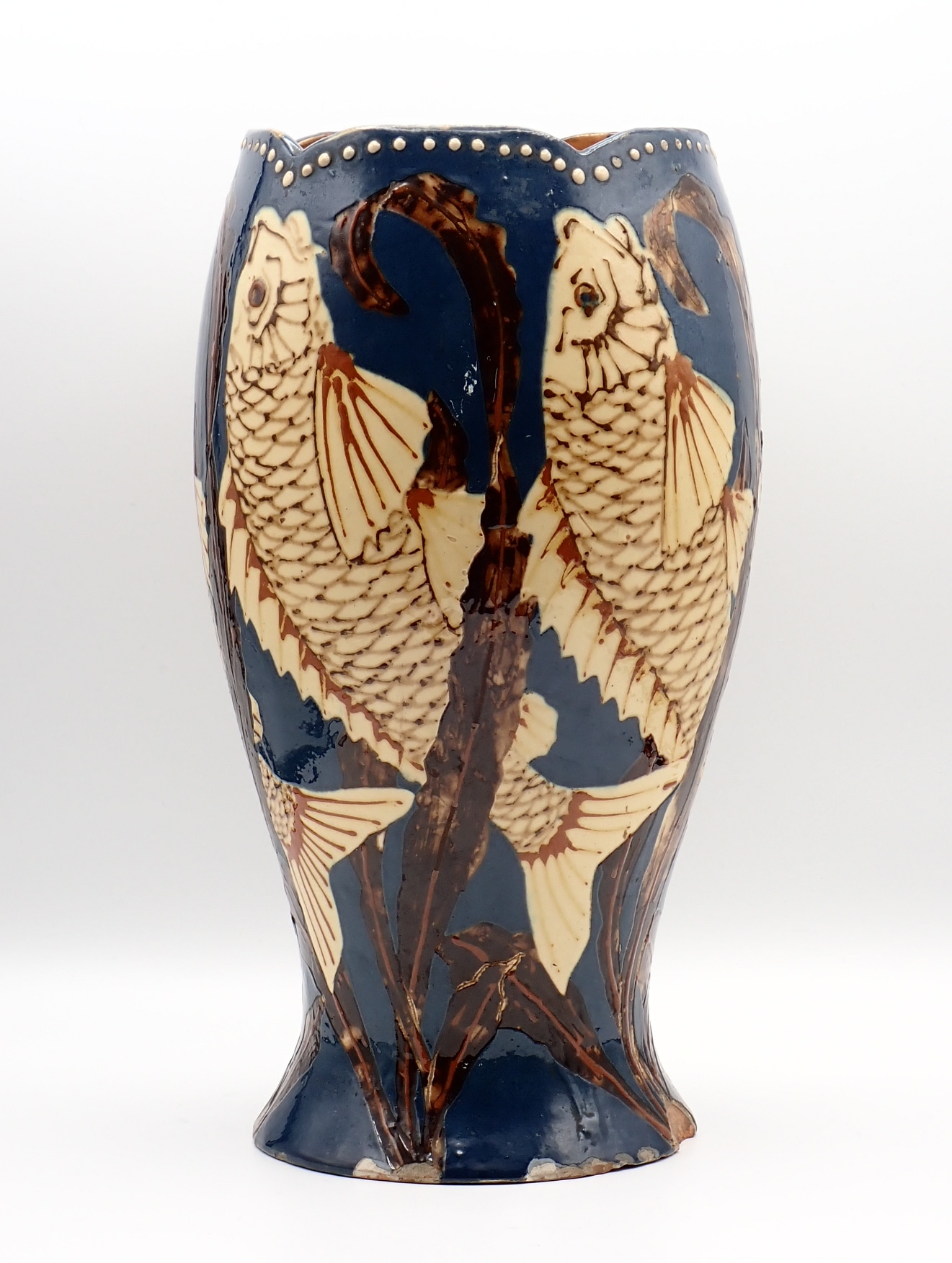
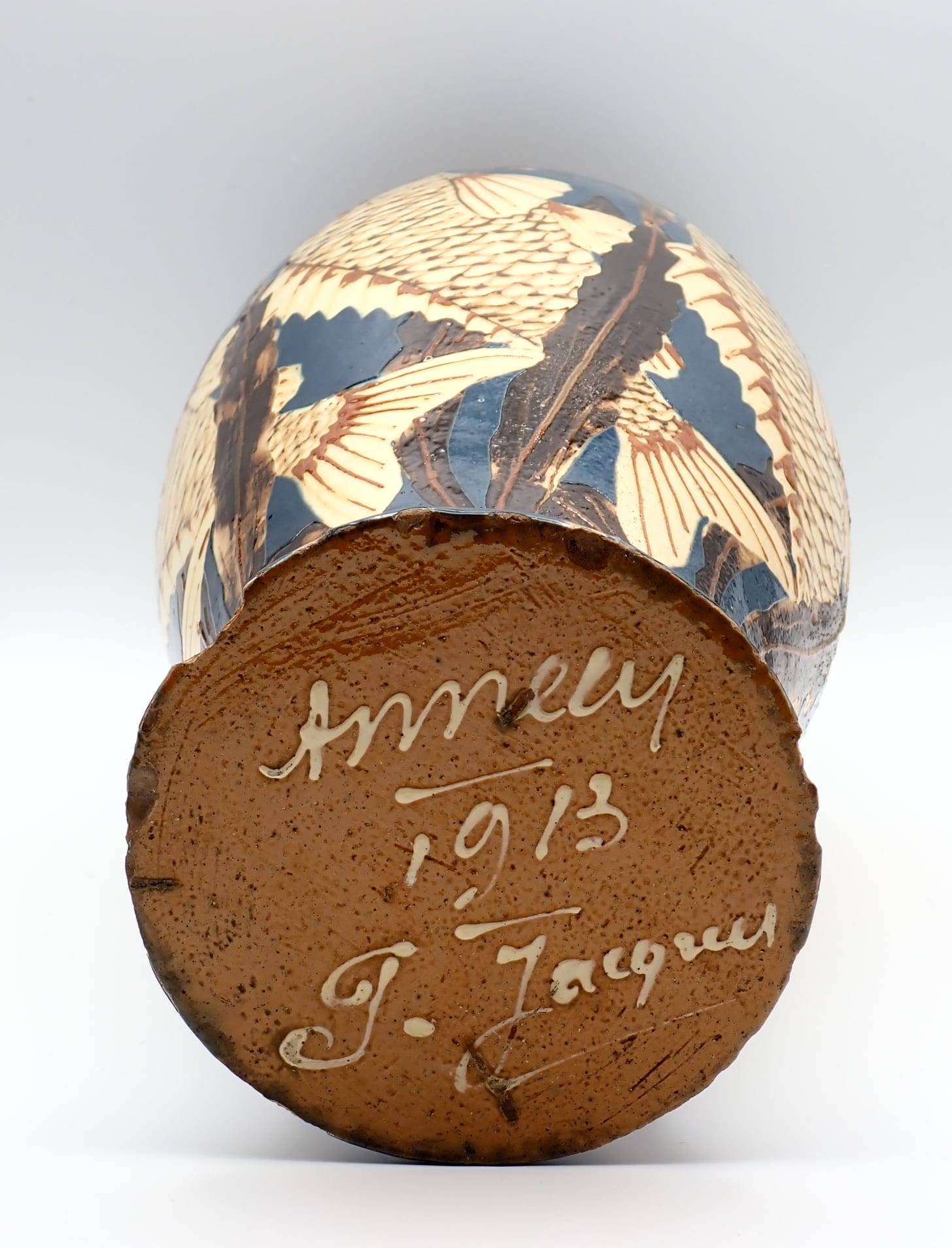
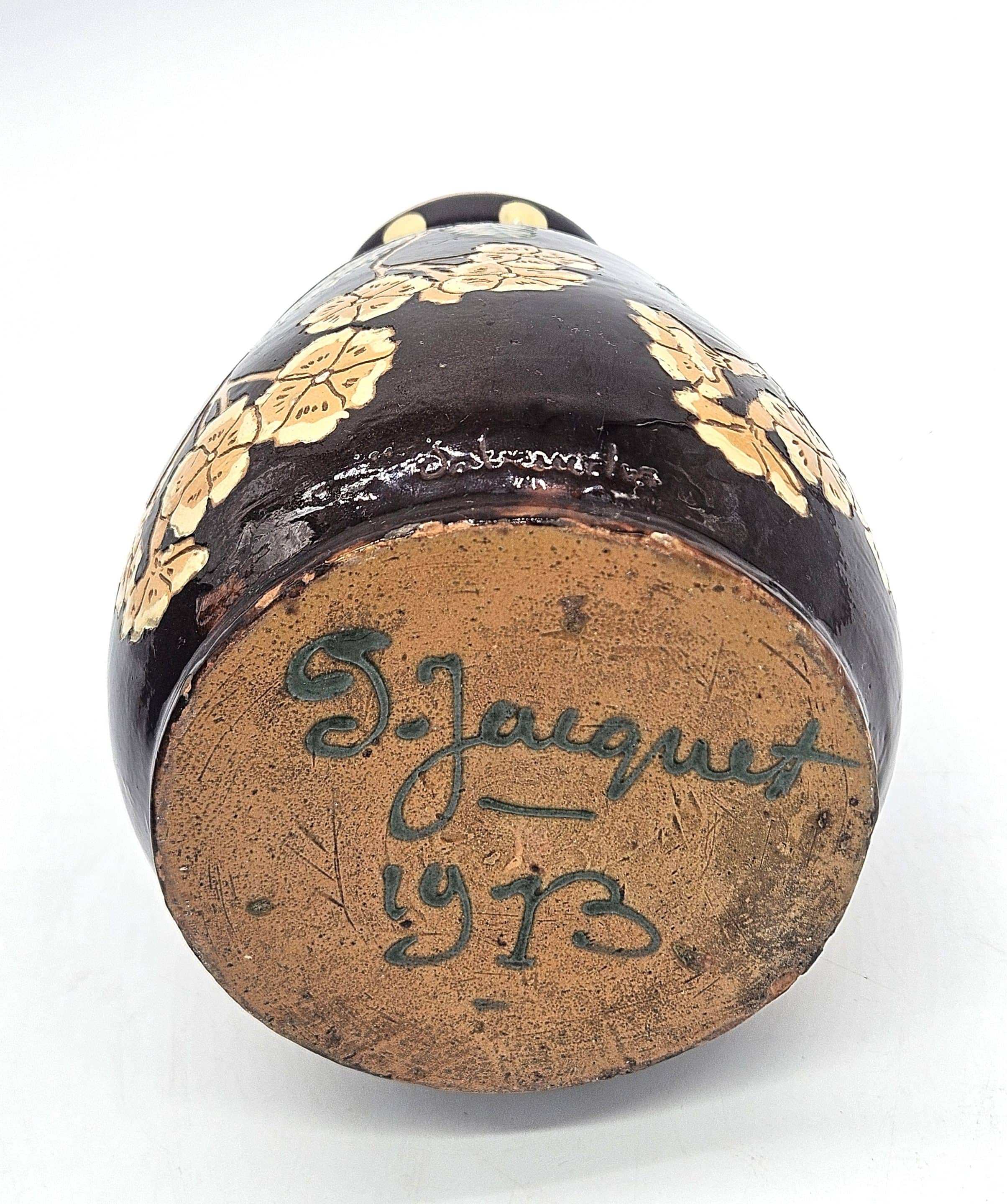
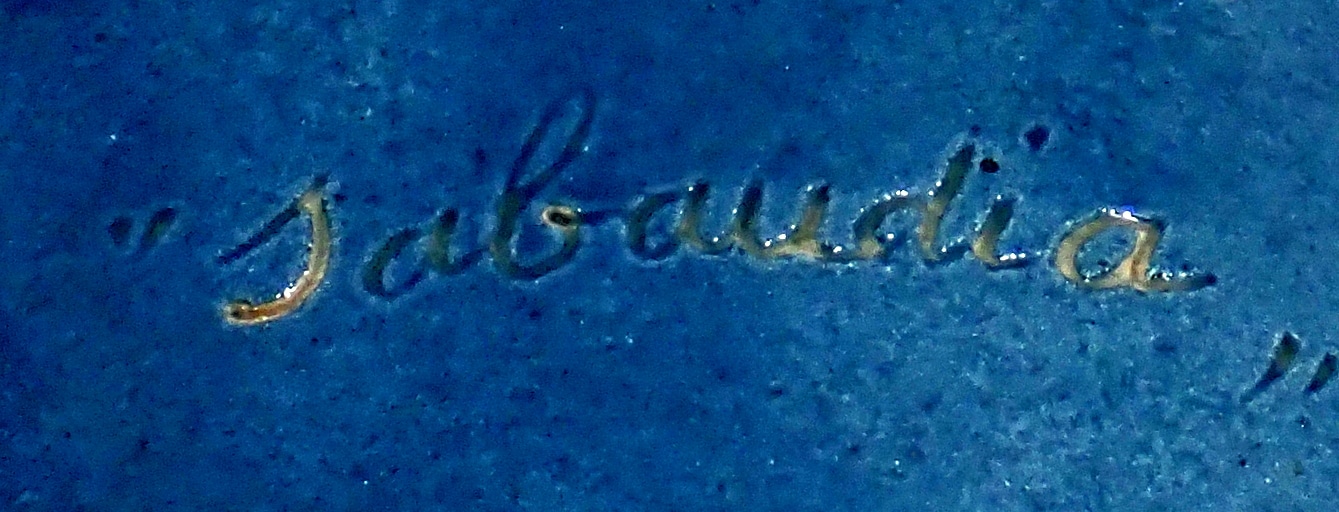
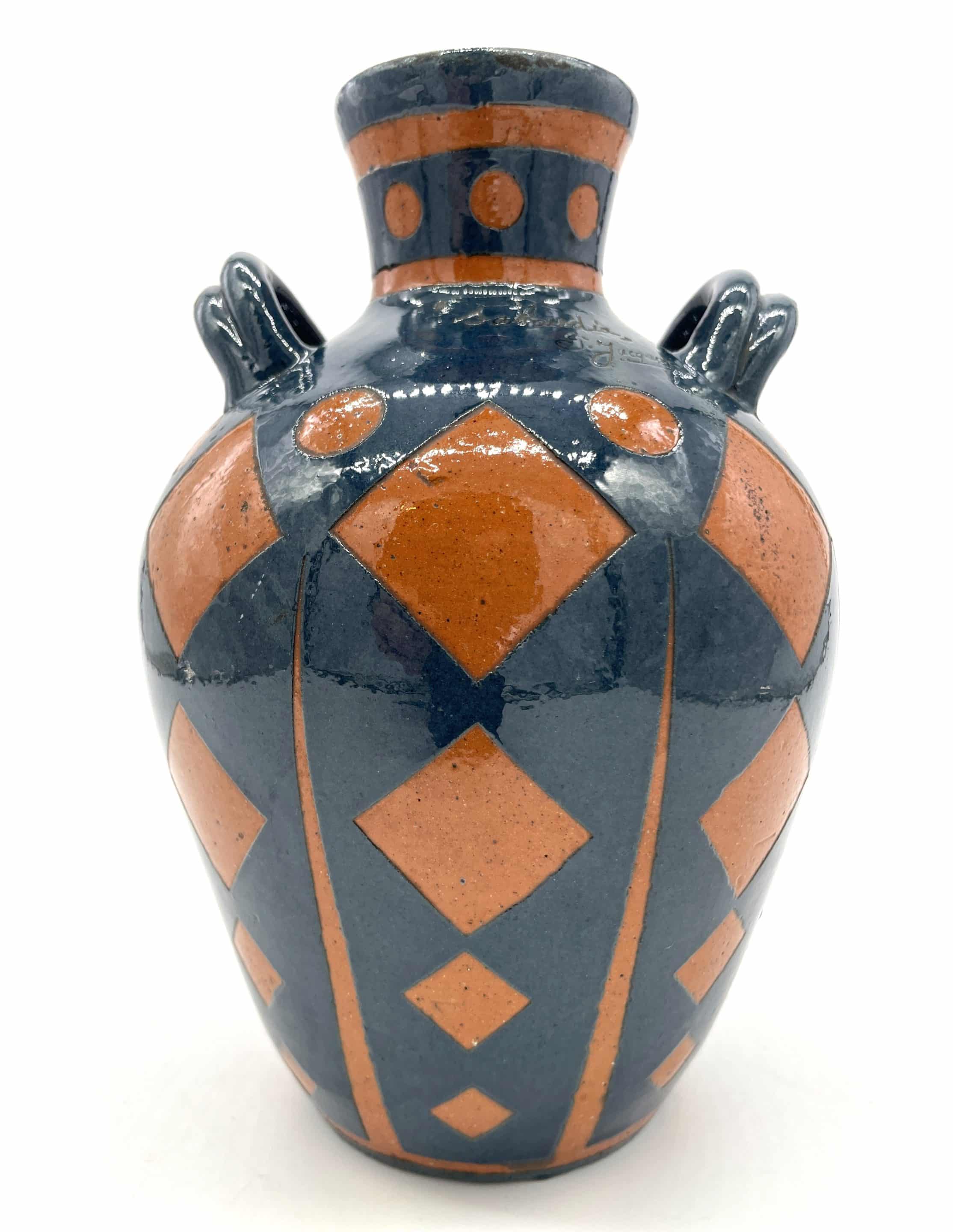
There is, in the vases listed to date, another vase "Sabaudia" with geometric drawings, undated, of less quality as to its decor, which we publish here.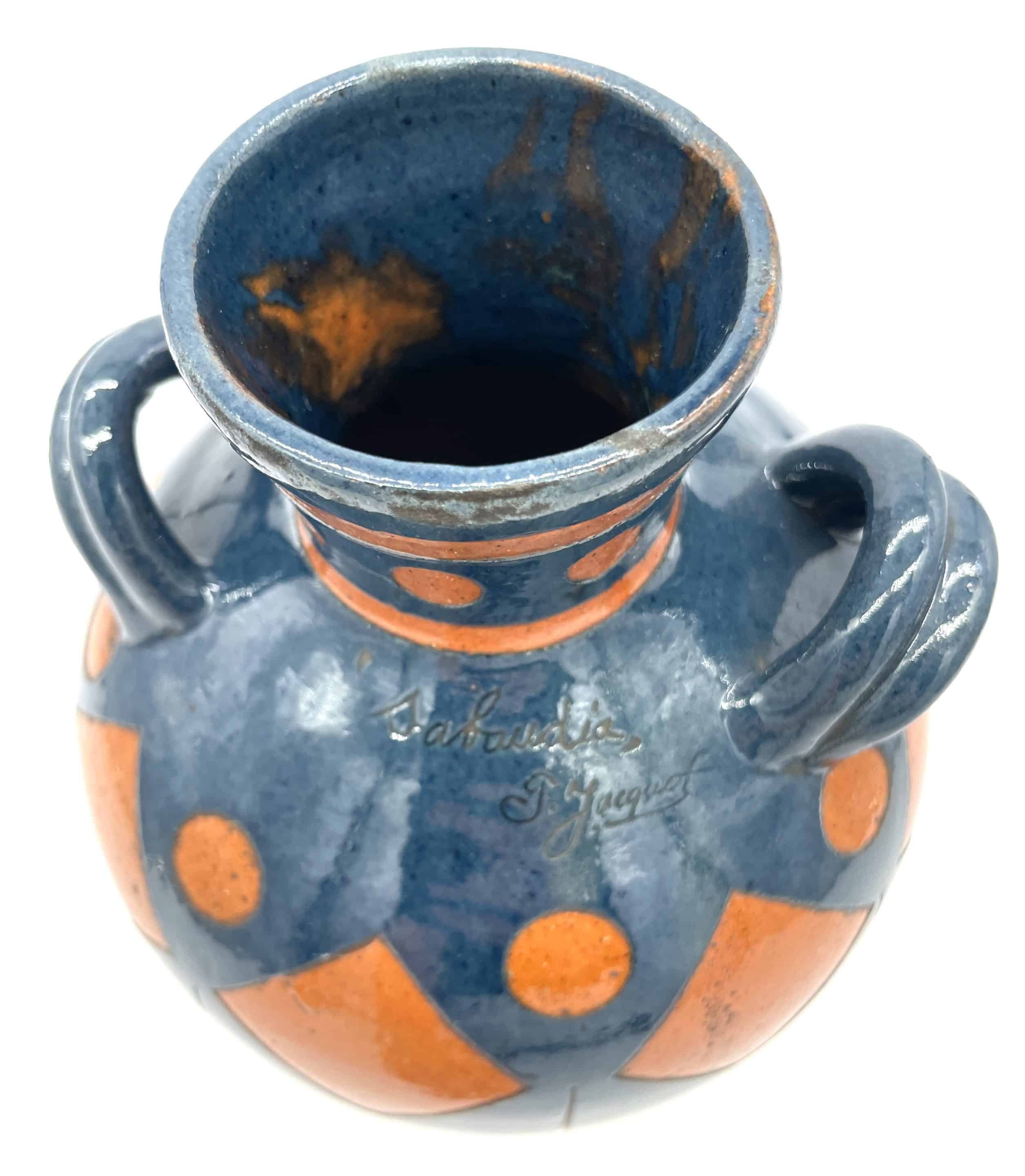
This first known production raises several questions:
What training in filming and decoration has followed Paul Jacquet?
We have very little details about this.
One of his friends, the bookseller Clement Gardet, later wrote that he had started pottery in 1910, working and cooking a few pieces at Tripp pottery in Annecy.
Similarly, one of his future workers Jules Emile Grillet later confided that his boss did not turn most of the coins.
Jacquet himself will say later in an article in the Echo of the Art Industries of May 1927 (to read Here) :
"I trained myself, at my expense and often despite the routine of the old potters. My workshop is that of the little craftsman. I decorate, I bake, I cook..."
We can also question on the origin of this production of a very high quality of aesthetic and technical execution.
It is common to meet "youth works", or a period of testing and taunting, in any artist or craftsman, whether he is a painter, sculptor and ceramist.
By these vases, Jacquet begins with works of a very great master's degree, which questions the thesis that he is the only author of it.
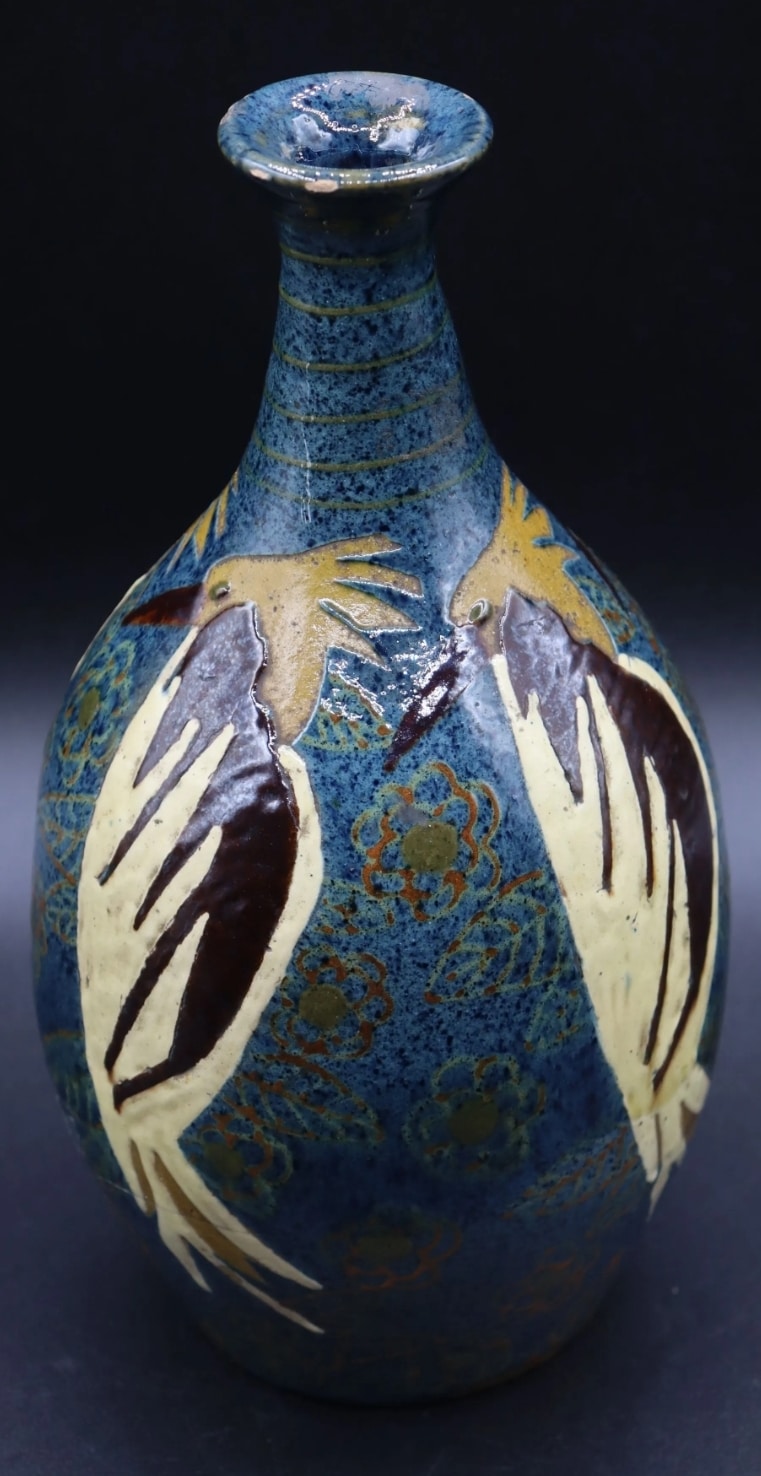
Ernest Béchard vase
L’apport d’Ernest Béchard
Ces pièces sont comparables à celles d’un autre céramiste savoyard Ernest Béchard (1981-1930), dont on sait qu’il était proche de Paul Jacquet.
After a stay of 10 months to Lips en tant que décorateur, Ernest Béchard revient pour 3 mois à Annecy en 1913, avant de repartir avec un autre contrat de décorateur, en août, pour la Nymphenburg Royal Manufacture Munich.
On sait que Béchard manquait de moyens financiers et on connait son attachement fort à la Savoie et à son patrimoine qu’il ne cessa de mettre en exergue dans son oeuvre.
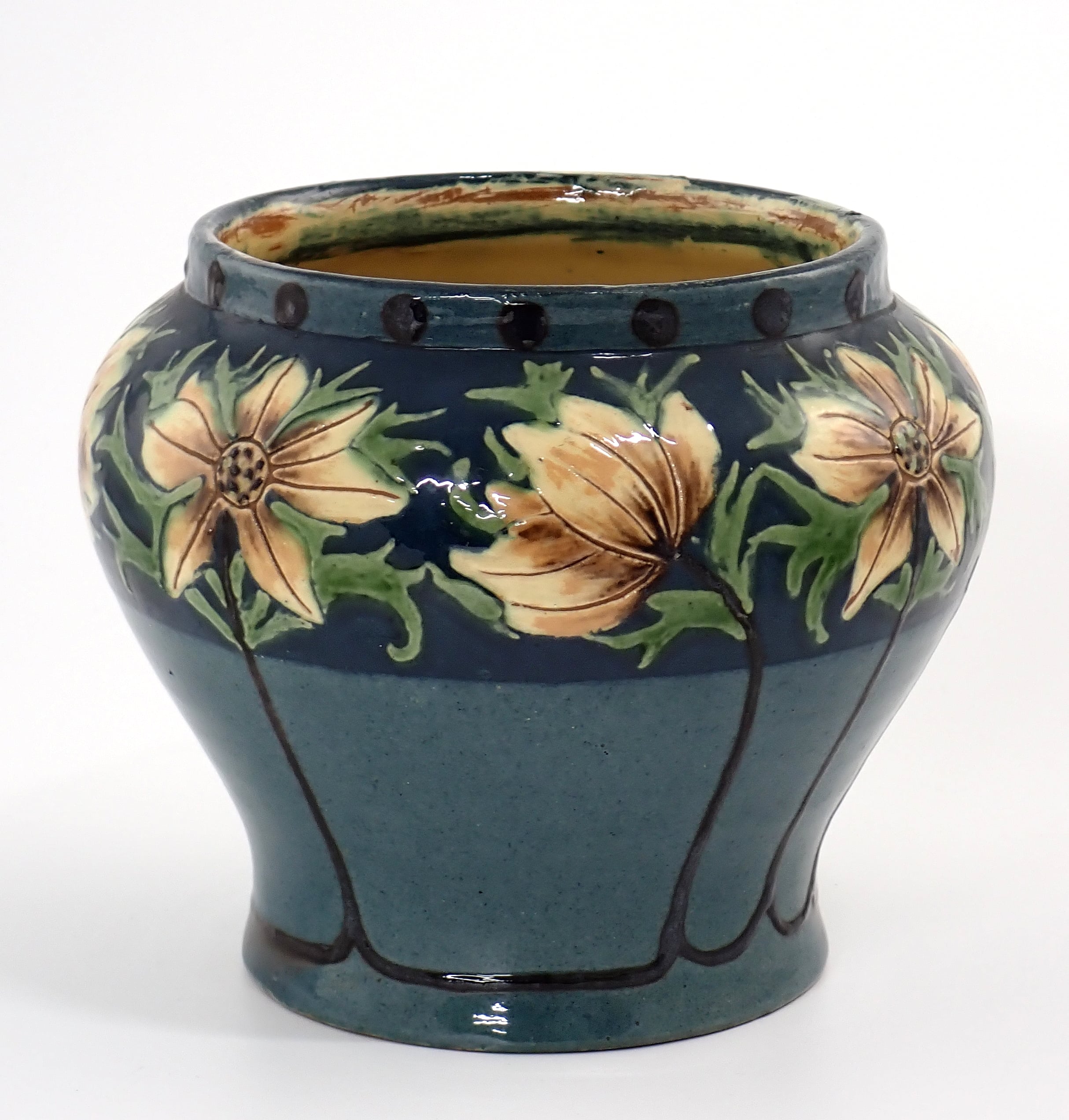
Ernest Béchard vase
Annecy Museums Collection
It is quite consistent to imagine a collaboration with Jacquet at that time, who perceived the artistic and commercial potential of regional ceramics, and who wanted to capitalize on Béchard's 8-year-old talent. The attention of the entire region is then drawn to the near inauguration of L-Imperial Palace d-Annecy, which will take place on 14 July 1913 in the presence of many French and foreign personalities, particularly American. (read more Here)
These few vases were, in all likelihood, designed and executed with 4 hands by the two men, helped by the Devaux turner, and cooked at the Hertz Pottery or the Tripp Pottery.
Béchard a pu transmettre à Jacquet des techniques de dessin à cru sur la panse des vases qu’il avait acquises à Sèvres. Il emploie également le sgraffito (de italien graffiare « griffer ») en plus des décors à l’engobe, ce qu’on ne retrouvera pas par la suite dans l’oeuvre de Jacquet.
Les deux hommes se retrouvent tous deux plus tard dans l’enseignement du dessin, Béchard à l’école municipale de dessin, et Jacquet au lycée Berthollet. Ils feront également tous deux partie de la Société des Beaux-Arts de Haute-Savoie à la même époque.
We also know other undated vases of the same style, bearing the same signature and probably the same period, such as this lizard vase and this butterfly plate.
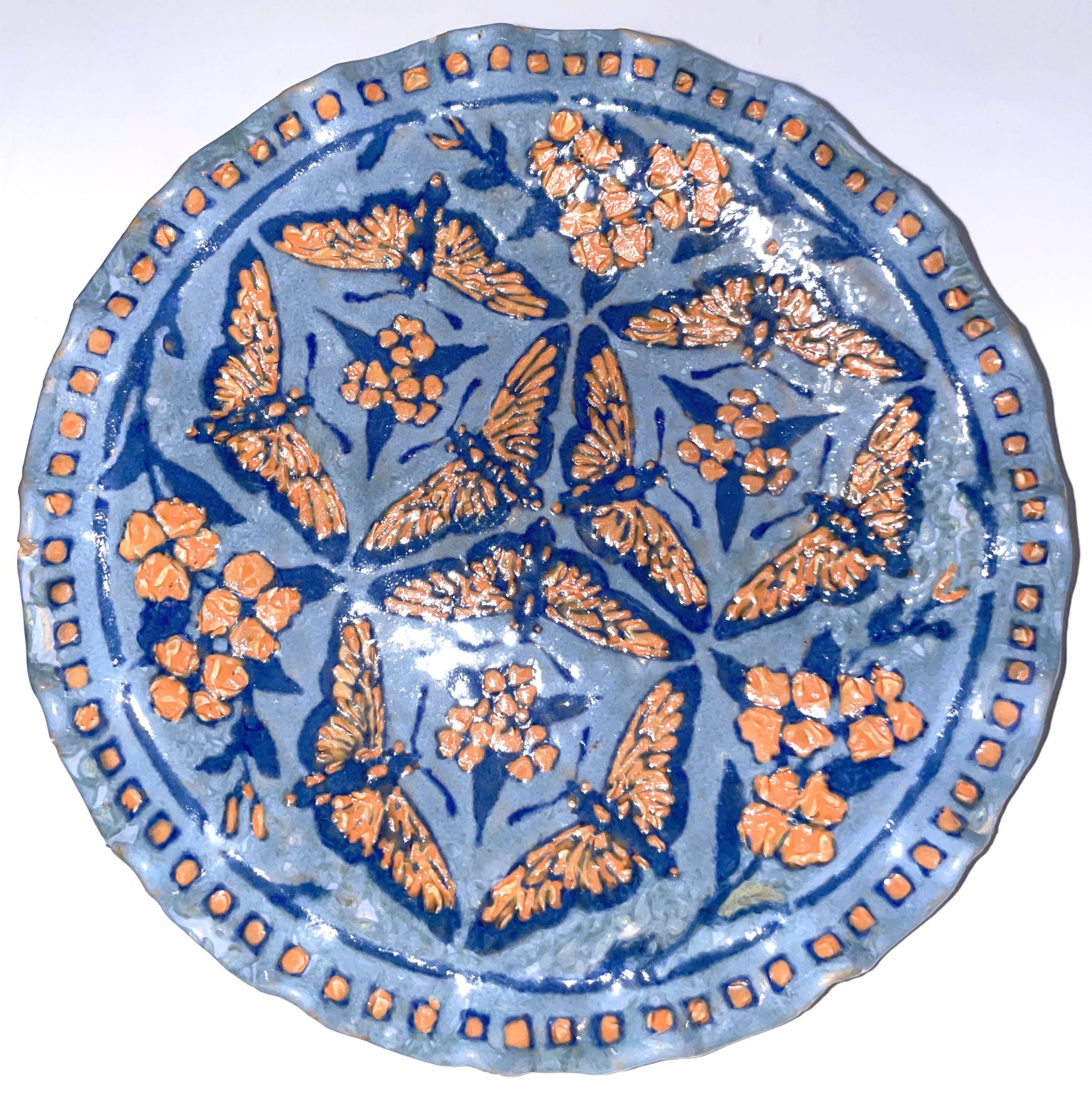
Plate with butterflies signed P. Jacquet
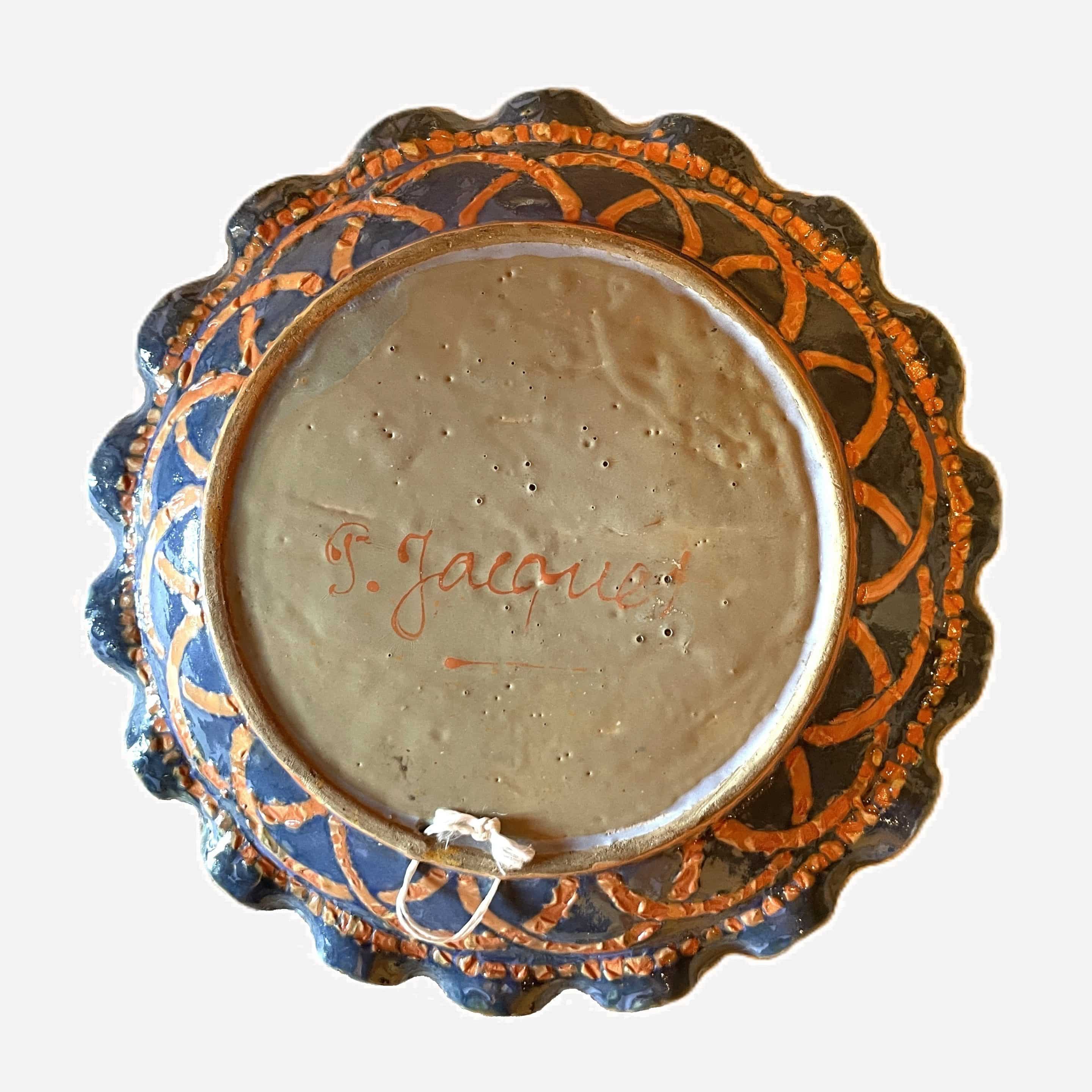
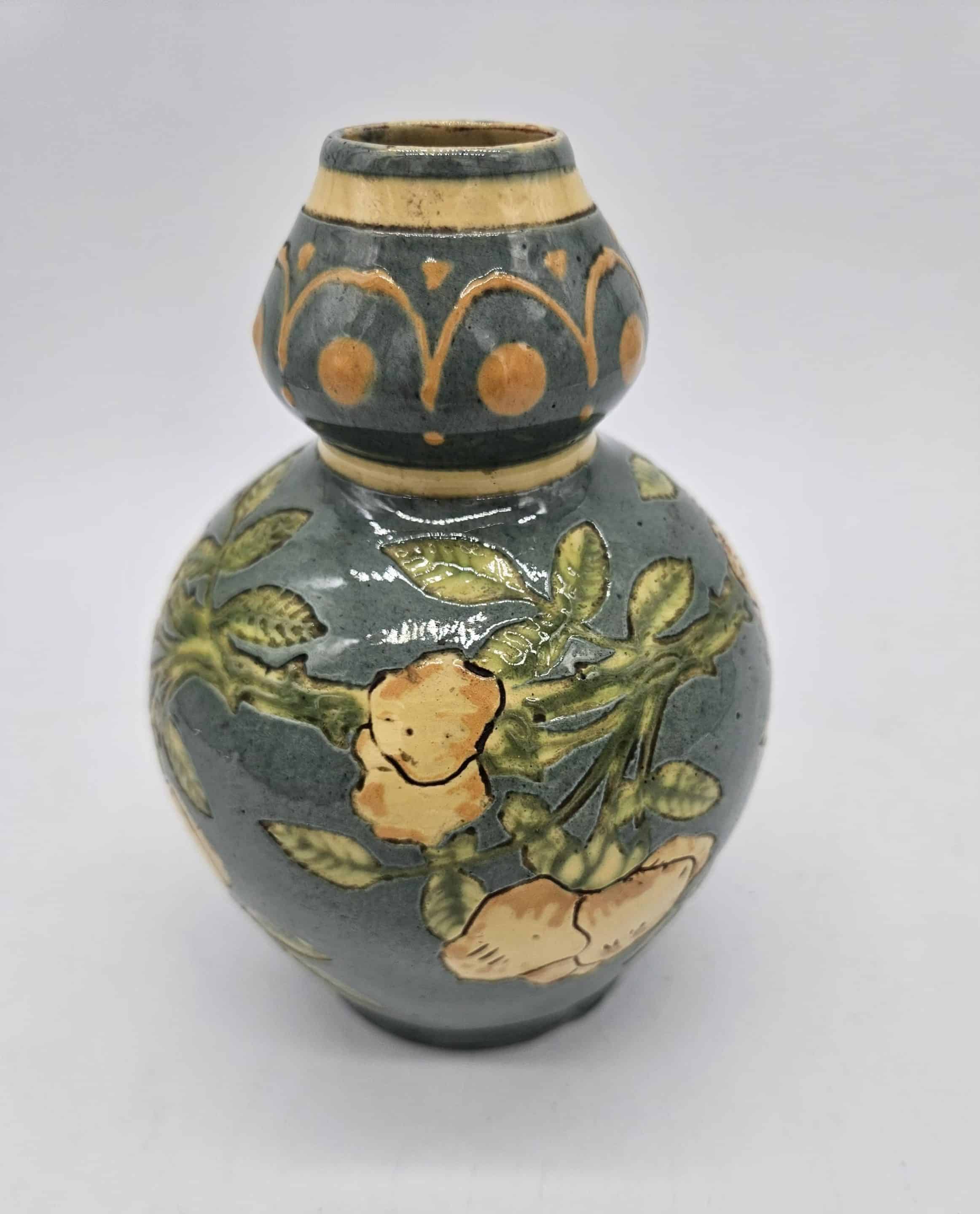
Vase signed by P. Jacquet
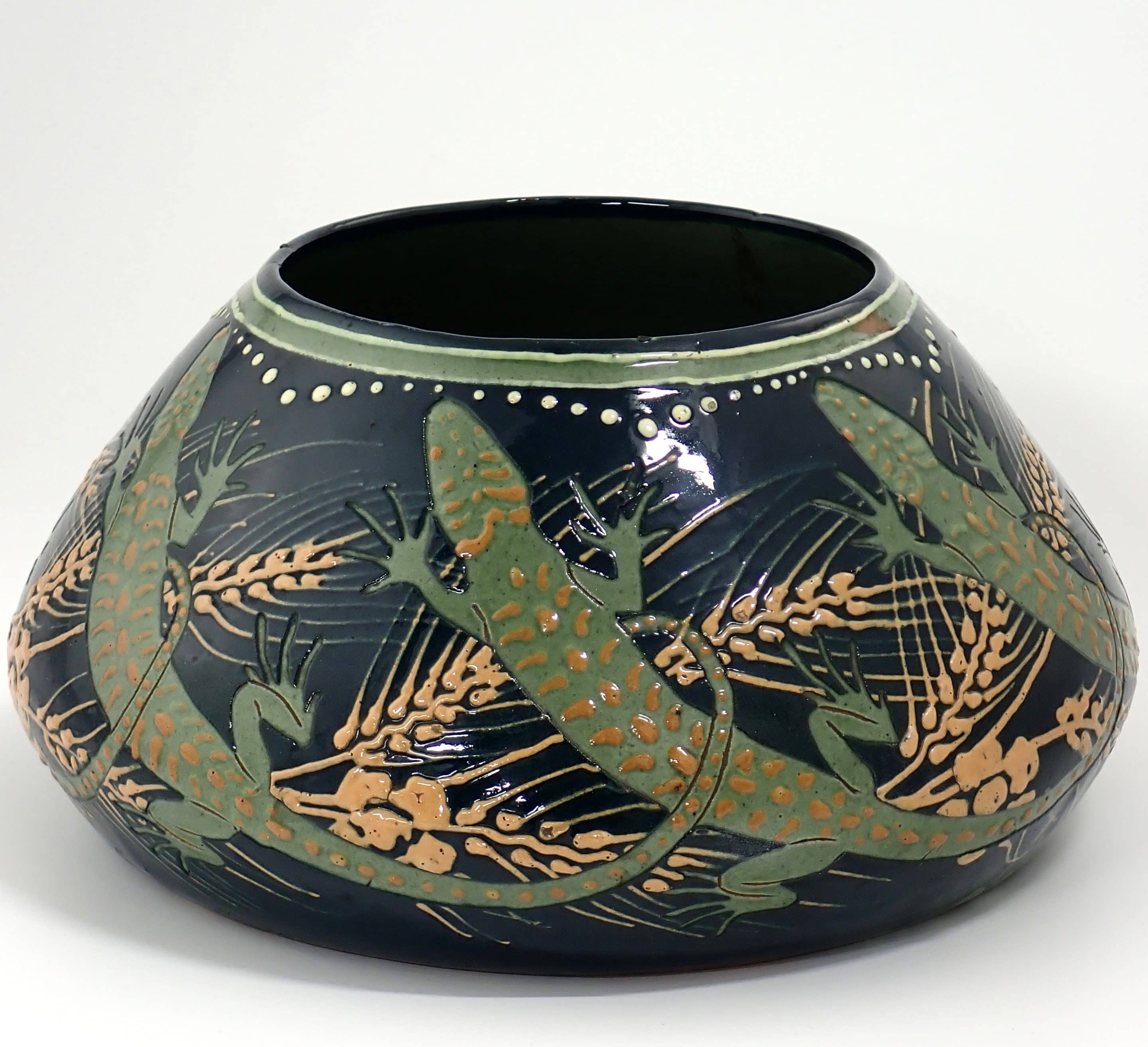
Lizard Vase P. JacquetMuseums collection of Annecy
These first works shown are worth a Article Ethnologist Arnold Van Gennep appeared in March 1914 in the magazine of Mercure de France, which saw Paul Jacquet as a founder of artistic ceramics in Savoie.
« Finally, I discovered Mr. Paul Jacquet: a teacher, he started painting, pottery, wood, and began sandstones, outside any school, reproducing primitive processes. He's not an unknown old man; He is twenty-five years old, I believe, so a life of success and failure alternated before him. What pleased her pottery is the use of the themes borrowed from the flora and fauna of the country, then the rounds of beautiful ladies in modern dresses; technique stiffens them, but there is still flexibility in attitudes. His paintings and wood are good: here is a Savoyard artist who has the intuition of colours.
That's an amazing exception. Besides, the Swiss painters also don't know what color is: the Dutch know it, a lot of Italians, some French, but for barely fifty years. If I refer here to Mr. Paul Jacquet, it is because his pottery is directly related by their origins and tendencies to the popular Savoyard pottery to which I have devoted an article in the Revue de Savoie 1912; There is therefore a new case of individual invention based on a collective industry of a kind, fixed by tradition within fairly narrow limits. It can be expected that this action inaugurated by Mr. Paul Jacquet will react to the potters his compatriots and that the strictly vulgar pottery will acquire in Savoie new artistic characters. It is a rare chance to surprise at the very moment of its vitality this process of local oscillations. »
With the declaration of war in August 1914, Jacquet was recalled and classified in the Auxiliary Service of the Armed Forces because of his state of health (bad dentition), and probably also his age, he was then 31 years old. He was employed as a control assistant at the inspection of the Lyon forges and then as a shell controller at the Creusot.
He went before the reform commission in November 1914 and was assigned to the internal service from December.
A ceramic contest in the middle of war
Unlike other learned societies such as the Haute-Savoie Fine Arts Society,Florimontane Academy does not cease its activities during the war.
This learned society has traditionally offered competitions every year, around poetry for more than 40 years, and local history for more than 10 years. There is An average of 30 people register each year, but it varies between 7 and 100 participants.
In 1915, and this is a first, she organized a competition of artistic ceramics, and published the regulations in the Revue Savoisienne (to read in its entirety). Here. Source gallica.bnf.fr / Bibliothèque nationale de France)
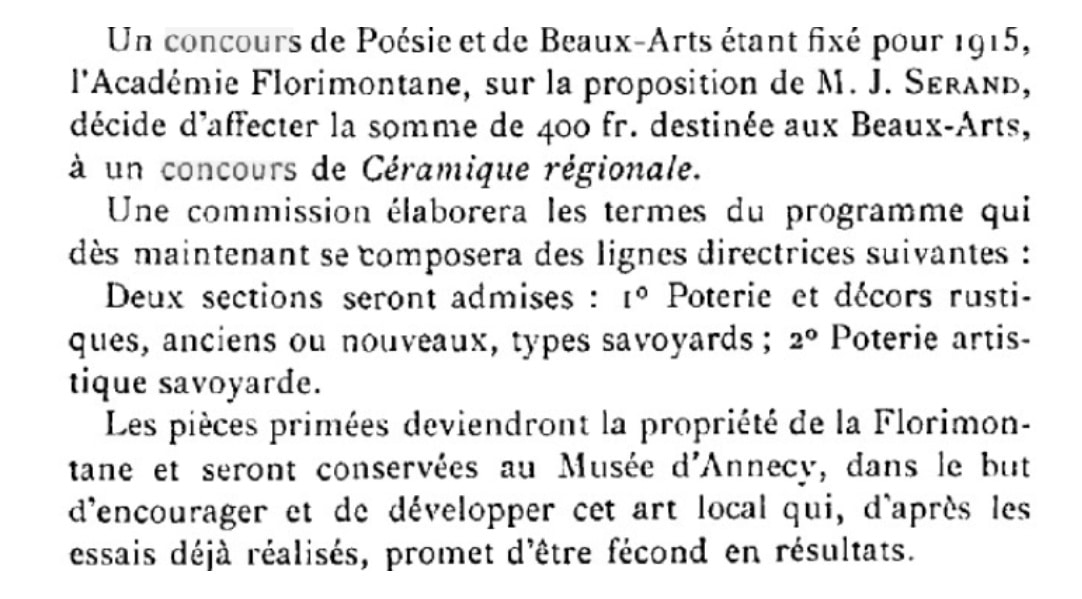
This will be the first and last time. The idea of a ceramic competition is launched by Joseph Serand, an archivist. It is intended for artists who have already exhibited, and for industrialists in Haute-Savoie.
Paul Jacquet and Ernest Béchard, tous deux réformés du service actifs, seront les deux seules personnes qui vont y répondre, alors qu’ils ne répondent à aucune de ces deux conditions.
They win the first prize ex aequo, « the effort of each of the competitors who appeared equivalent ».
Paul Jacquet had presented many parts, some of which are specified:
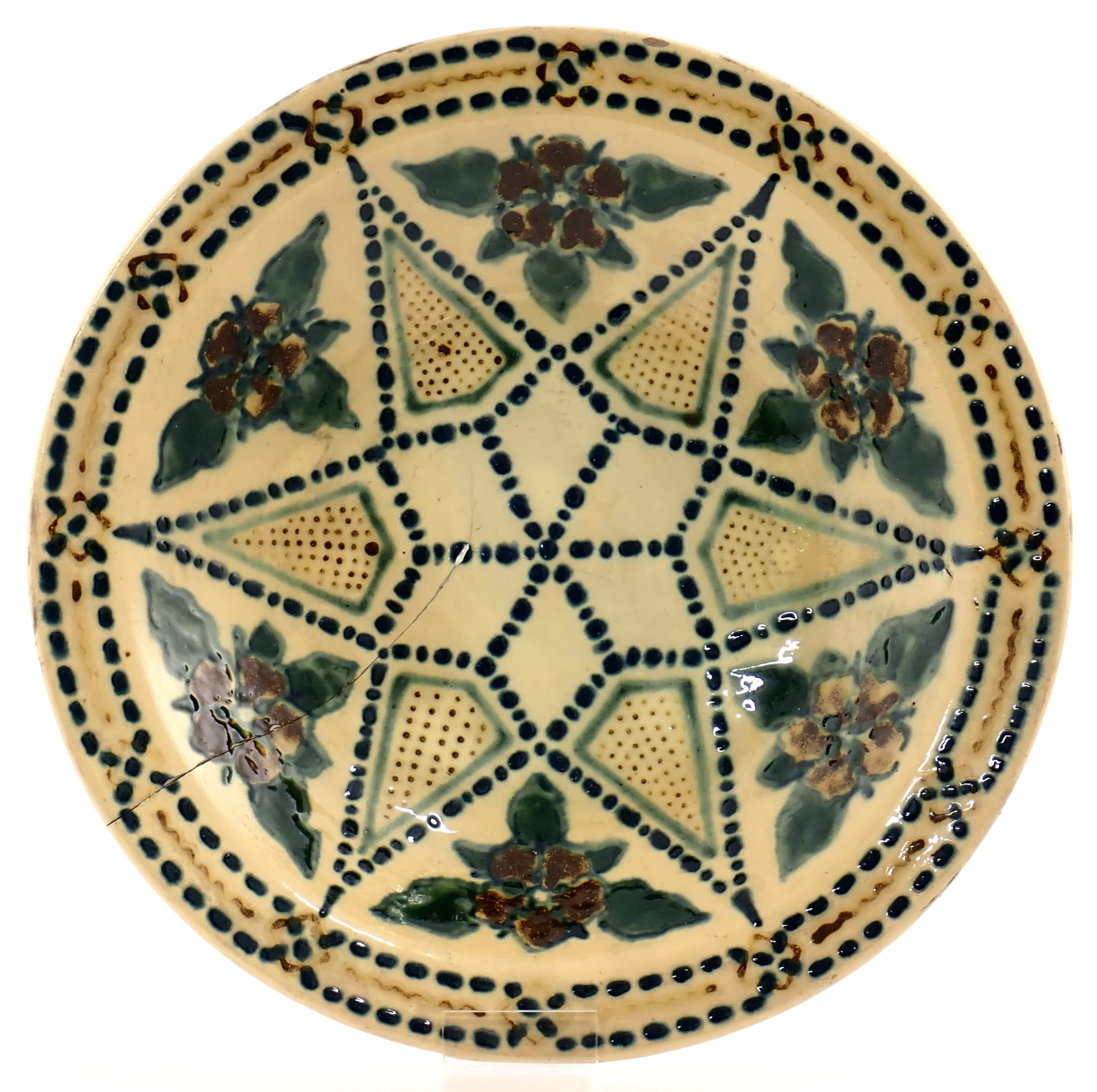
« Star-decorated dish with flowers »
of Paul Jacquet
Coll. Museums of Annecy
- a dish decorated with a carp contoured in Chinese or Japanese taste
- a vase with fish bristled with prickly
- a spy
- a dish decorated in stars with various flowers
- a honeypot with cyclamens
- a blue sugar maker
- a white vegetable with blue twists
- two water and wine jars
The entire report of the results of the competition appeared in the Revue Savoisienne in 1916. (read Here. Source gallica.bnf.fr / Bibliothèque nationale de France)
A first workshop
En 1918, la charge de professeur de Paul Jacquet le contraint à augmenter son temps de travail et donner 20 hours of instruction per week at Berthollet High School (14 hours of drawing, 2 hours of mechanics, 2 hours of geometry, 2 hours of writing).
At 35, il rents his first workshop in Annecy, stalemate Saint-Bernard-de-Menthon, and gives himself to pottery decoration, painting and wood engraving.
This workshop certainly does not have an oven.
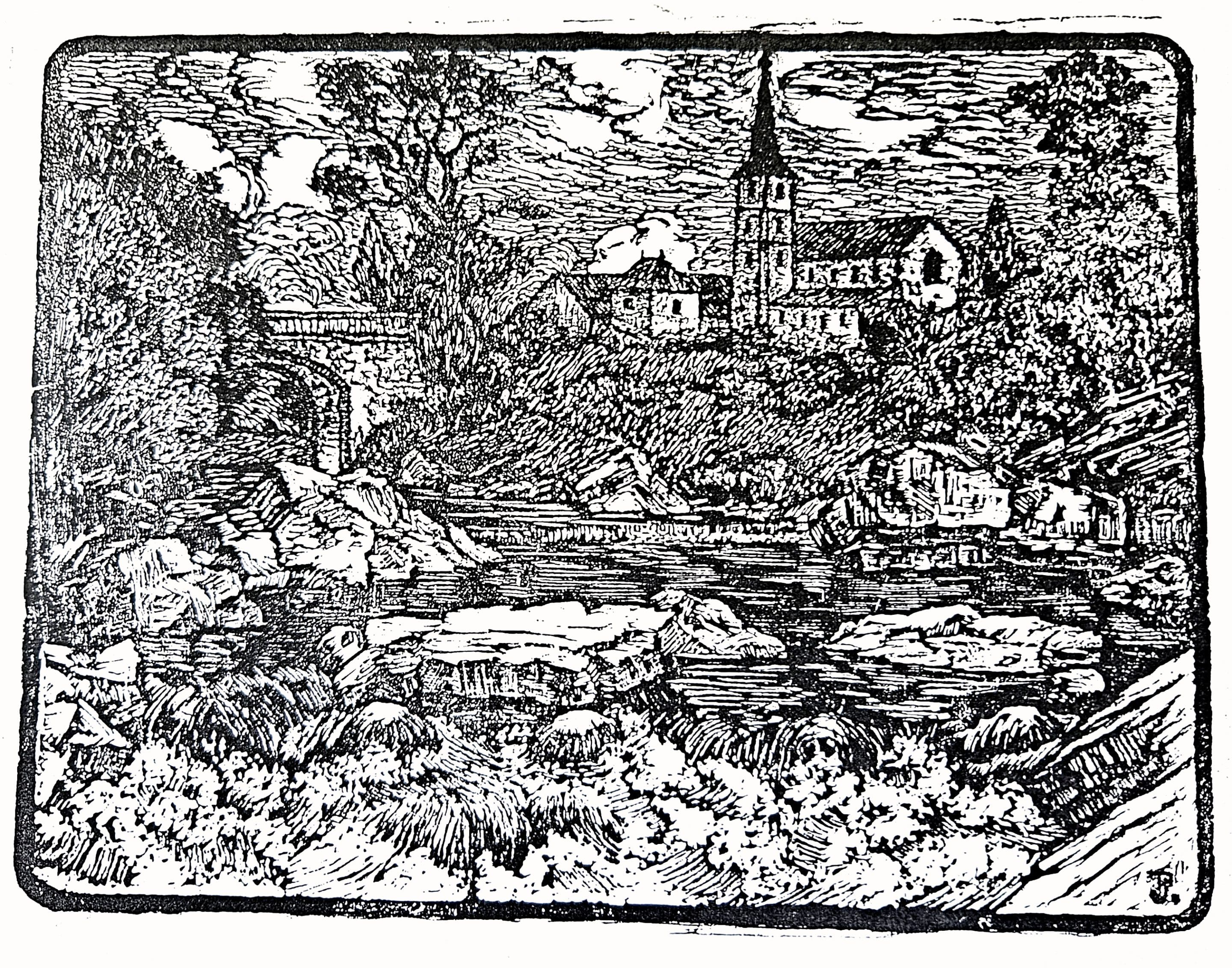
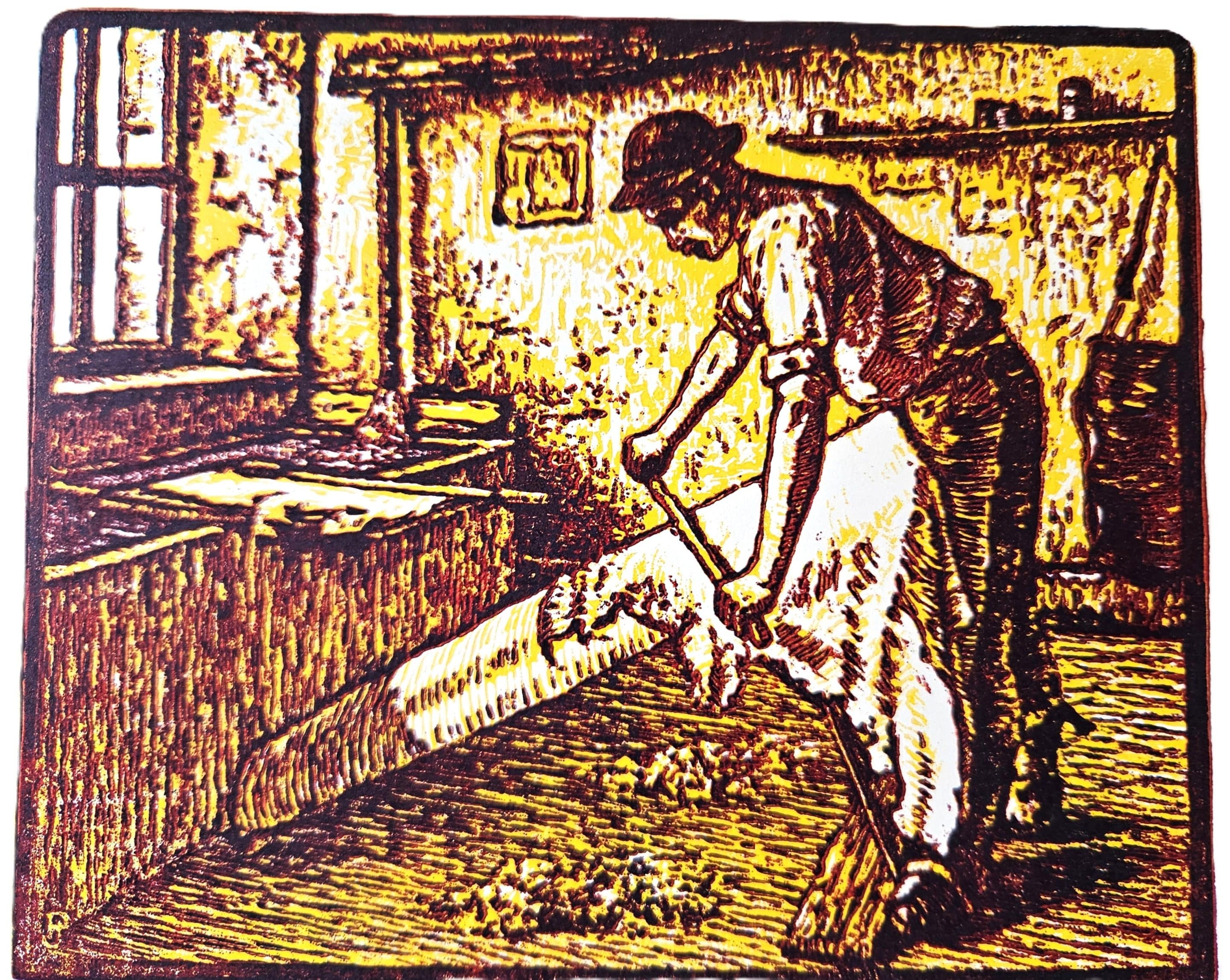
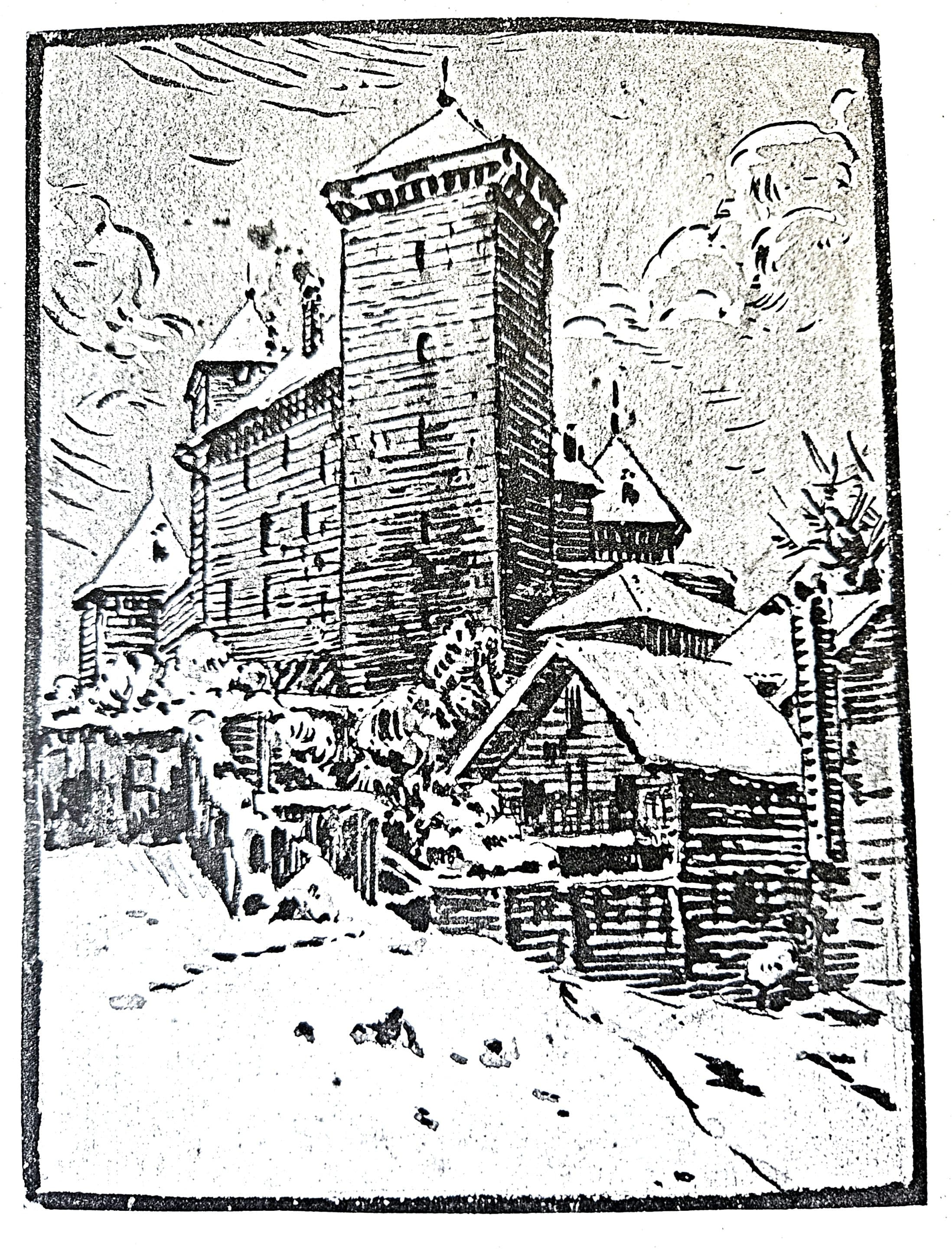
Concernant ses tableaux, il n’en existe dans aucune collection publique. Hormis quelques bois gravés (voir ci-dessous), peu d’œuvres de lui, pour ne pas dire aucune, sont connues ou reproduites.
On 1 January 1919, Paul Jacquet was appointed assistant professor at the Ecole Primaire Supérieure d'Annecy with Certificate of Design Teaching, a position he would retain until his retirement in 1939.
II will also teach drawing at the Normal School of Rumilly Teachers from September.
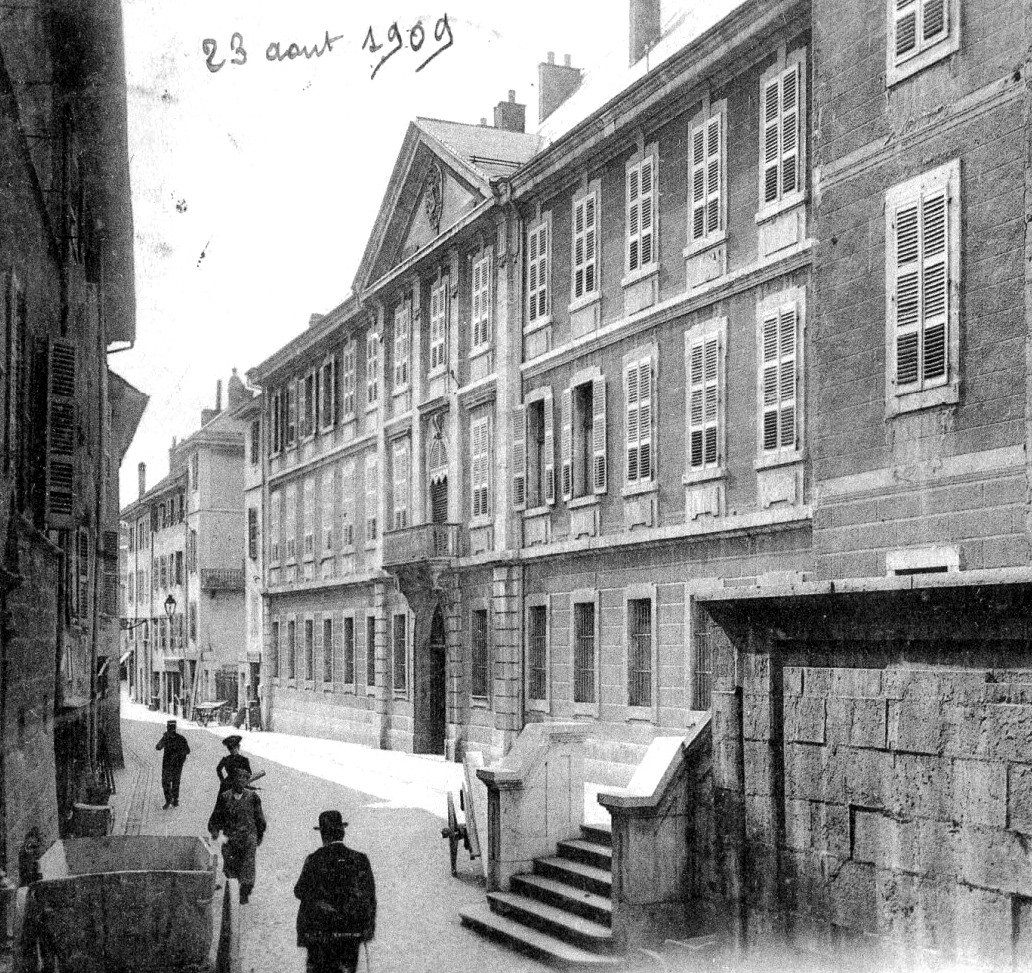
He then lived in a residence at 10 rue Jean-Jacques Rousseau in Annecy. (see photo)


© La Céramique à coeur – Legal information – Privacy Policy