Débuts à Orléans
1926-1928
A Worker Experience
At the beginning of 1926, René Anchierri left for Paris, with the aim of establishing himself in the capital. But he stops in the Loiret in Orléans, having found a job of turning worker in the Labrut & Recullé establishments, a factory of earthenware and pottery employing more than 200 people at that time.
At the beginning of 1926, René Anchierri left for Paris, with the aim of establishing himself in the capital. But he stops in the Loiret in Orléans, having found a job of turning worker in the Labrut & Recullé establishments, a factory of earthenware and pottery employing more than 200 people at that time.
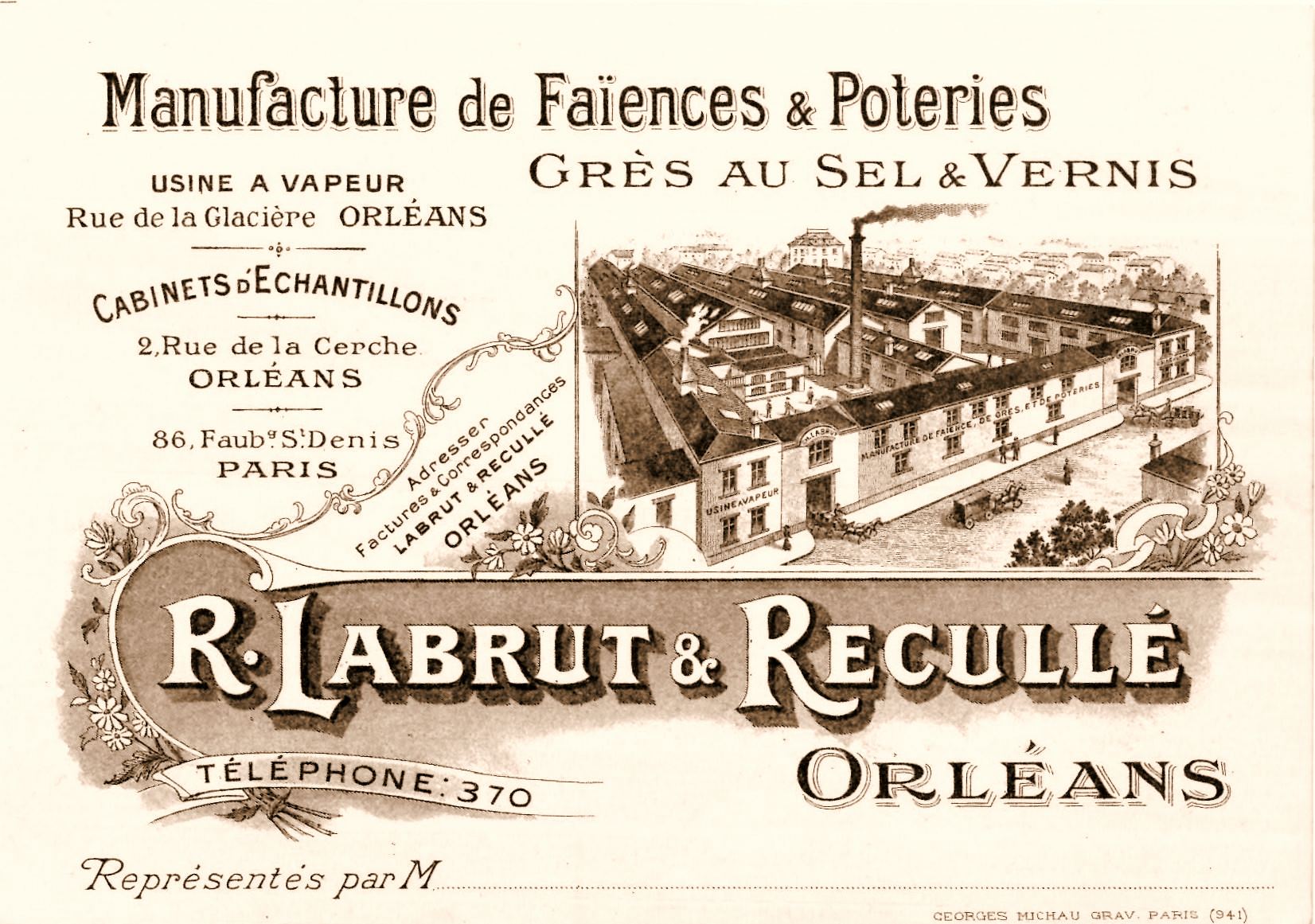
After its installation, the company had to rapidly increase the number of its furnaces. Having found a special process for varnishing, she produced a wide variety of pottery shapes (fine sandstone, terrines, chopines, dishes, Norman brocs, bottles, rillette, jam and mustard jars...). The pottery was quickly placed first, and the fame
of the «Labrec sandstones» contraction of Labrut-Recullé, largely removed the borders of the region.
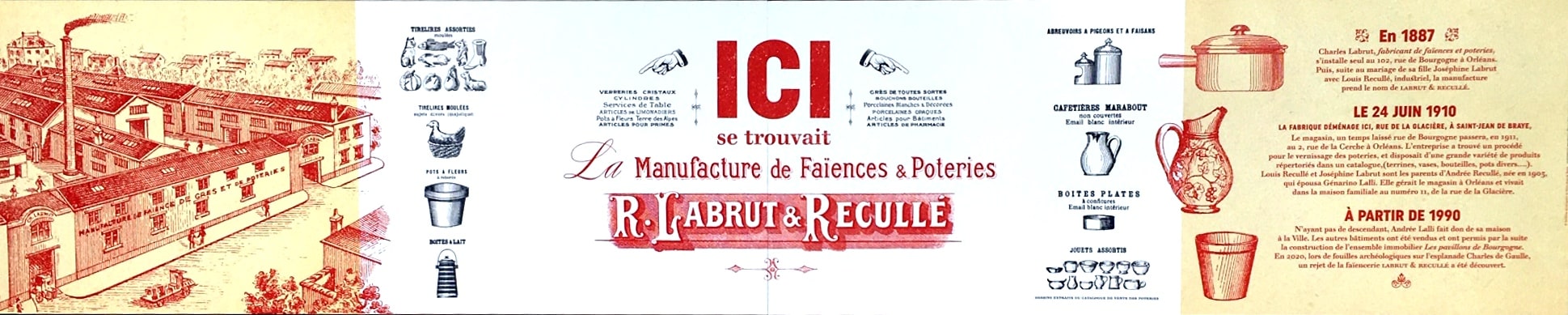
A fresco rue de la Glacière commemorates the location of the factory, now destroyed
Orléans, potter's land
 The city of Orléans is built on limestone. Above the limestone banks are clay levels of various origins and present throughout the territory: north of the agglomeration at the level of the forest of Orleans; in the valley of Orleans and further south in Sologne. They are of good quality and easily accessible, so exploitable for the shaping of pottery or tiles. These clay levels belong to the formations referred to as "Marnes and sands of the Orléanese", "Sands and clays of Sologne" and "Alluvions of the Loire Valley".
The clay quarries of the municipality of Saran are among the most well known in the agglomeration and feed the « earth potters » d Thus, the « Black Head » has a layer of clay of 6 to 8 metres in thickness exploited in open air. Every year, several tens of workers manually extracted thousands of cubic metres of pots and bricks soil transported by fall to the workshops.
Some productions such as sandstone, fine earthenware or porcelain required the use of specific clay that was absent locally. The import of these raw materials, via the Loire, will be necessary for their manufacture from the 18th century.
Sébastien Jesset
Archaeology Service of the city of Orléans (SAVO)
A young entrepreneur
These few months in this factory reveal the economic potential of ceramics. Thus, at the age of 21, in the spring of 1926, he decided to launch himself and planned the construction of a ceramic workshop.
The artistic context is particularly favourable after theInternational Exhibition of Modern Decorative and Industrial Arts of 1925 who has highlighted the arts of fire, including ceramics.
He is also rich with a 4-year experience in the Paul Jacquet workshop, where he was able to learn to master all the positions of pottery creation.
He receives financial support from his family and the assurance to partially fill his order book, through local subcontracting, and a little further away as he will recover to produce for Annecy.
Indeed Paul Jacquet has not yet been able to reorganize and find a good decorator to ensure the replacement of Anchierri.
The Honorary Diploma he obtained at the international exhibition in November 1925 in Paris, highlighted the quality of the work of his workshop. IIt is very much requested by orders, especially large parts, which it cannot make in the small oven of its workshop.
René Anchierri lived at that time at 15 rue aux Ligneaux in Orléans. He buys land on the other bank of the Loire in a sparsely inhabited agricultural area at 16 rue Registretaire.
On 18 April 1926, he applied to the prefecture for authorization to establish a ceramic workshop with a muffle oven, including technical specifications and situation plans.
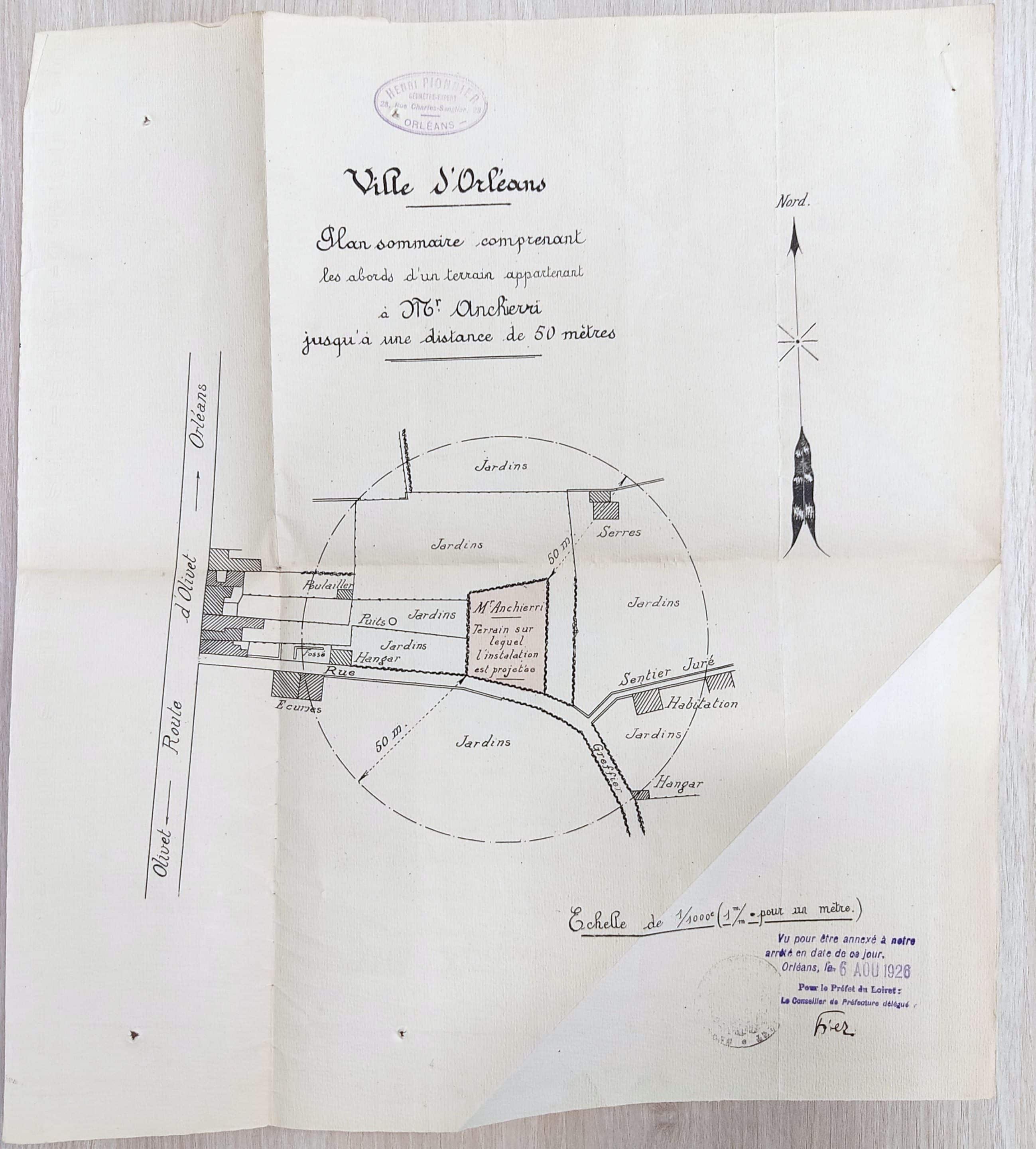
Municipal and Metropolitan Archives of Orleans
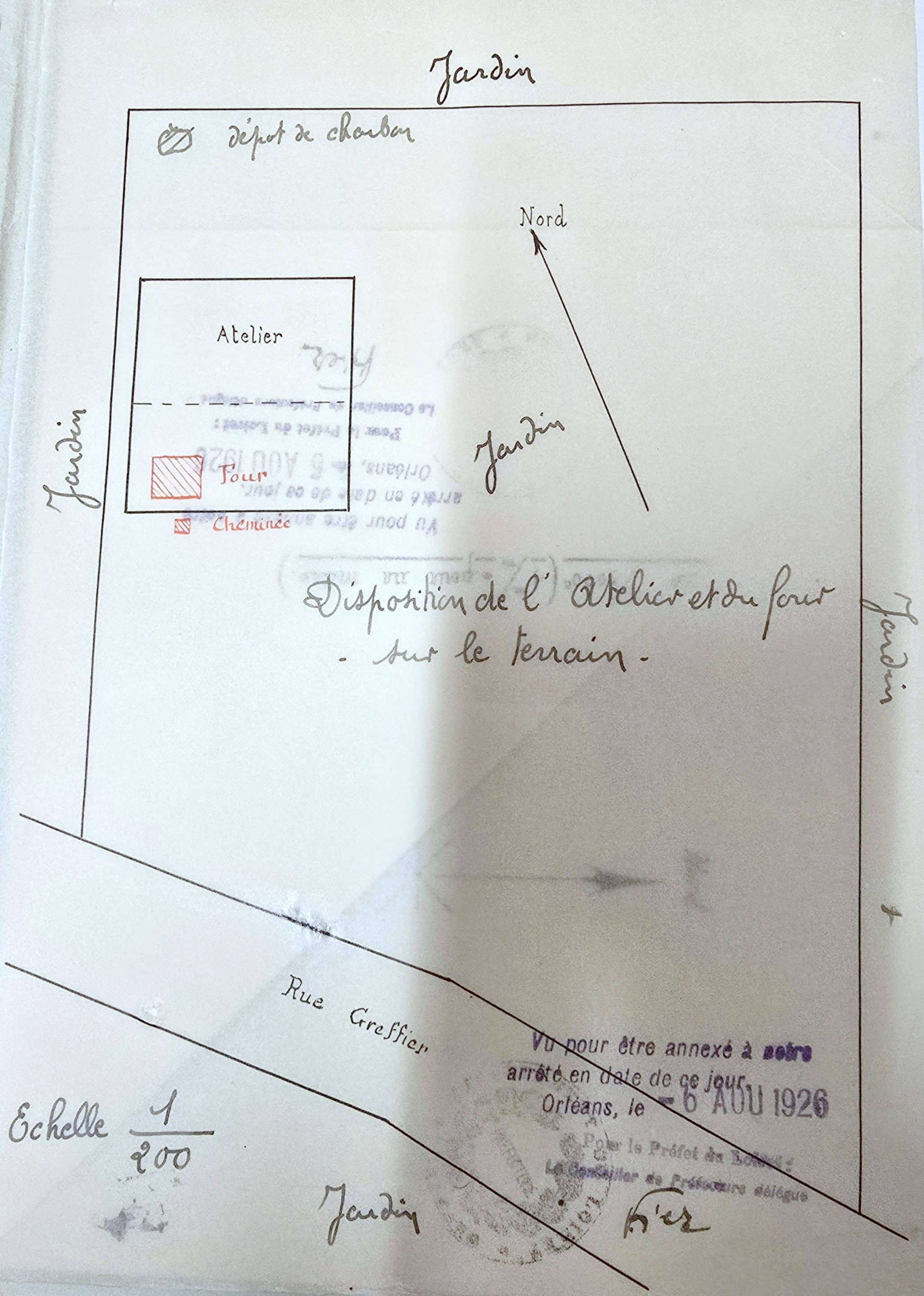
After a neighbourhood inquiry to collect any complaints and a favourable opinion of the departmental council of hygiene rendered on 16 July 1926, the prefect notified him by decree on 6 August, his authorization to build his factory and therefore to carry out his activity.
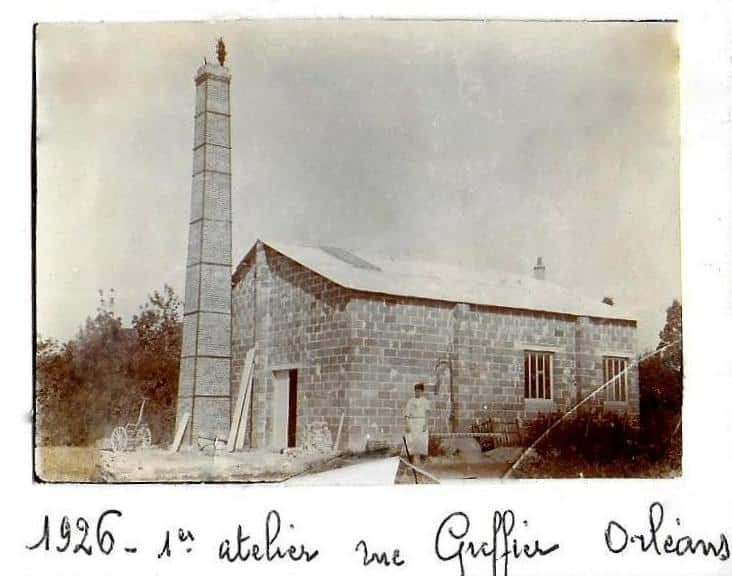
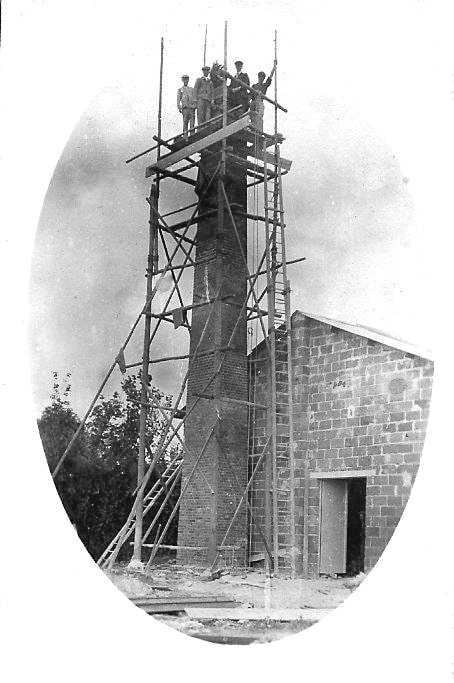
He built a small workshop during the summer to house a large oven of 6 m3, equipped with a 13-metre-high chimney, the first images of which are visible after construction:
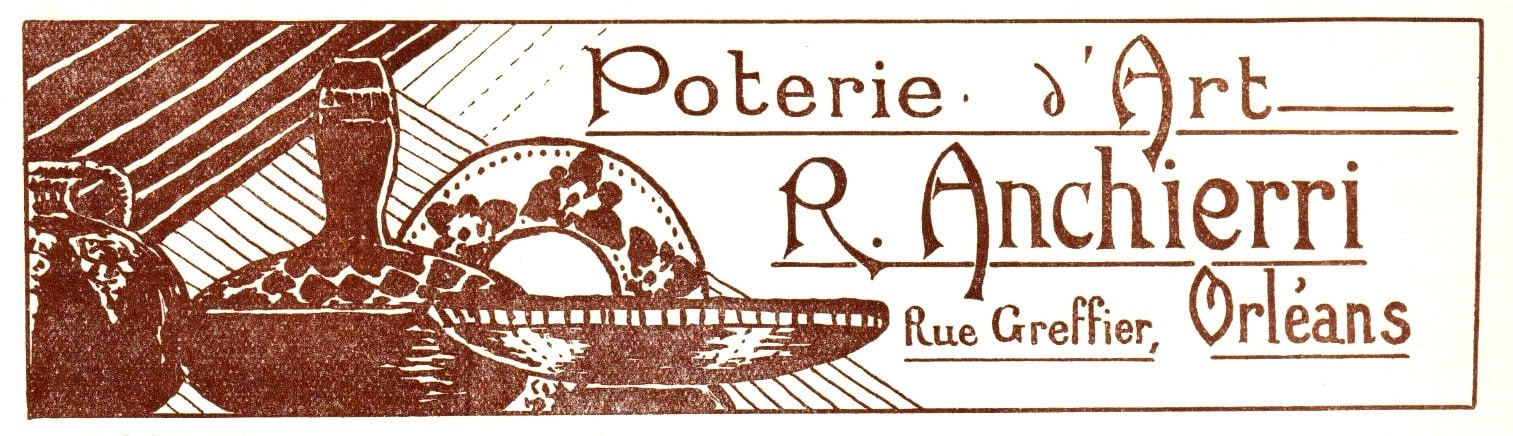
Header paper of the Pottery d
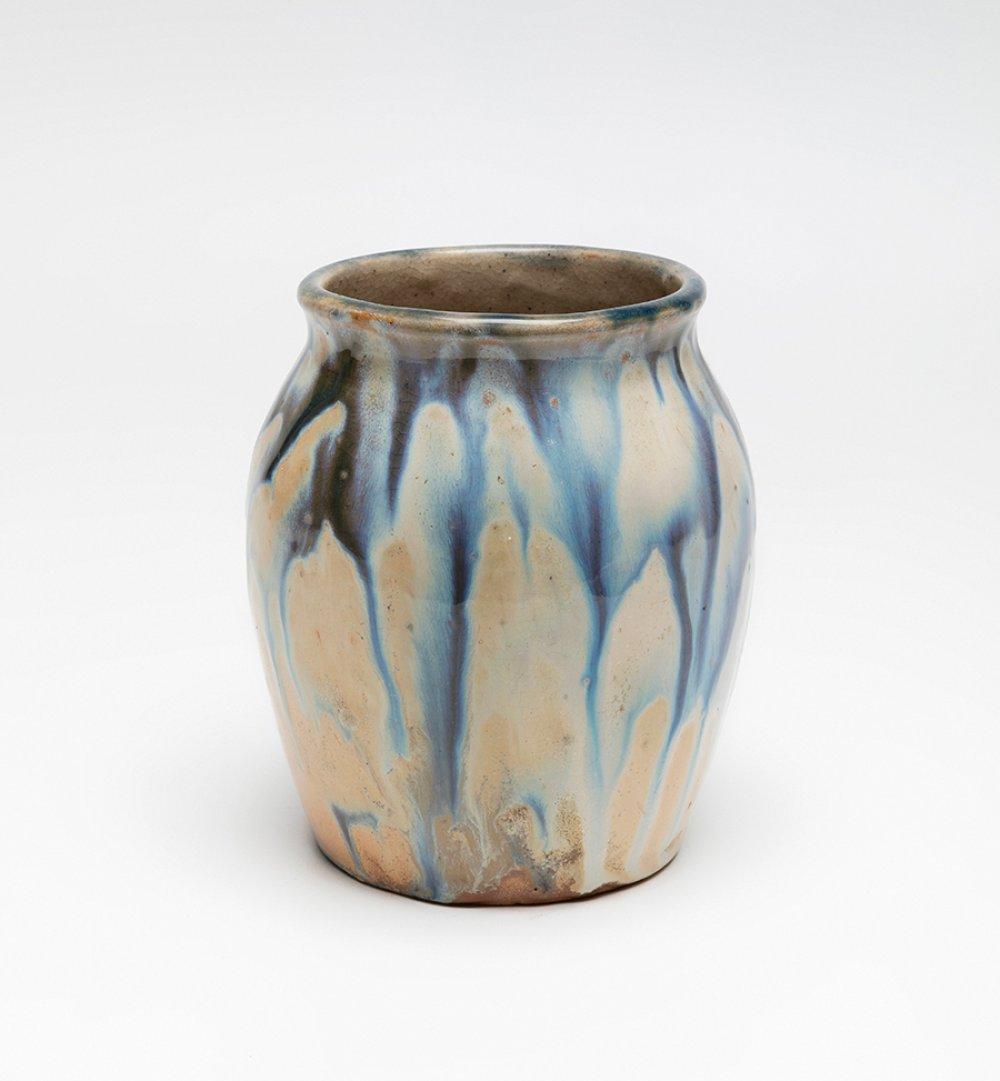
At first, the personal manufactures that came out of the oven in the autumn of 1926 were still very inspired by the Savoyard style he had practiced diligently in Paul Jacquet's workshop.
Both productions can be easily confused, as they show similarities. Some will be signed "Jacquet" with the a in print letter to identify Anchierri production (Paul Jacquet signs with a a).
Monogram PJ by Paul Jacquet
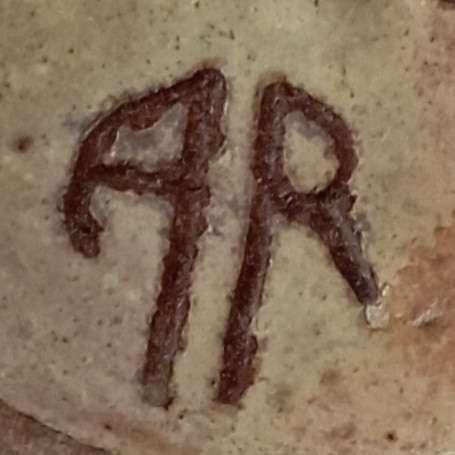
Monogram AR by René Anchierri
Others are marked AR in square brackets, copying Paul Jacquet's monogram.
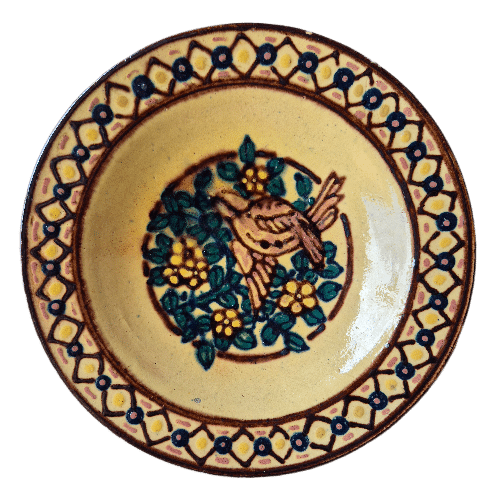
Bird-decorated plate, AR-Lengobic signature (see above), Orléans 1926, dated and located on its original packaging.
Ceramics from the first batches
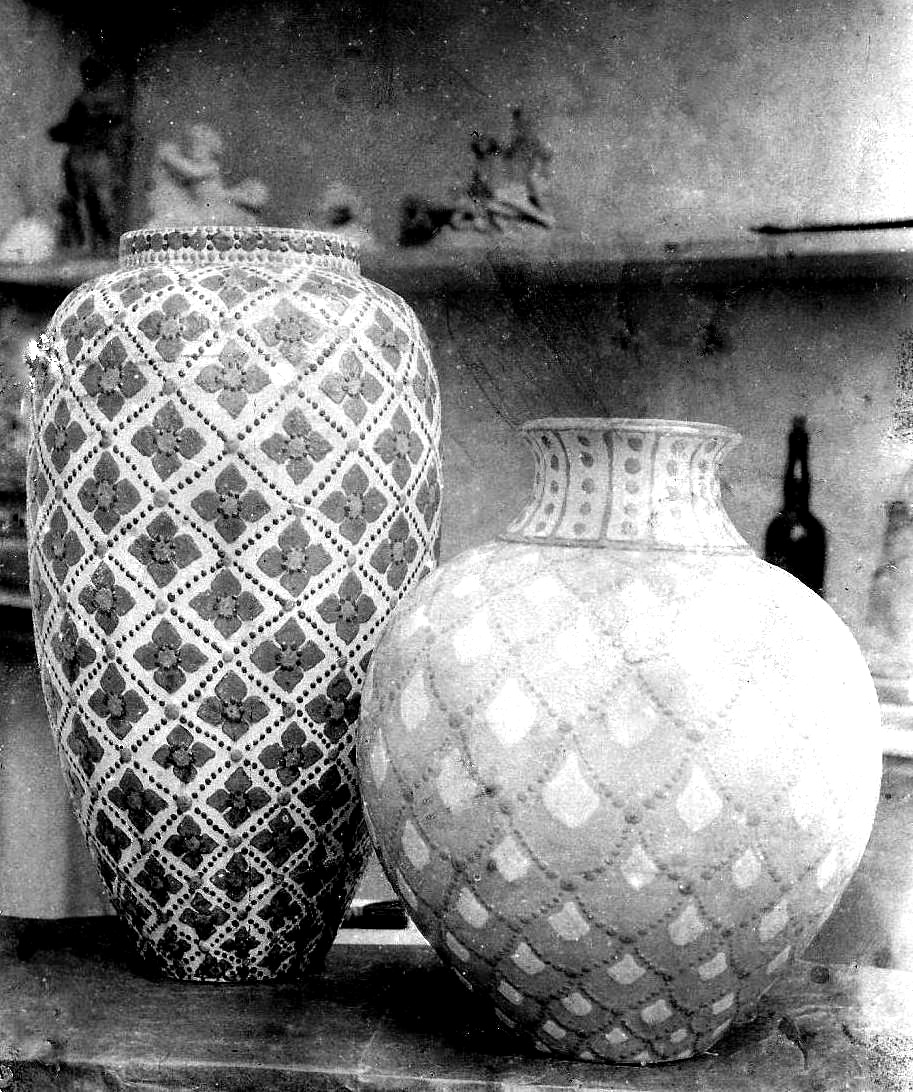
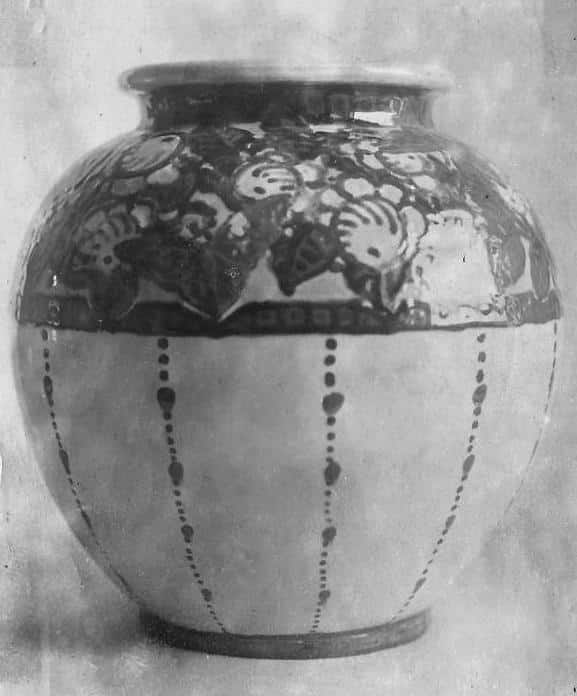
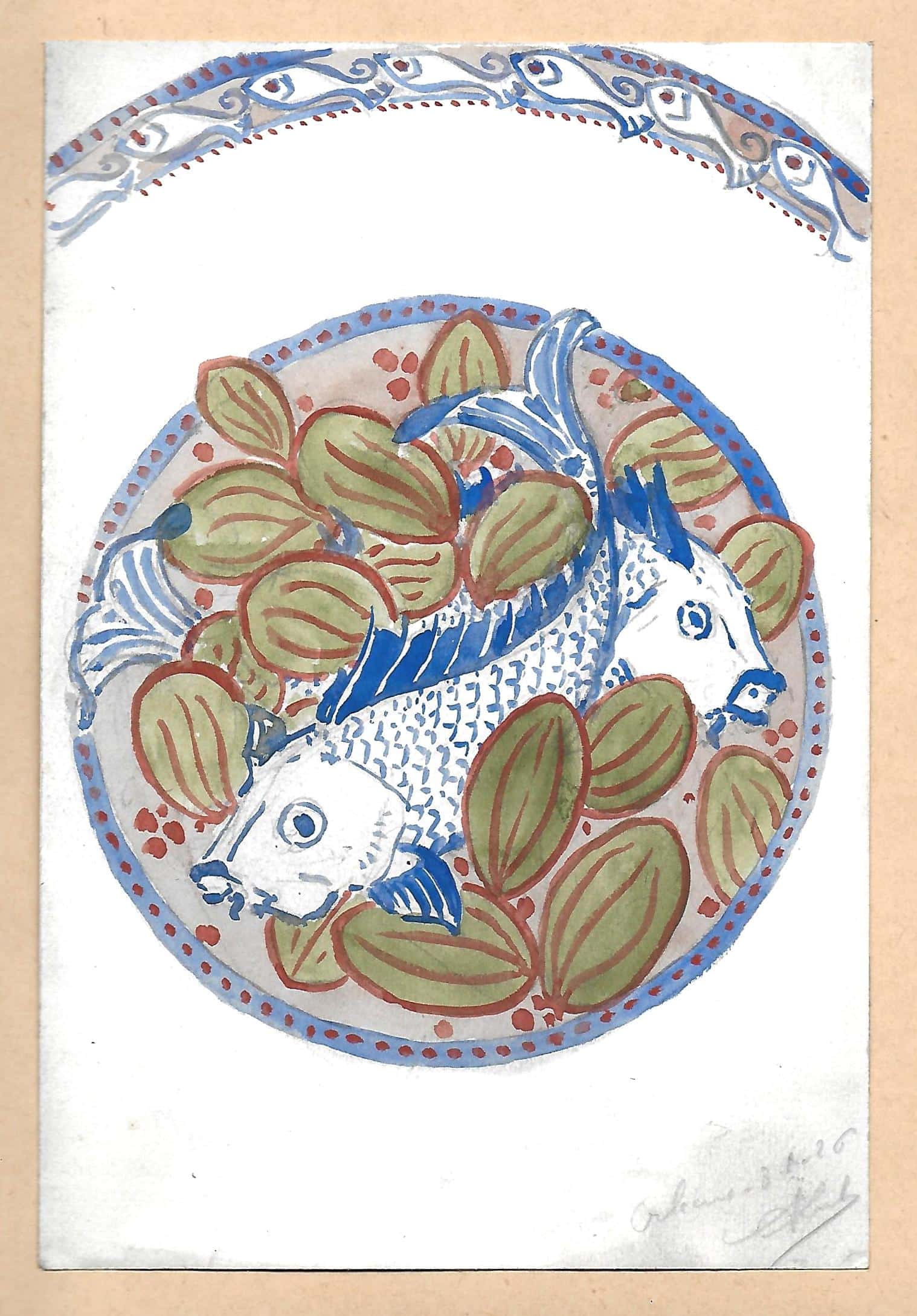
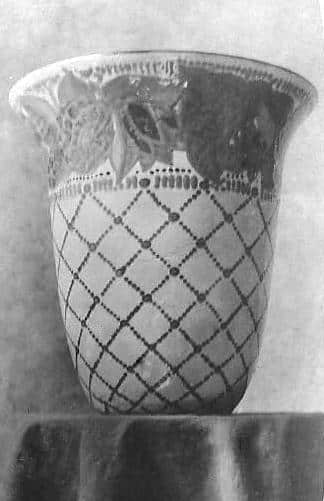
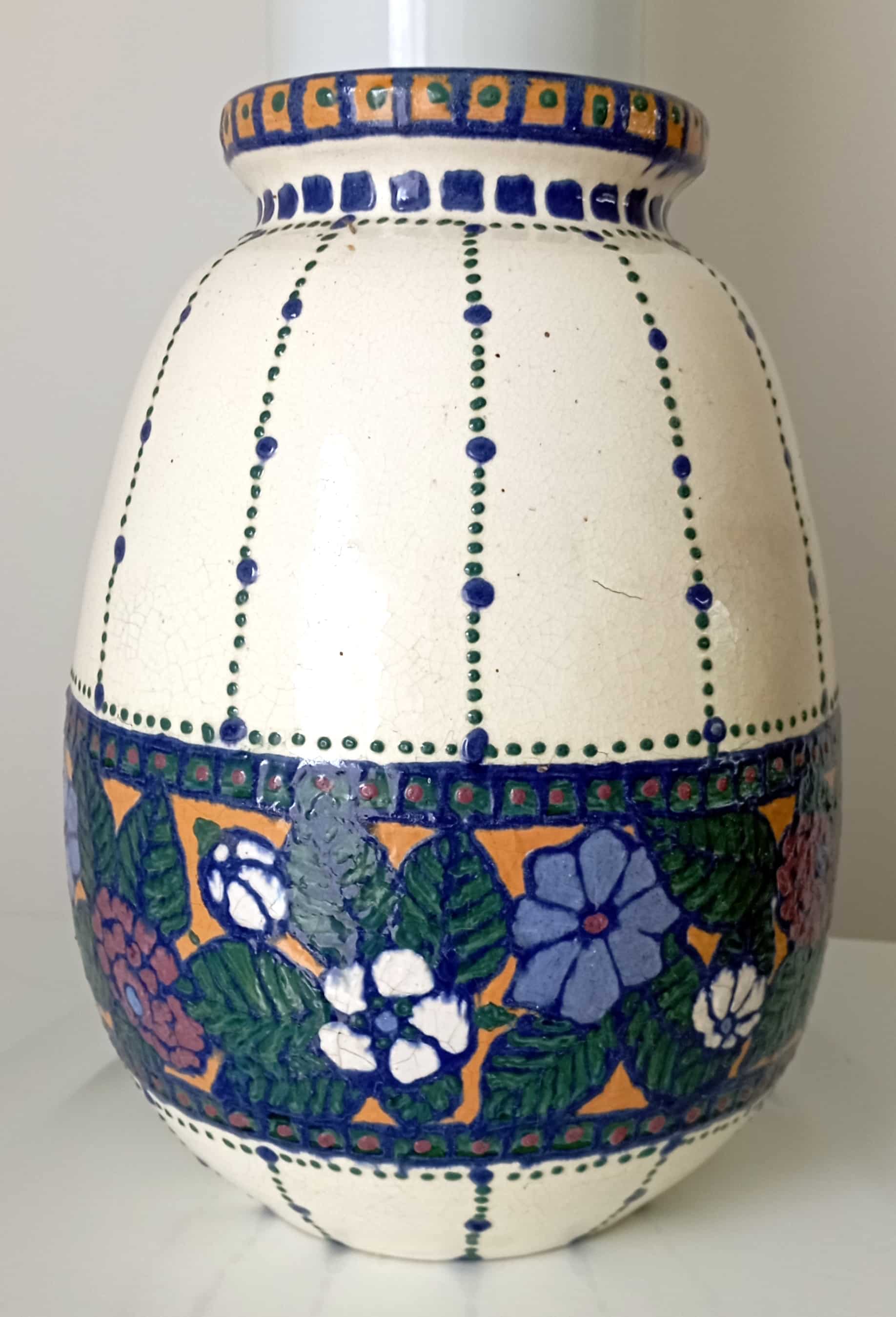
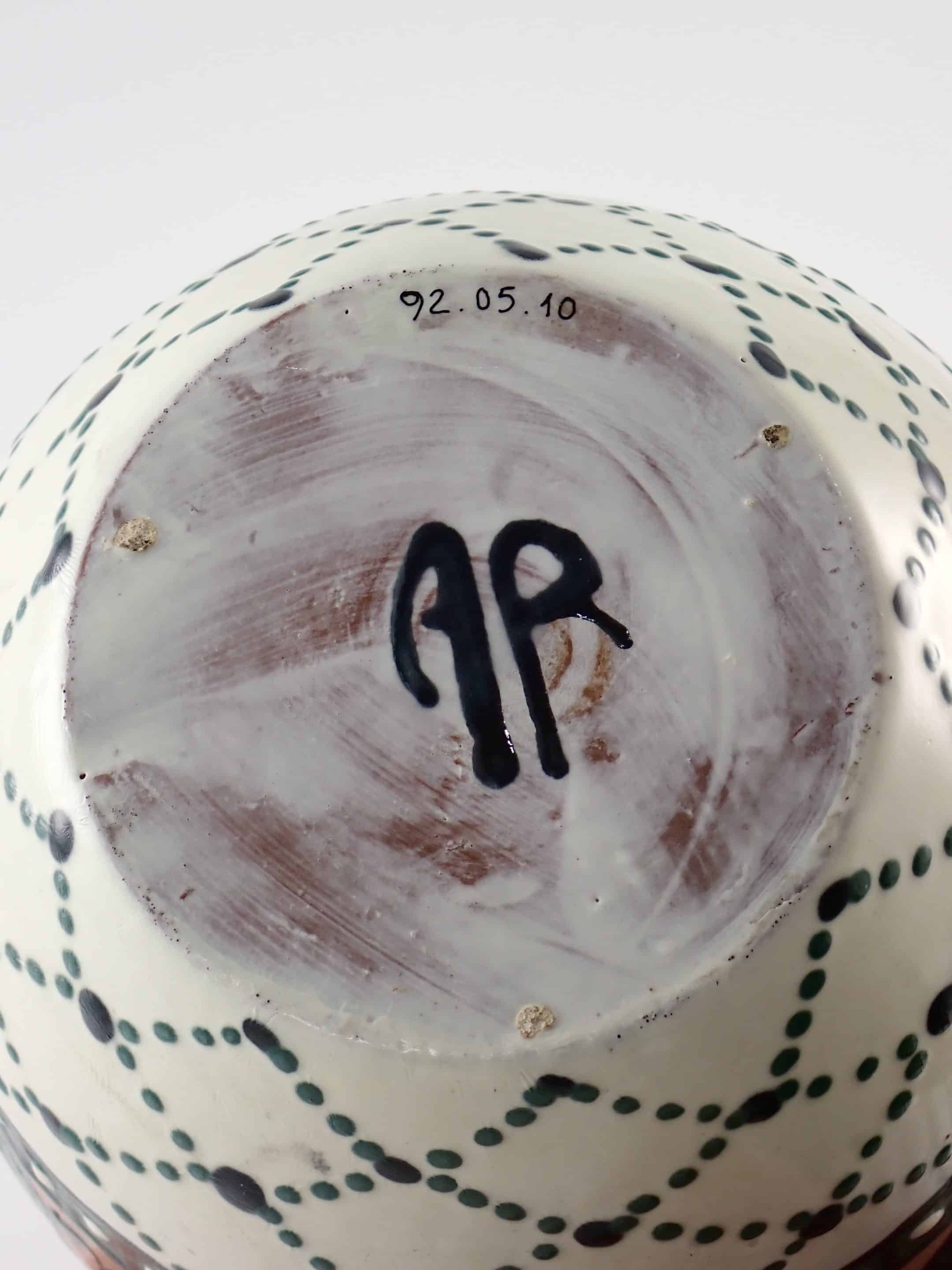
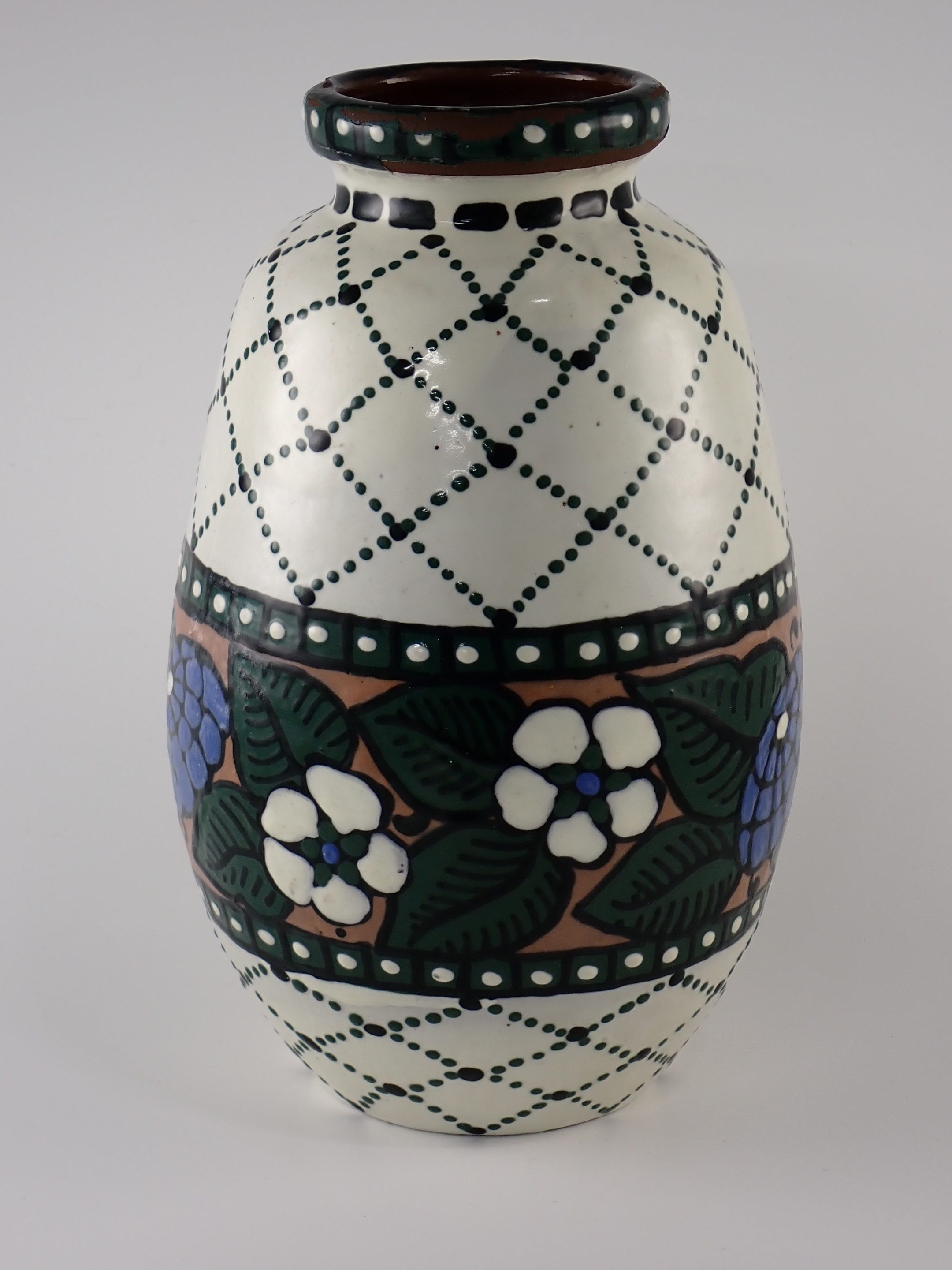
Coll. Museums of Annecy
He was inspired by his most recent work experiences until he borrowed Labrec's graphic style to form his signature:
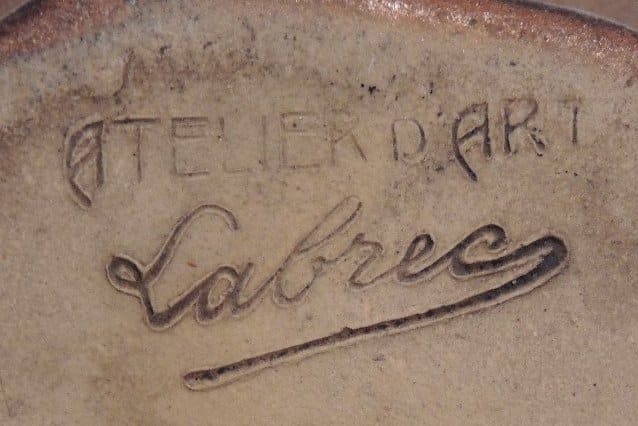
"Labrec" signature for Labrut and Recullé
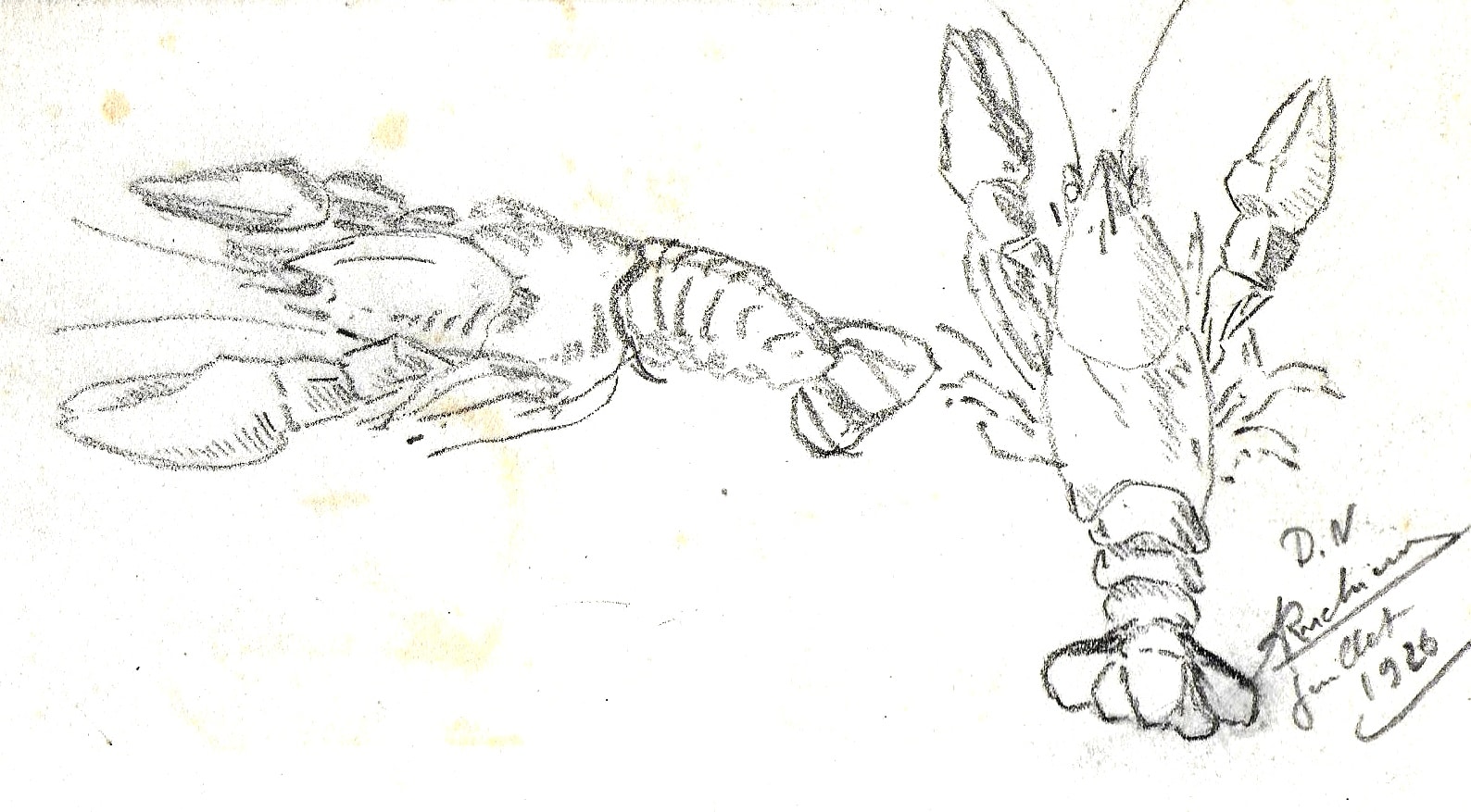
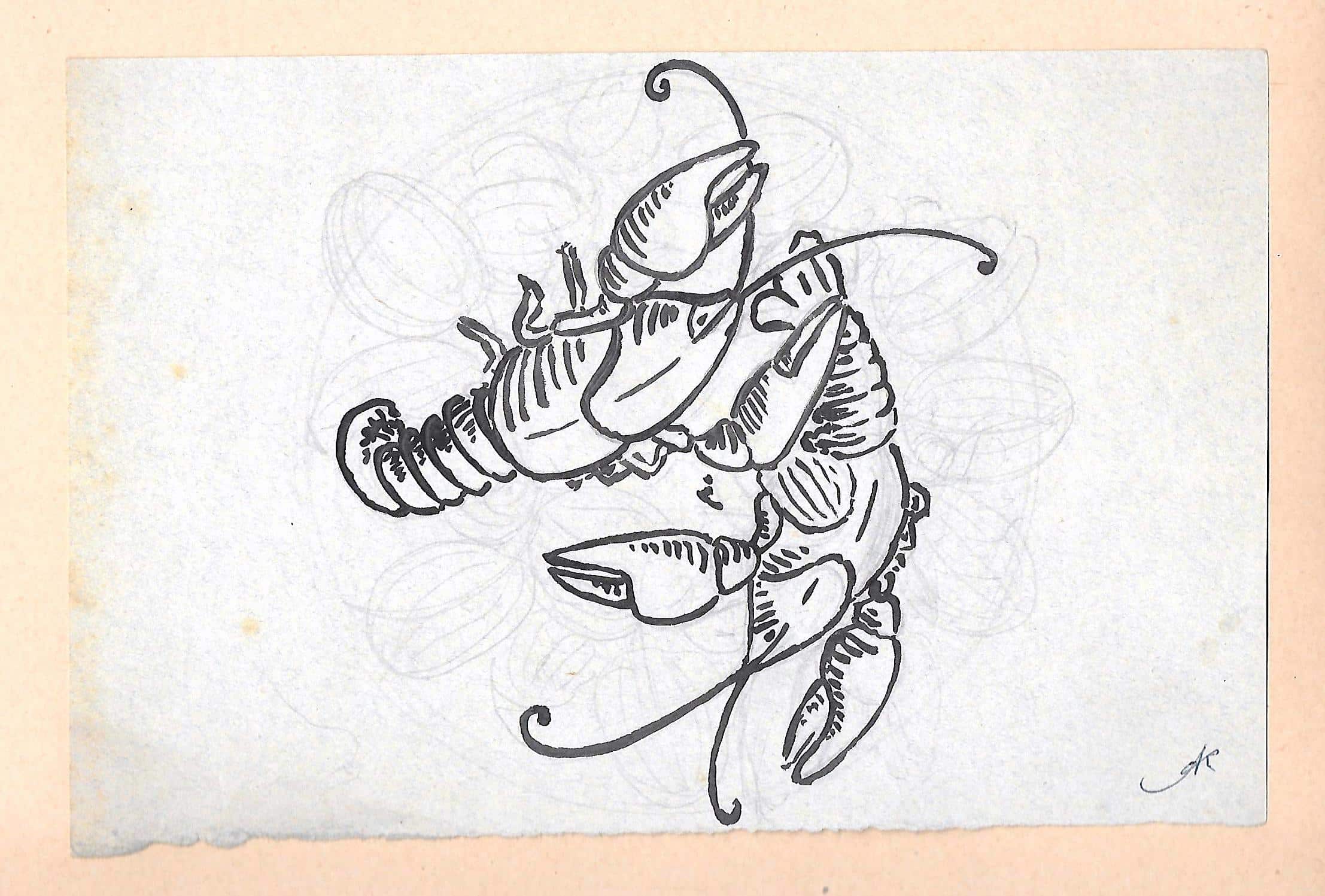
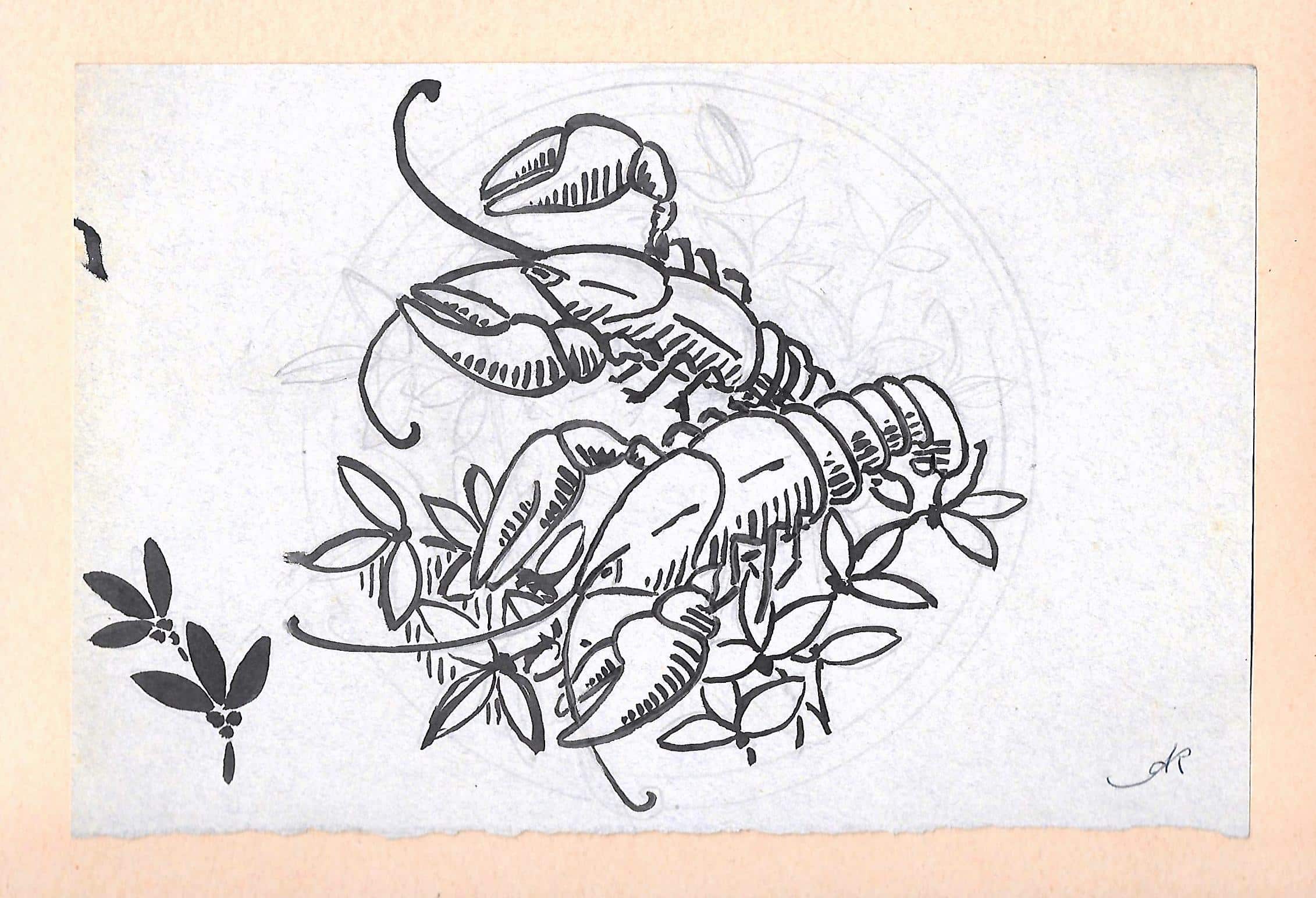
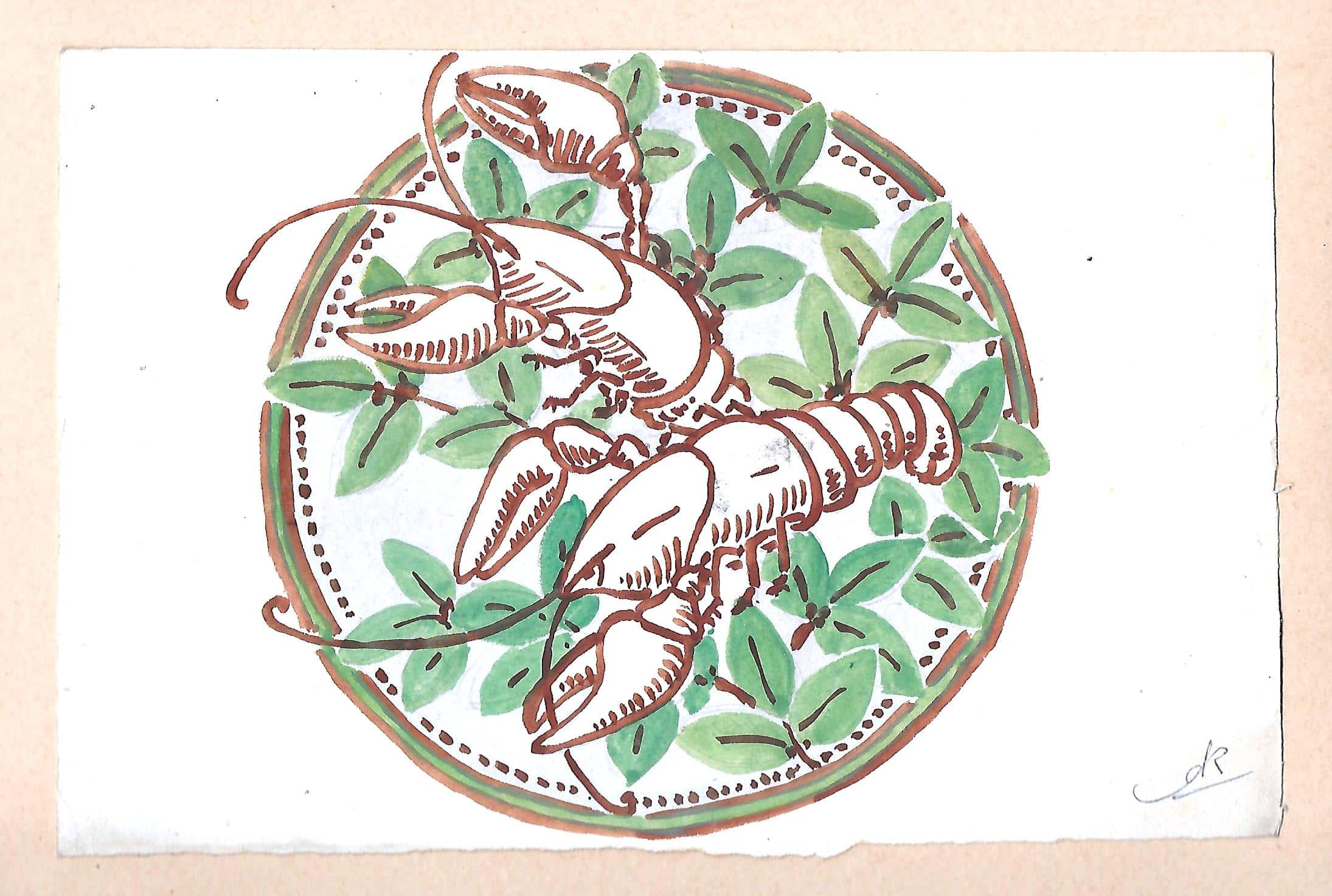
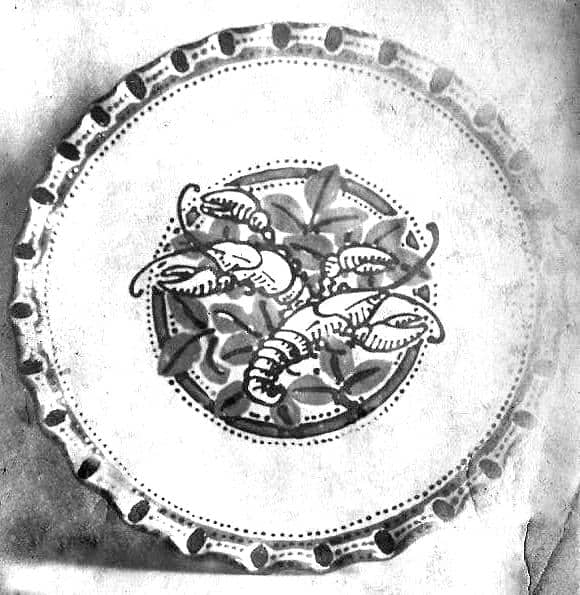
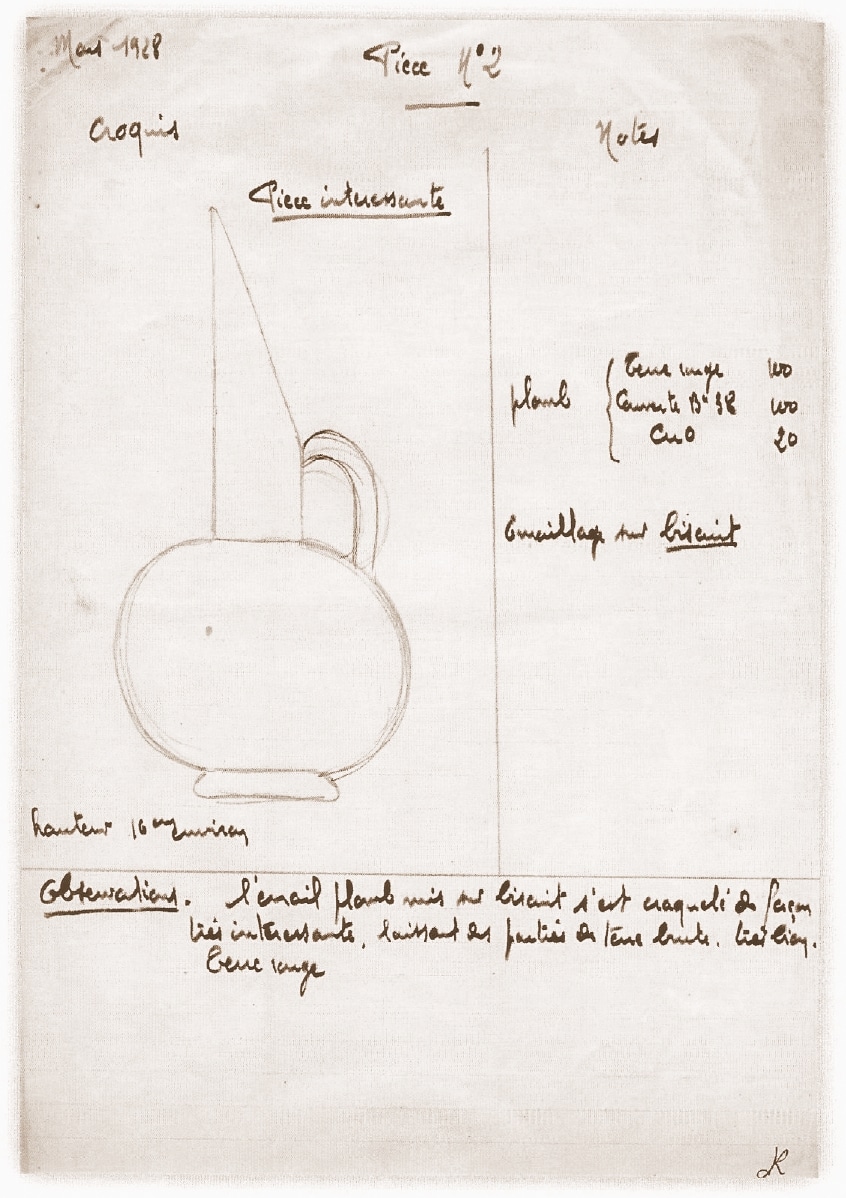
Rare example of a preliminary work drawn, then formatted, and photo archive of one of the first batches of 1926
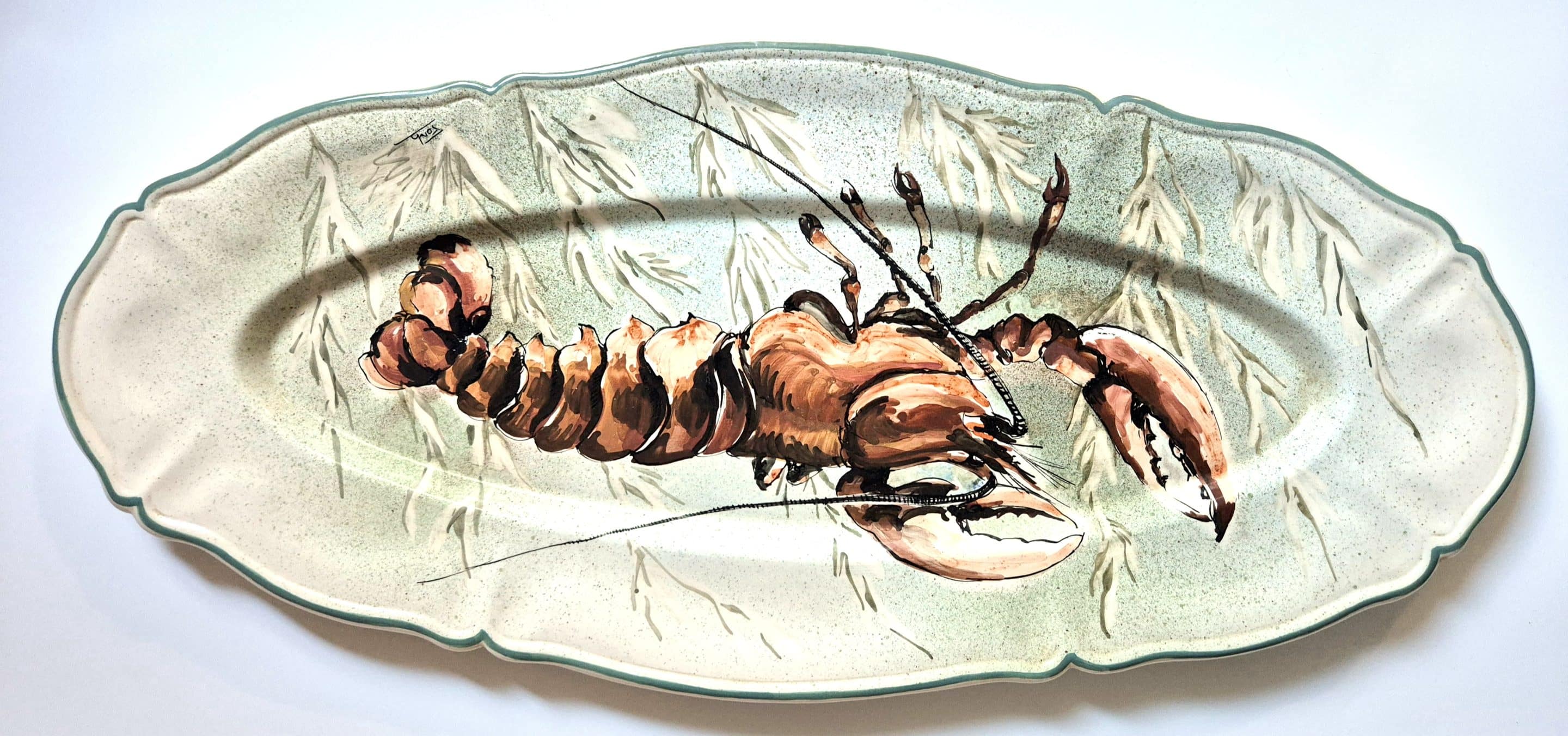
A theme dear to the Annecian René Anchierri since he will recreate in the fifties, dishes with crayfish, signed Forah.
Coll. Brosseau, Orleans
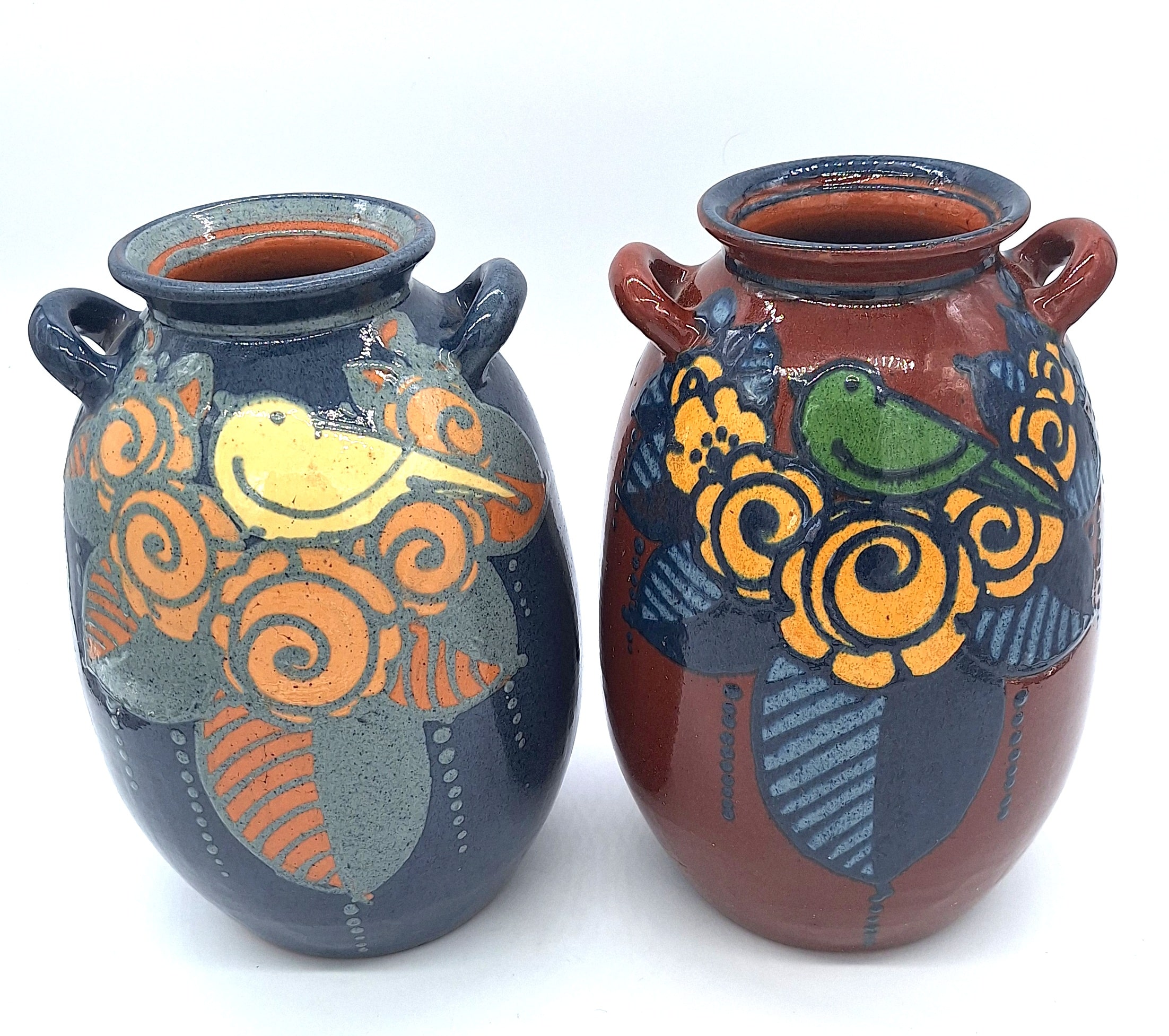
Vases signed PJ
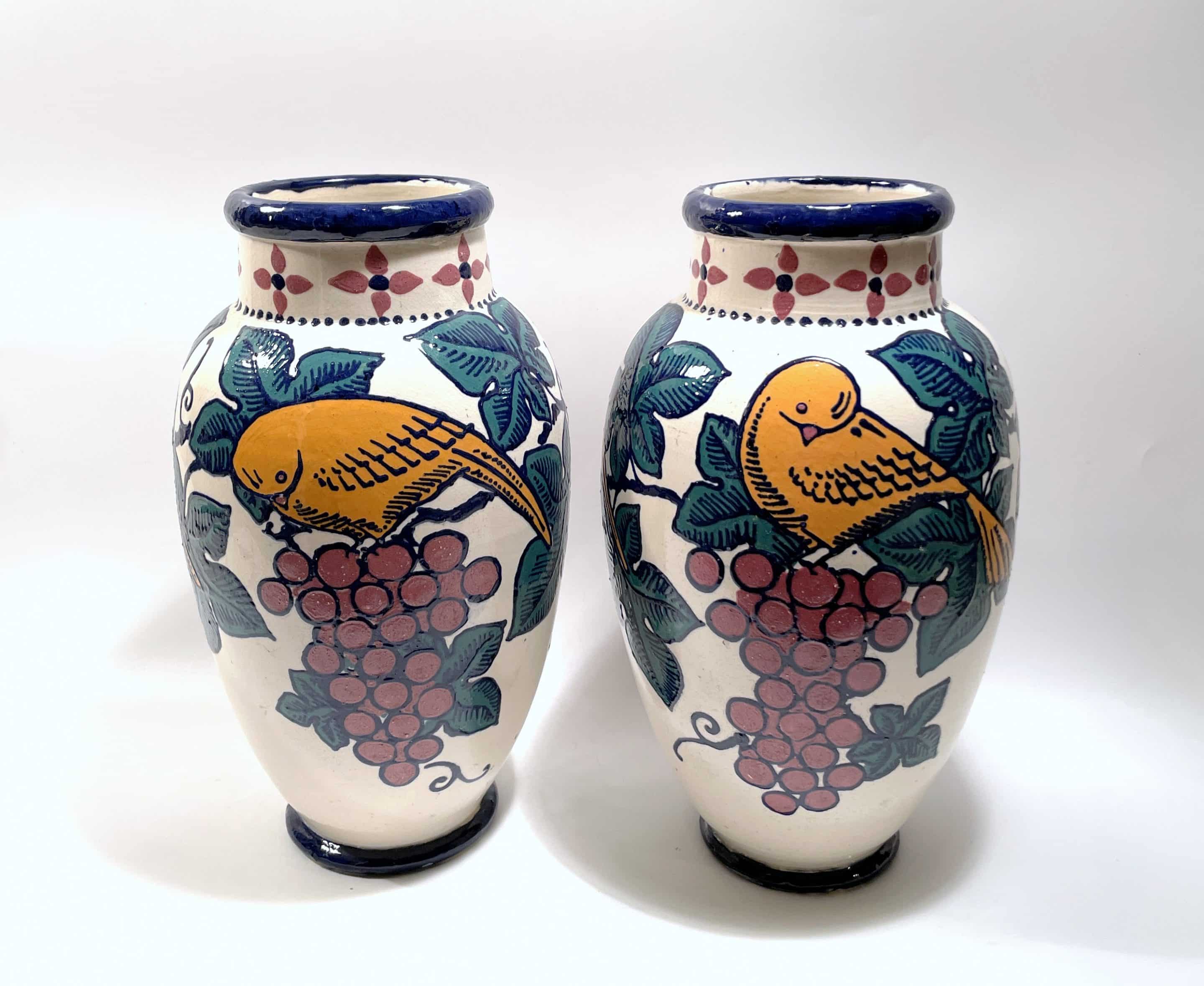
Pair of vases signed AR
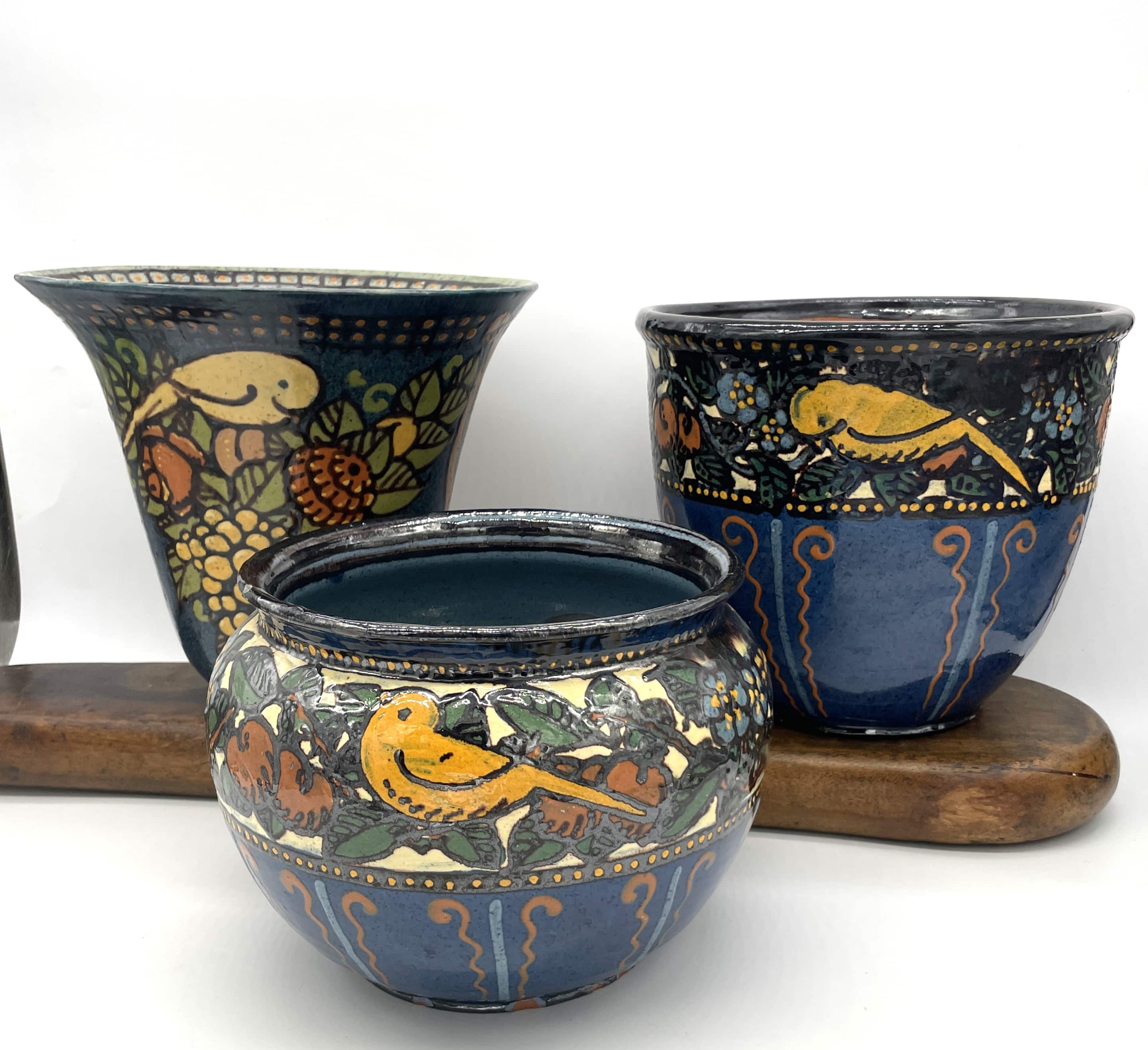
Vases signed PJ
René Anchierri gradually develops his very young company, he recruits workers and turners. First providing the decoration part alone, it is thus able to meet the controls and develops its own style. Continuing his research on the covered ones, he began to free himself from his past experiences and created collections that met the various aspirations of his clients.
Local anchoring
He will have the opportunity of first contact with the public in June 1927 at the fair-exhibition reconstructing the old Orleans.
Indeed, since 1922, on the boulevards of Verdun and Alexandre-Martin, in Campo Santo, and on the former Duportail barracks place Halmagrand, several hundred barracks are built. On these grounds of about ten hectares, close to the station and the city centre, a fair and exhibition awaits thousands of visitors who come to discover the know-how of local industrialists. This event will continue until today to become a traditional medieval market, also celebrating Jeanne d'Arc.
In that year, the organizing committee went so far as to reconstitute facades of houses of the « Old Orleans » in Campo Santo.
Sources: Archives Orléans Métropole
Further information Here
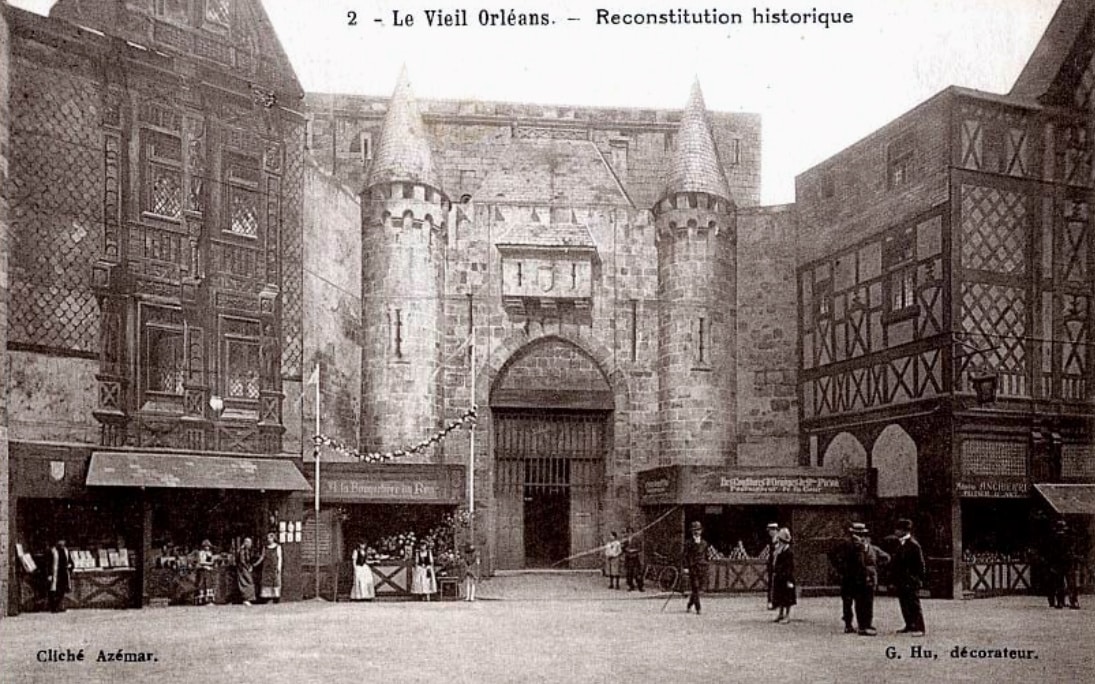
René Anchierri's Lechoppe is well placed in this reconstruction of the old Orleans in 1927.
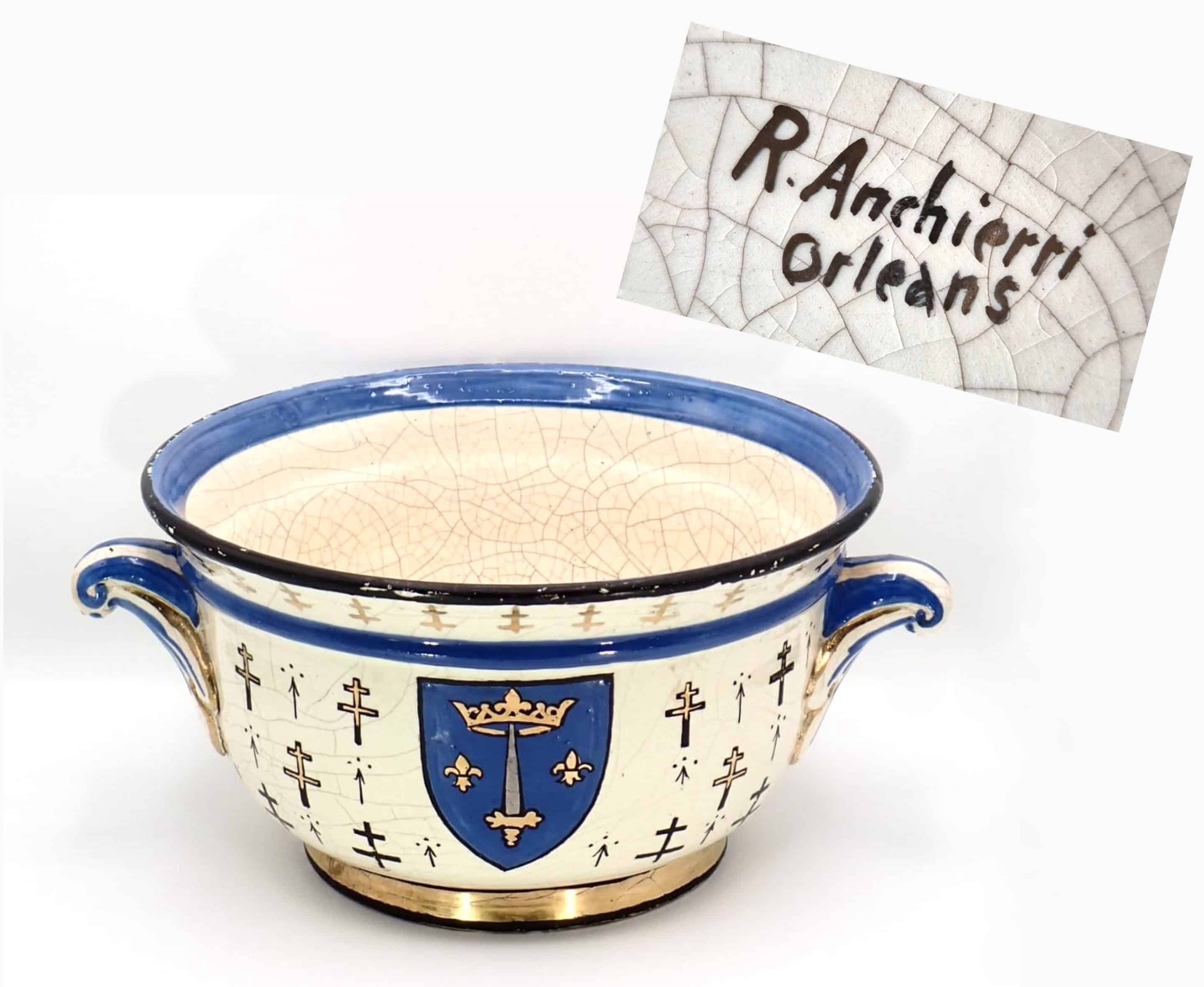
Cache-pot réalisé à l’occasion des fêtes johanniques, modèle des années 30/40, signature au nom complet situé Orléans.
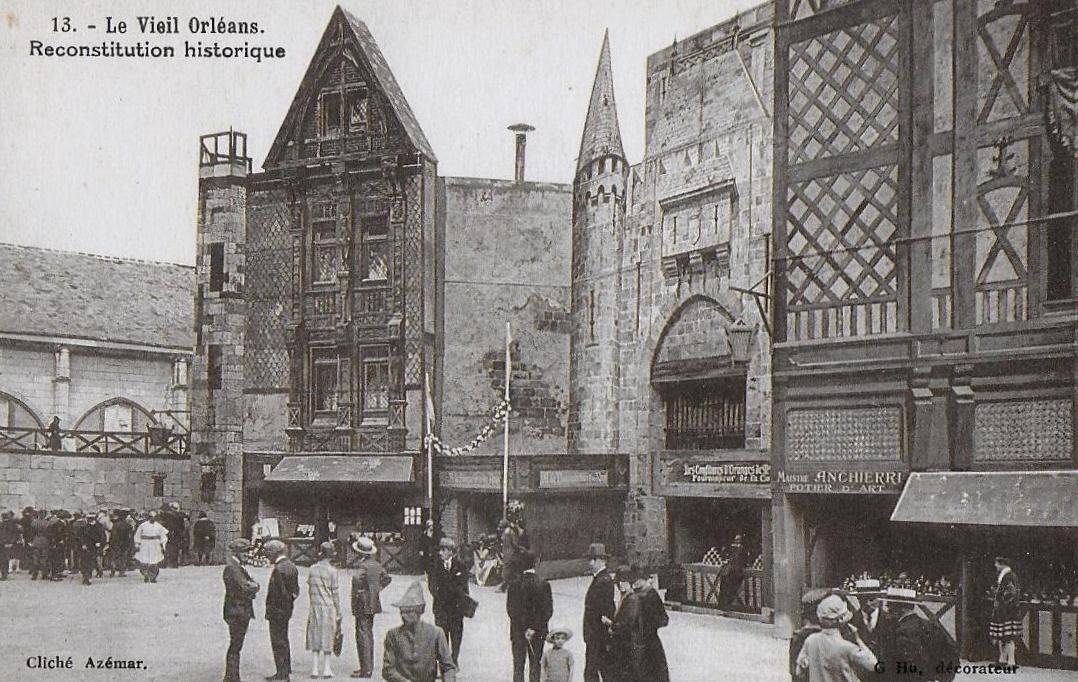
We can read on the right under the half-timbered crumbs: Anchierri Art potter