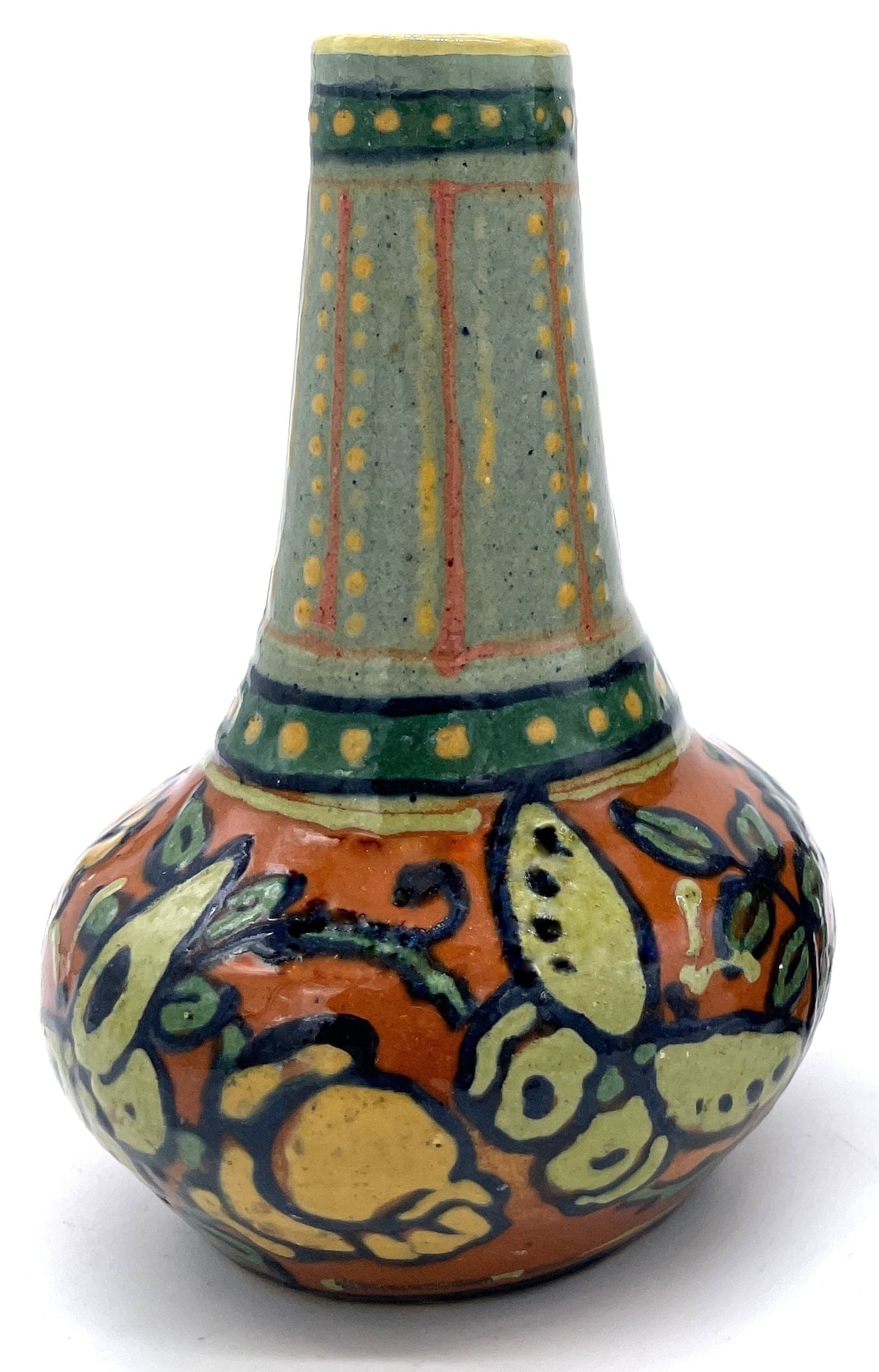
The Jacquet workshop
1920-1925
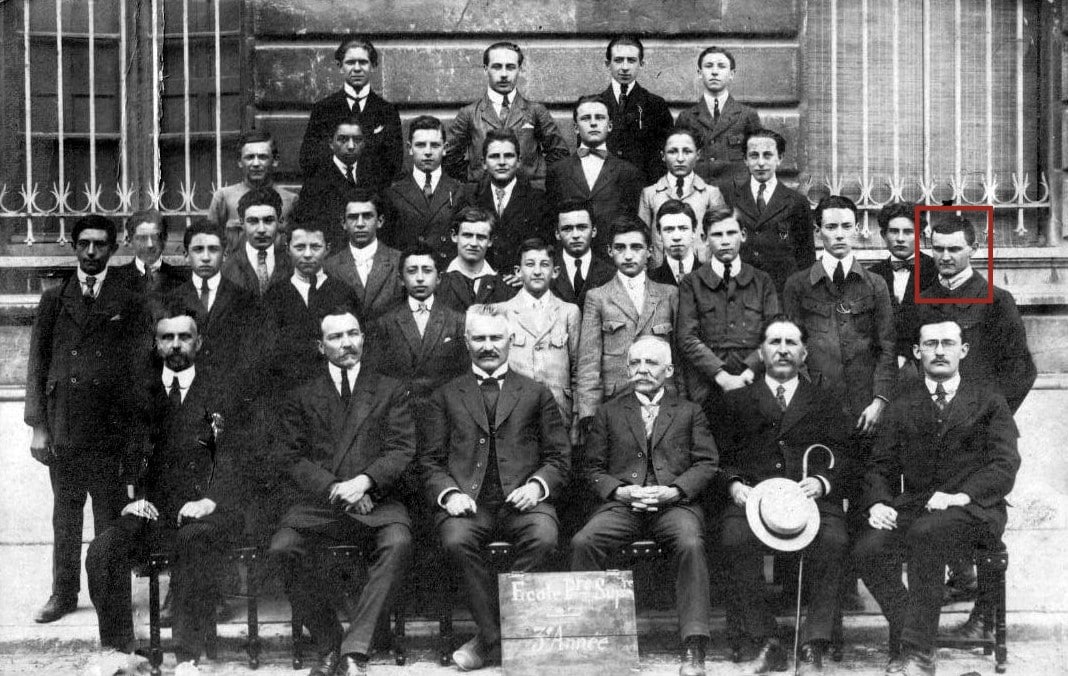
School year 1920-1921
Berthollet School (Annecy)
In 1920, in his third year of higher preparatory school for the Arts and Crafts Berthollet High School Annecy, he received the teaching of Paul Jacquet (1883-1968) for drawing and geometry. His teacher will quickly spot his talent for drawing in the school setting and offers him to work in his workshop after the classes.
A decisive meeting
Paul Jacquet had probably started a small production activity of artistic pottery, which he would pay workers to work, and which he would cook from time to time in the pottery he had already attended, namely Tripp and Hertz Annecy. (See chapter on these beginnings in ceramics) Here)
For some time now, he had rented a discount to Mrs Chevalier and Mr Delaunay. With the arrival of René Anchierri, and production now regular, he had an oven installed in 1921 and started cooking on site.
We know for sure that Jacquet used his professional background to find inspiration. In fact, this professor also a member of the office of the Société des Beaux-Arts de Haute-Savoie, co-organizes a drawing contest in this context, in order to encourage this practice and reward the most talented students.
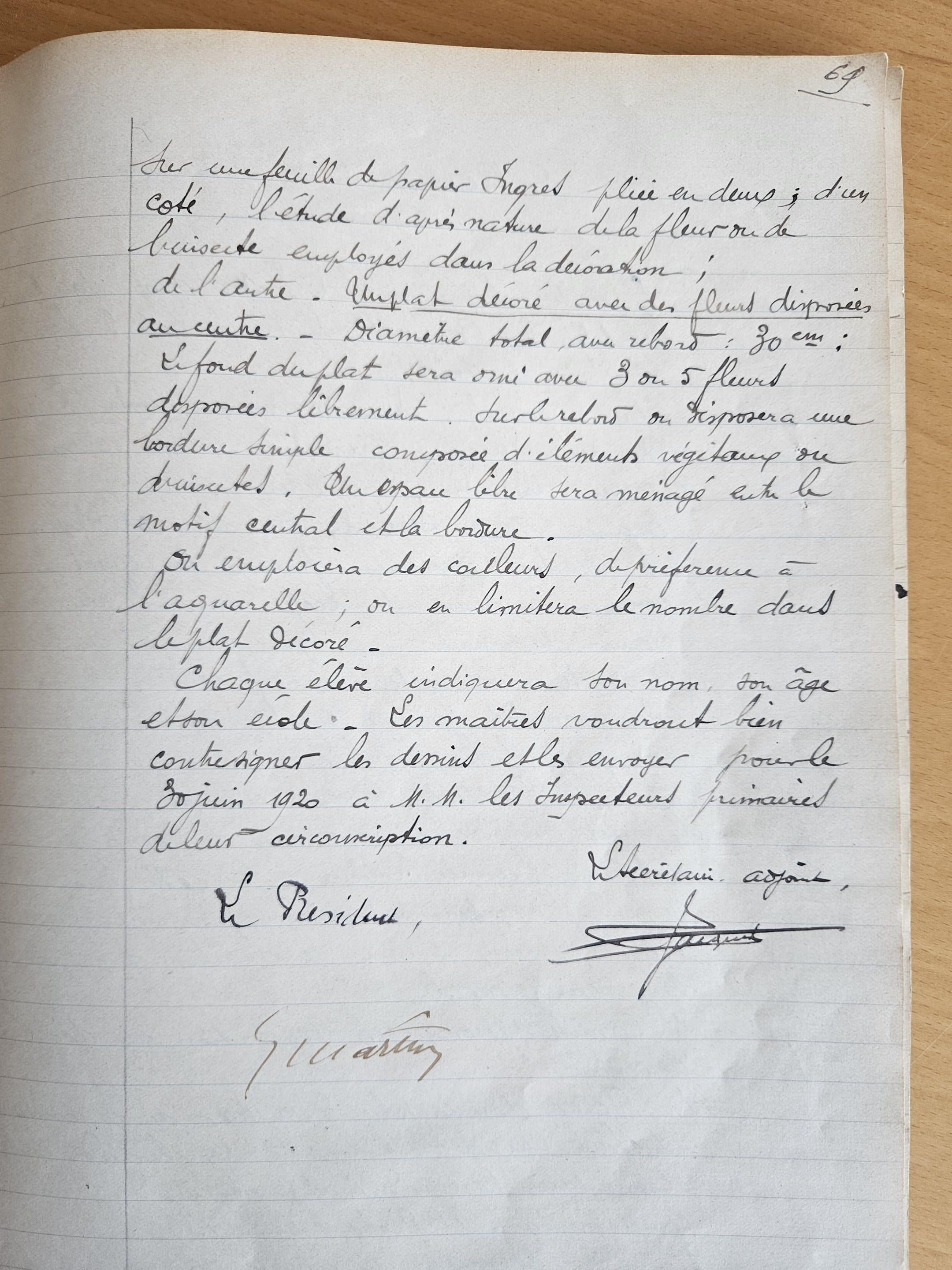
Named responsible for choosing the themes of the competition, he will direct part of it towards the decoration of ceramics:
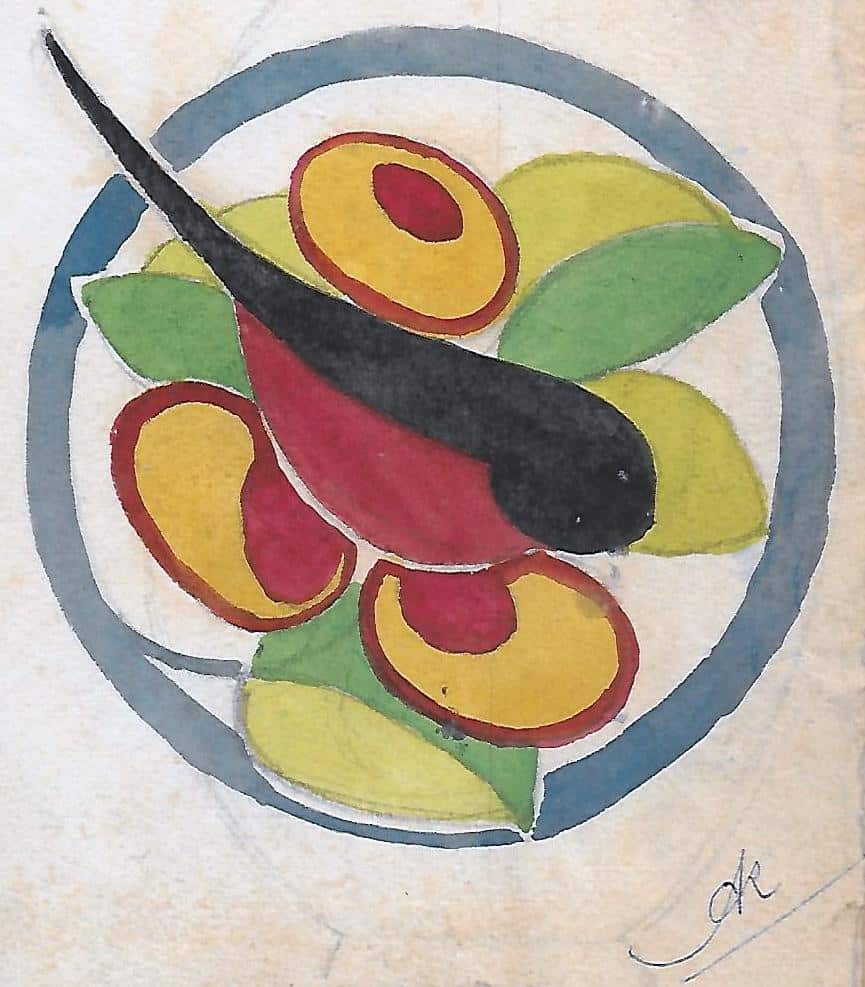
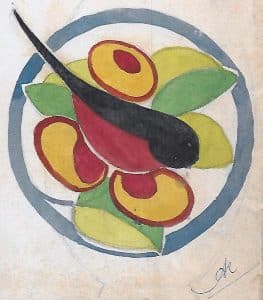
"An imposed drawing that will be made in each school under the supervision of the master comprising a sheet of Ingres paper folded in half; One side, [...] a dish decorated with flowers arranged in the center. Total diameter with edge: 30 cm. The bottom of the dish will be decorated with 3 or 5 flowers arranged freely. On the edge there will be a simple border composed of plant elements or insects."
A career is emerging
René Anchierri thus begins by learning to turn, decorating the pieces before cooking, as attests a salary sheet dated 1920 detailing the price of scraping and barling (use of the barolet, small earth crate with a feather containing an engobe).
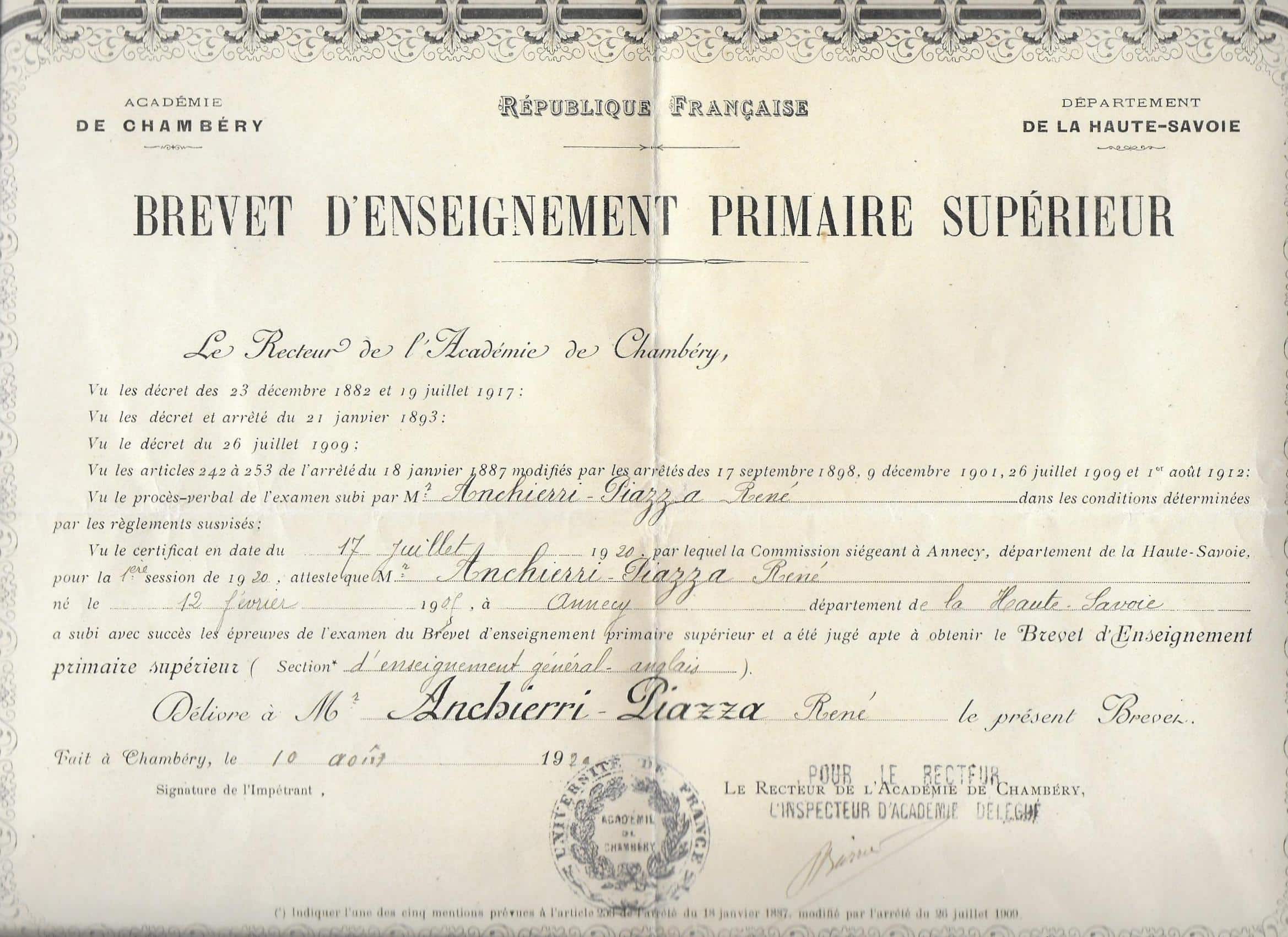
In 1921, at the age of 16, he completed his study cycle and obtained Higher Primary Education To become a teacher, a prestigious position at the time, which he will never exercise.
Ceramics has become both a passion and a profession, and therefore engages a fruitful collaboration of several years with Paul Jacquet.
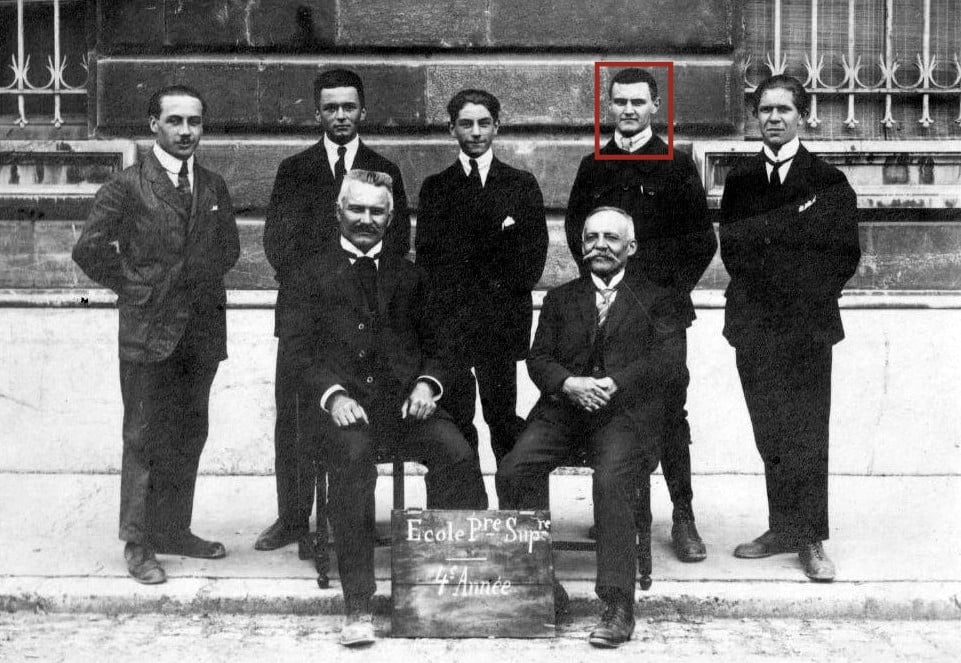
School year 1921-1922 Berthollet School (Annecy)
This one forms it and opens the doors to the artistic milieu that it is near, but also to the Parisian museums that they sometimes visit together. In return, Anchierri will put his energy and creativity at the service of his mentor.
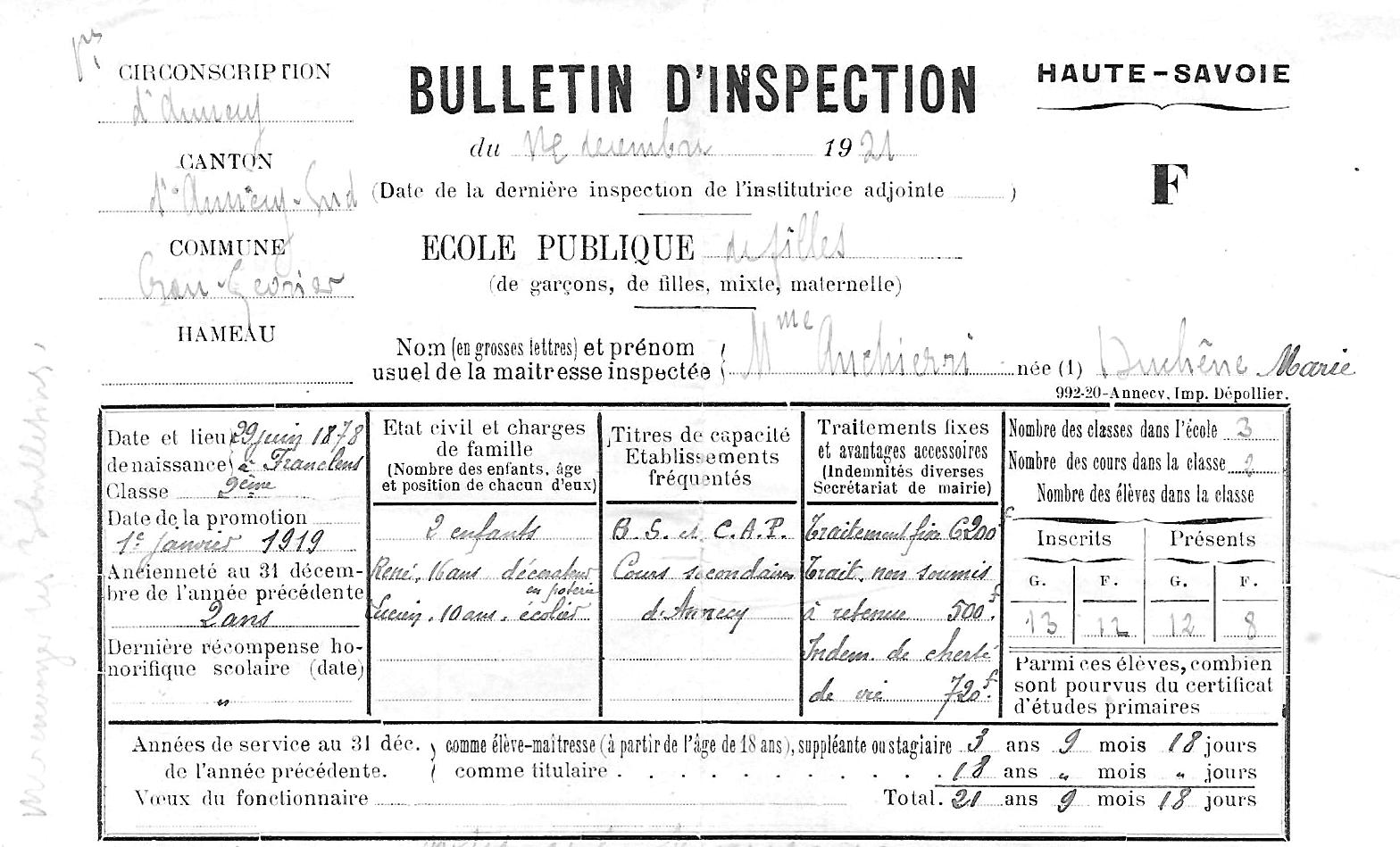
In December 1921, Anchierri was officially registered as a "pottery decorator" at the National Education Department, as evidenced by his mother's inspection bulletin. (See extract Here)
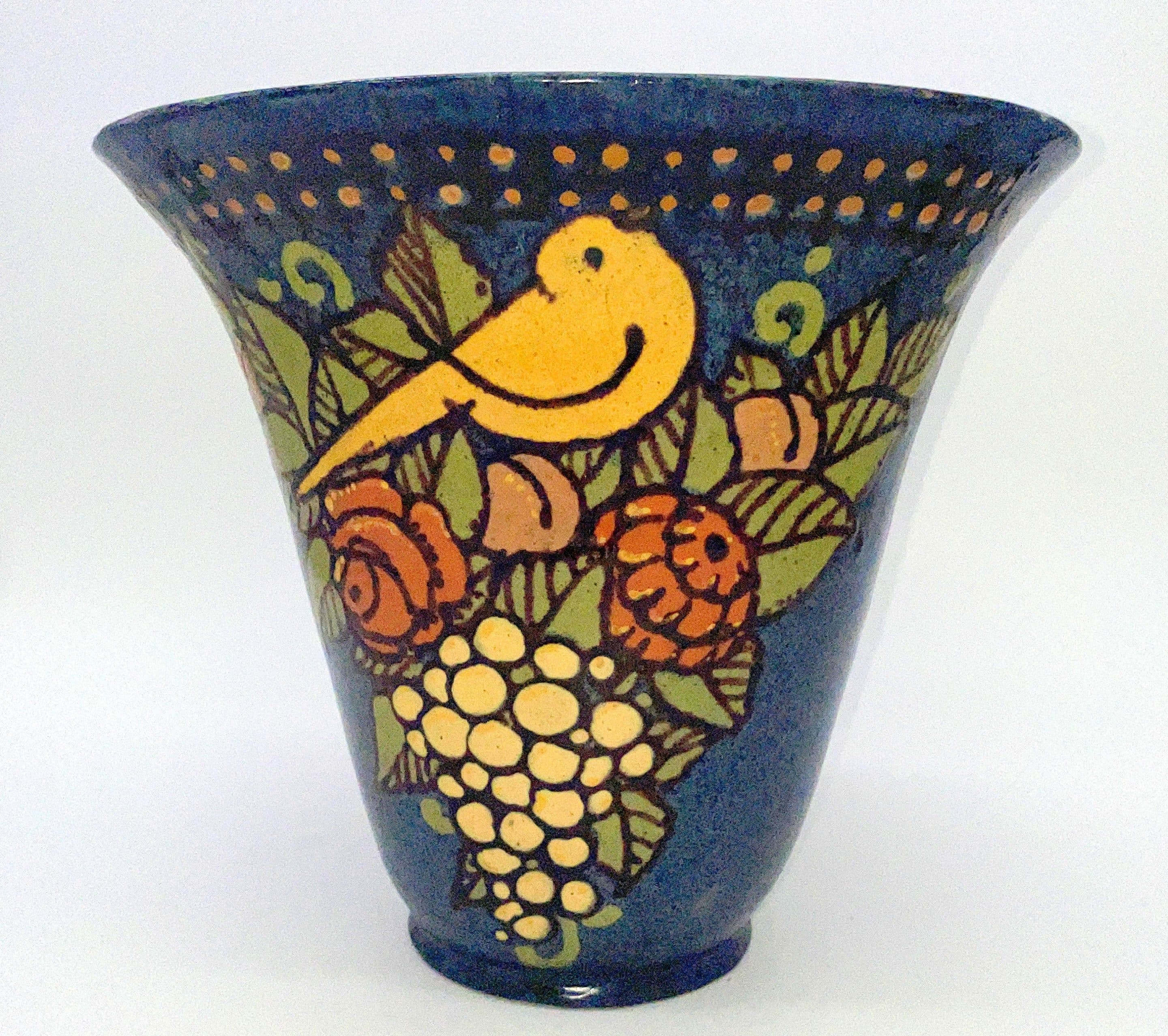
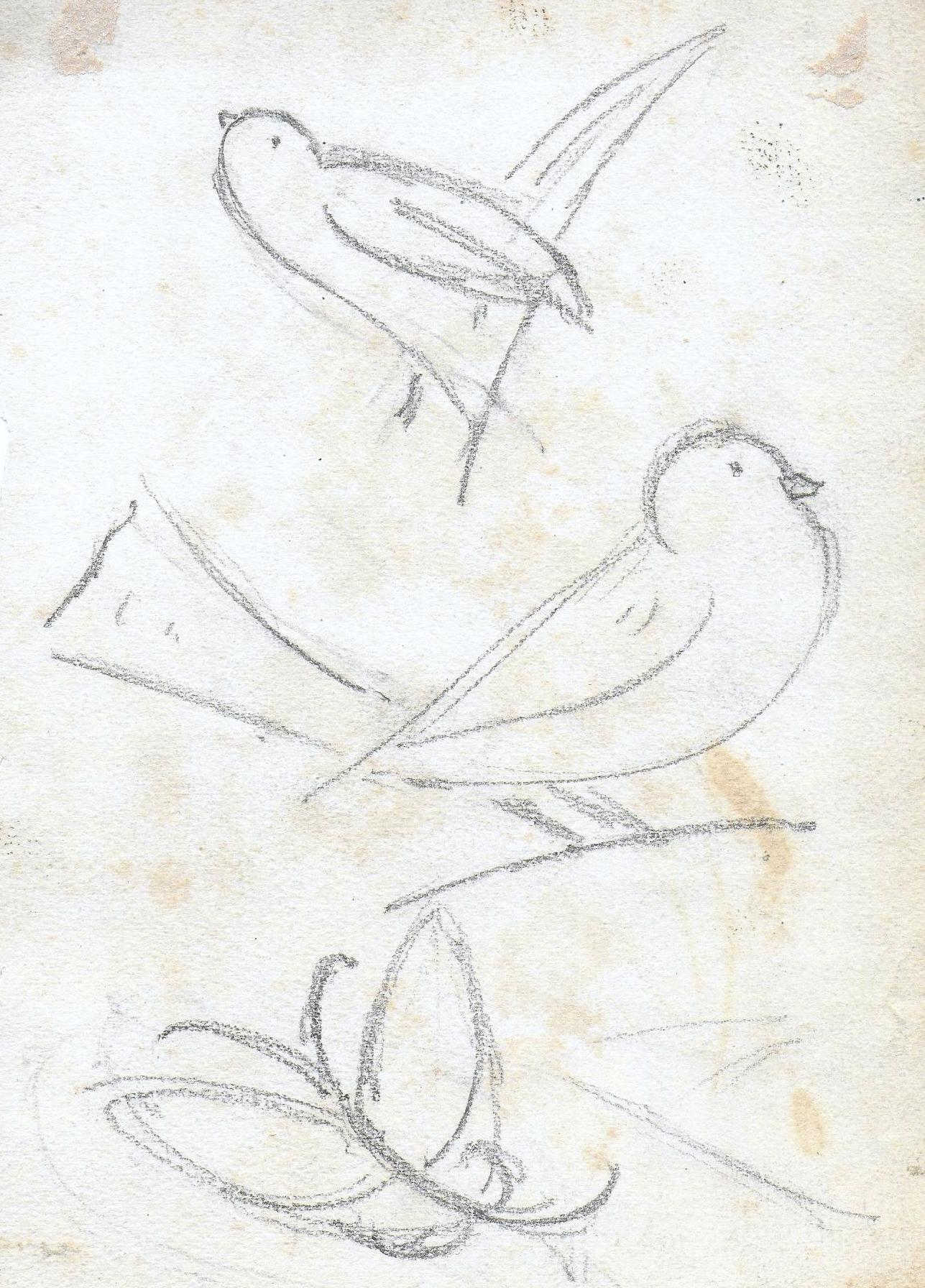
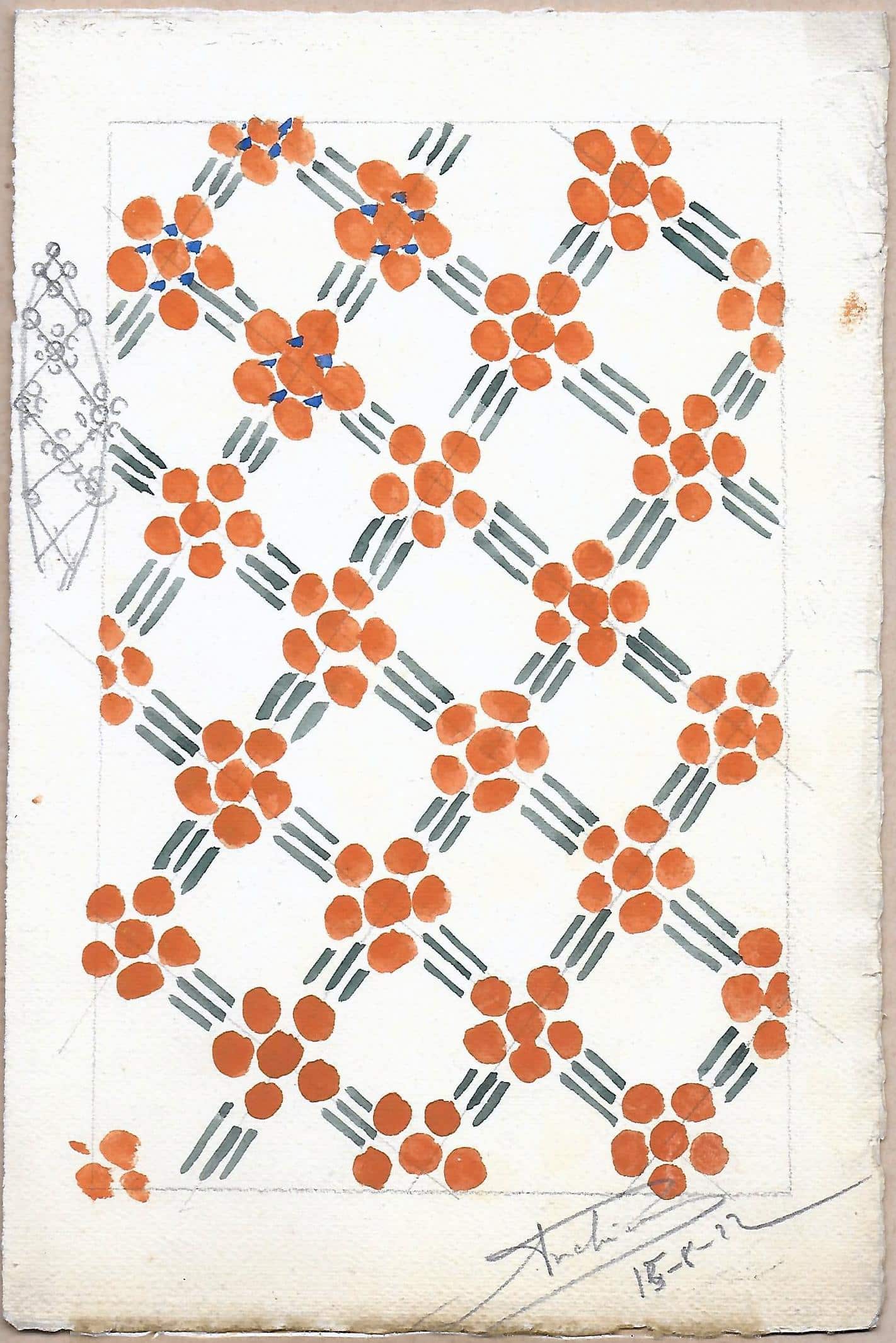
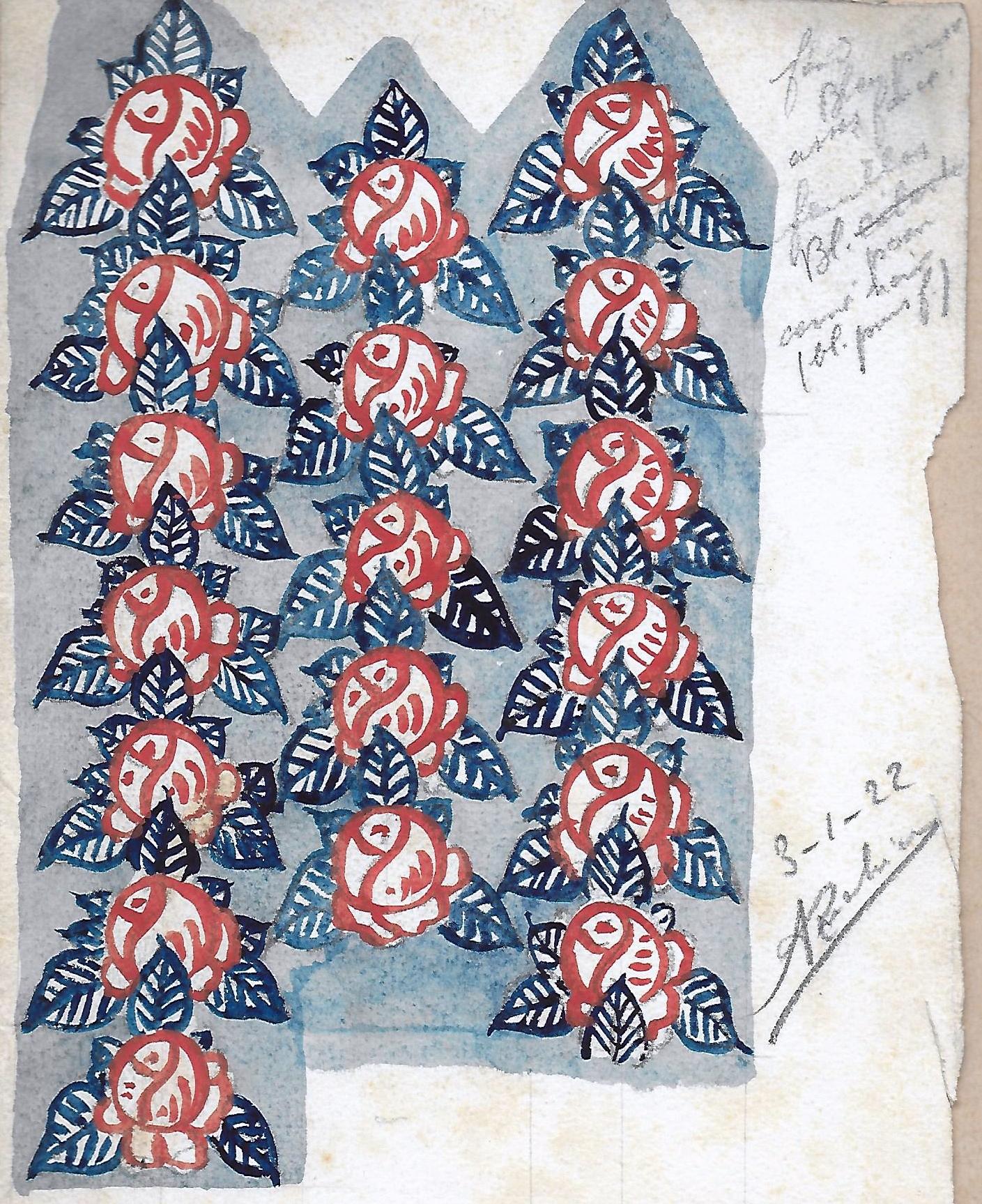
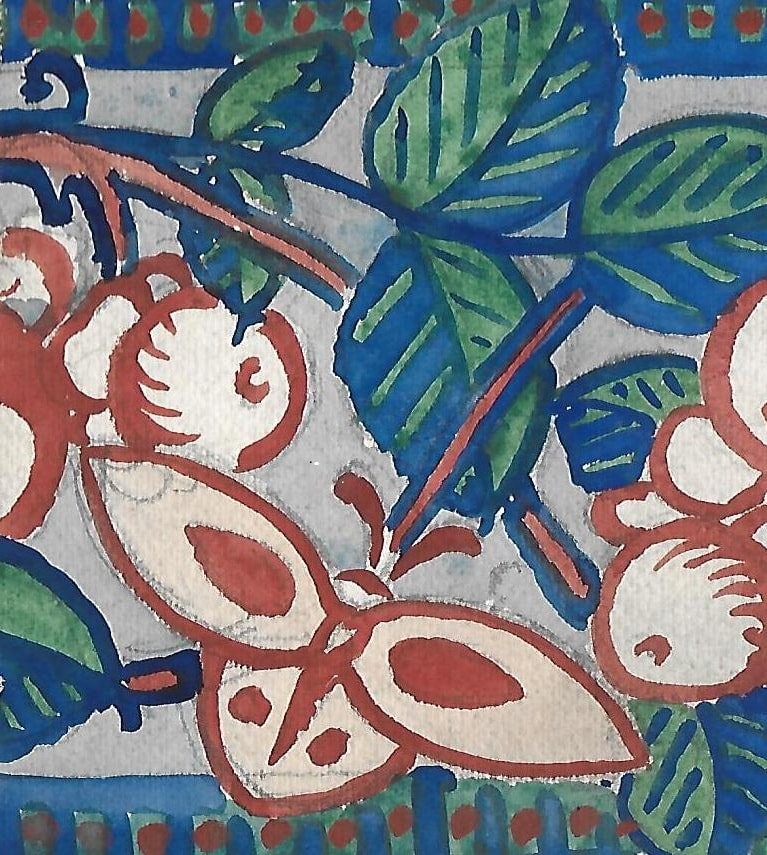
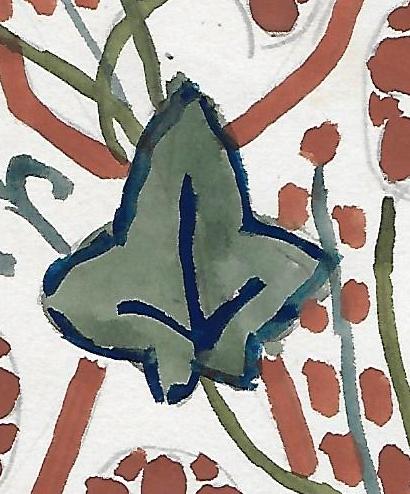
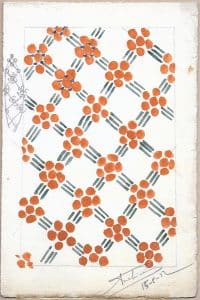
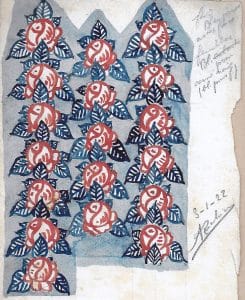
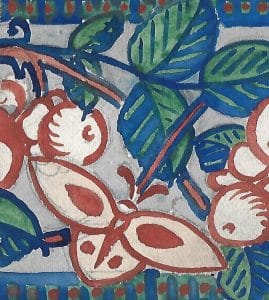
Between all the arts, drawing remains the preferred way of expression, which serves as a laboratory of experimentation: it makes friezes, bandages, details or overviews, animal representations, as many sets as we will find, partly or entirely on the ceramics that it will create in the years that follow.
This corpus of dozens of preparatory drawings preserved in the family shows the importance of the role he held in the Jacquet workshop by providing his employer with a kind of catalogue from which he could draw to decide the models.
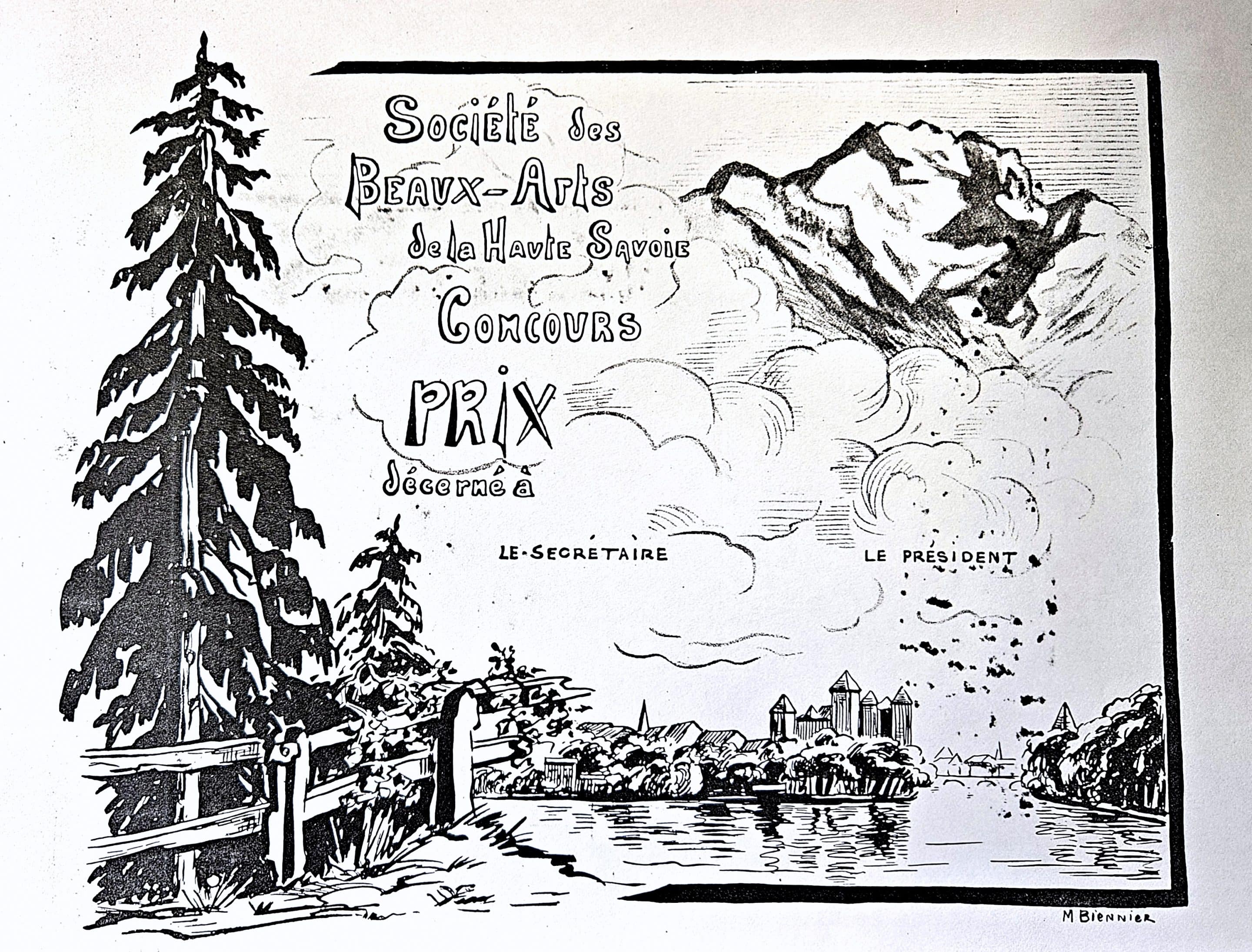
That same year 1921, René Anchierri won the first prizes in free drawing and drawing imposed during the competition of the Higher Primary Schools, but also 2 first prizes in the first competition organized by the Société des Beaux-Arts de Haute-Savoie in the decorative arts and still life categories. The results of this competition can be read in the proceedings of the committee meeting of 1 and 8 July 1921. Here and There.
He also exhibited a decorative frieze in watercolour at the 1st Salon of the same Society that summer, among 88 exhibitors and 383 works. (and nearly 1200 visitors!)
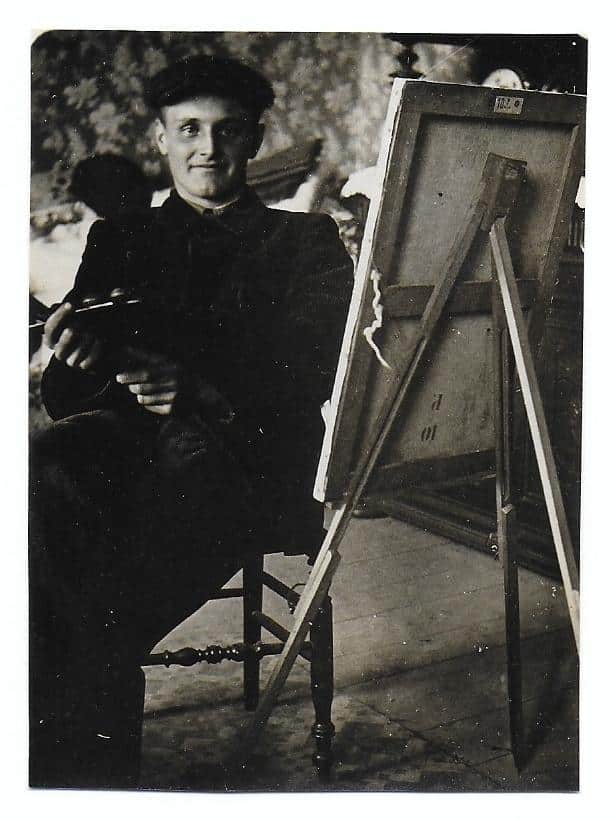
René Anchierri at 18 in front of his easel (1923)
The young Anchierri quickly perfects his art, develops his practice and can therefore respond to the orders given to him by Jacquet, but also create his own ceramic models that he does not sign by his name.
The period 1921-1924 is certainly the best of the Jacquet workshop, we can convince ourselves by consulting the biography we dedicate to it Here on this site.
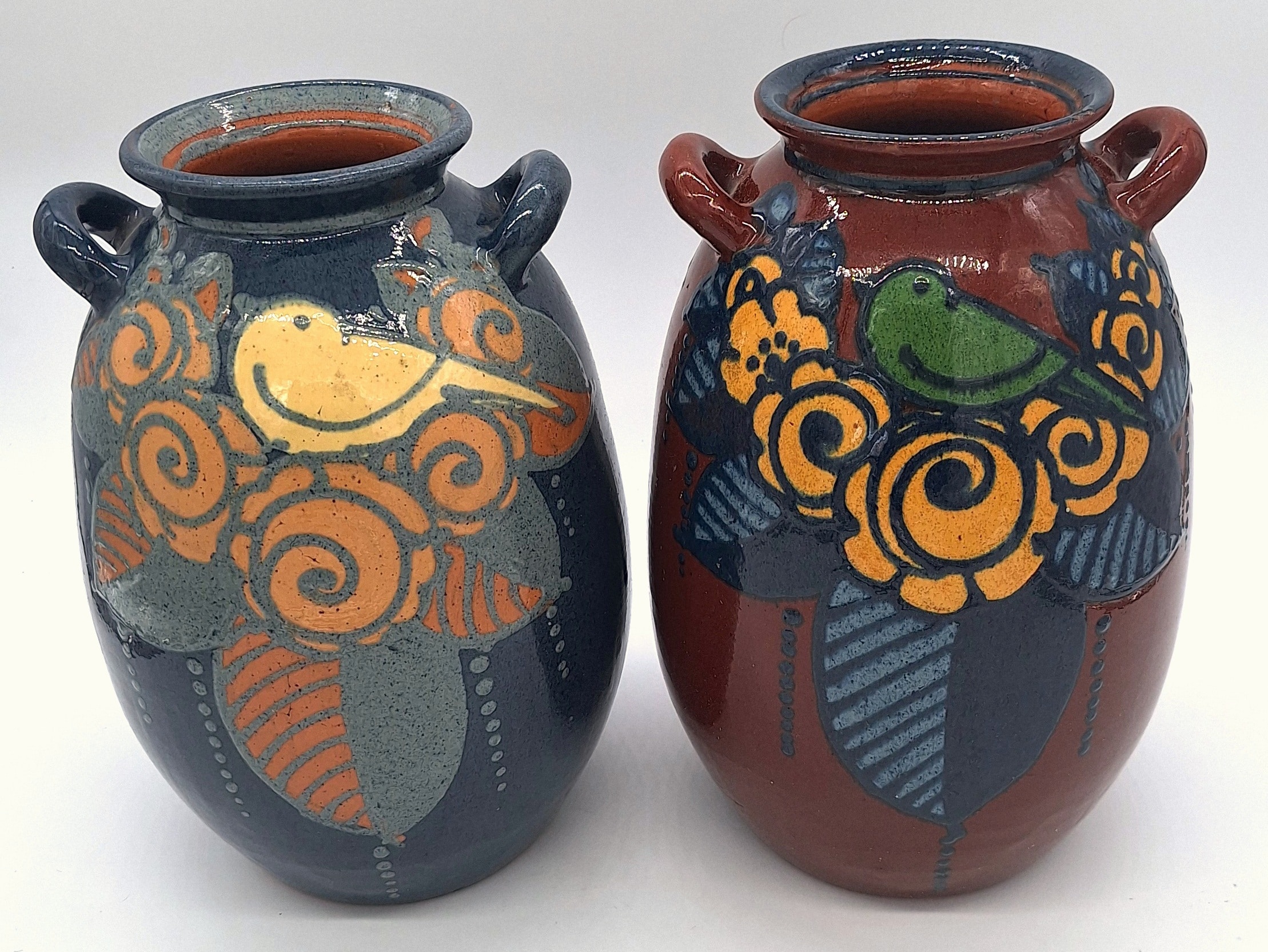
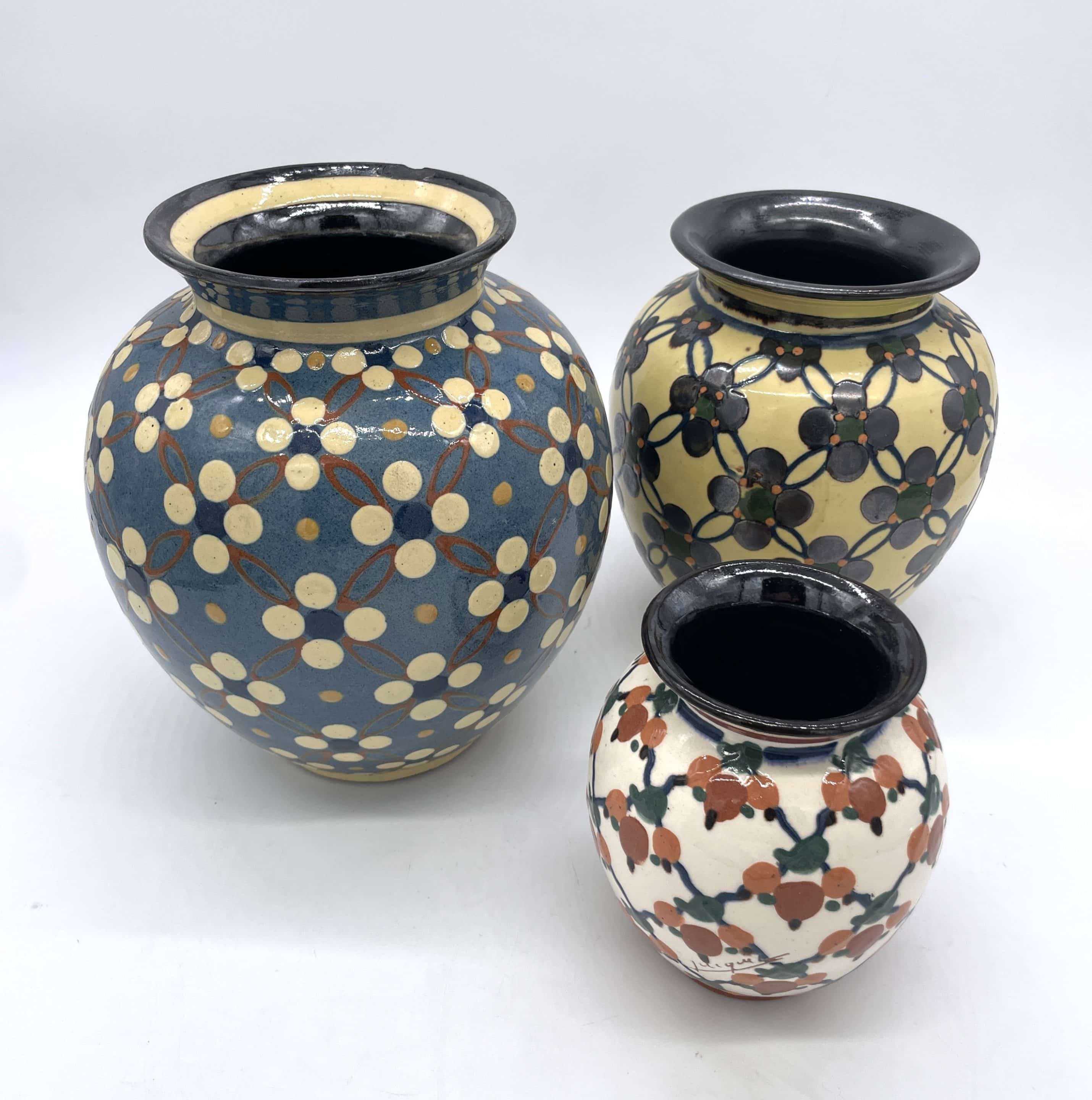
By choosing from Anchierri's drawings and performing in parallel a technical research work on the colours and enamelling as well as the shape of the models, the two men will gradually develop a characteristic style that is precise and diversifying both over the collection.
Anchierri, a natural taciturn, untalented and with a great working force, becomes the second ideal for Jacquet and gradually, the real host of this workshop.
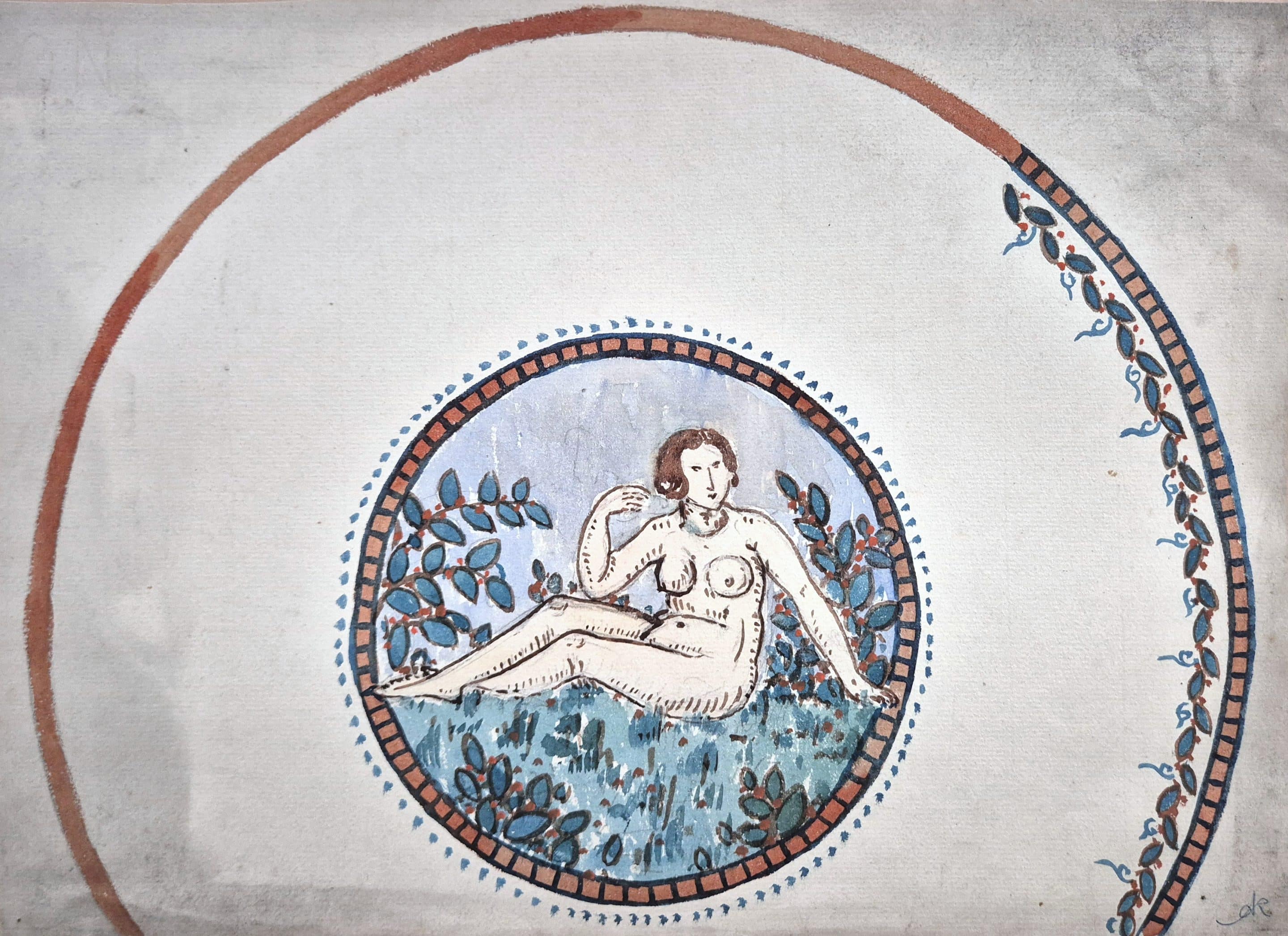
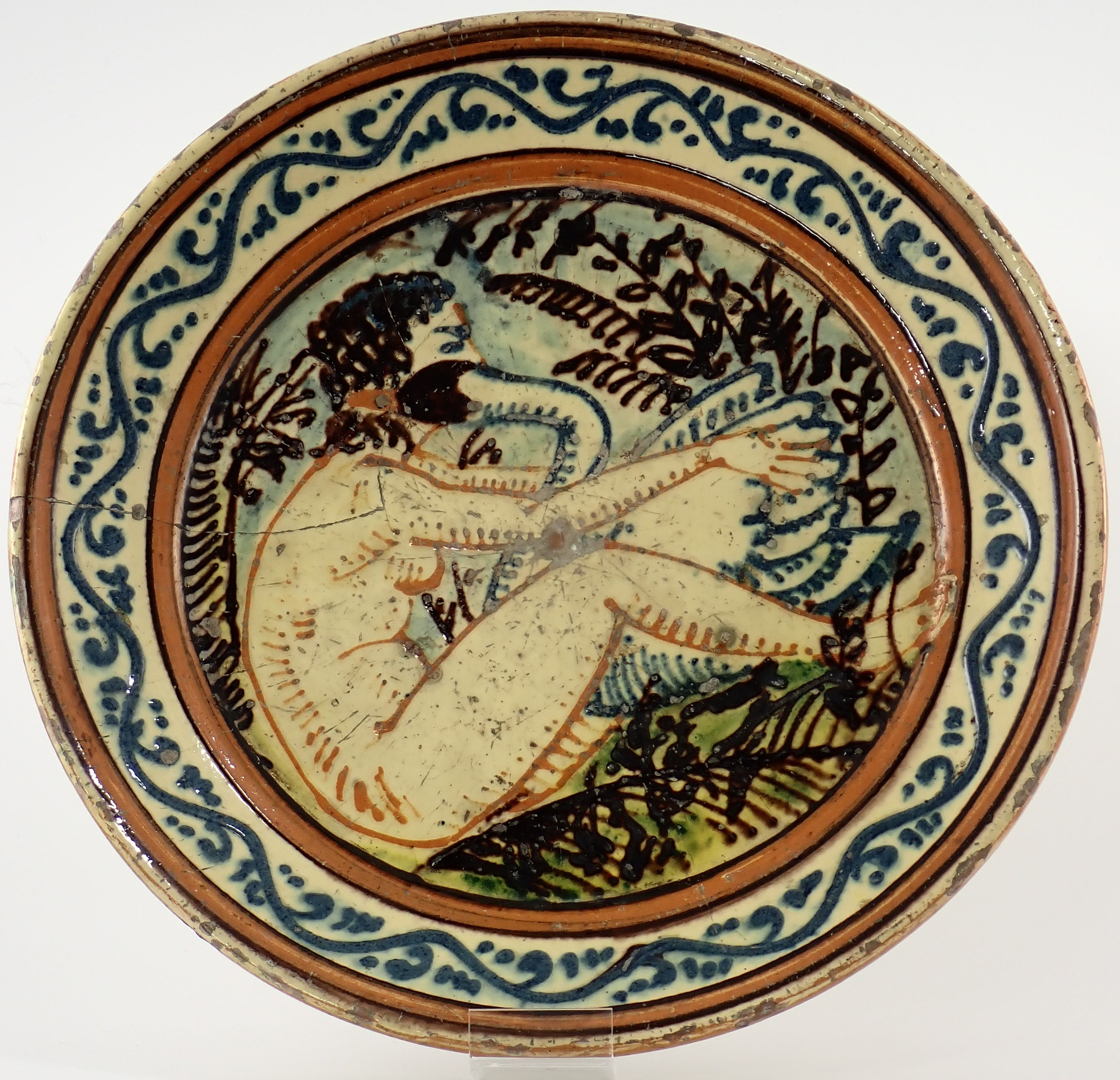
There are few anthropomorphic representations, with the exception of rare works inspired by the ancient Greek repertoire.
Left: Flat drawing representing a nude signed René Anchierri
Right: Leda and the swan signed Paul Jacquet Coll. Museums of Annecy
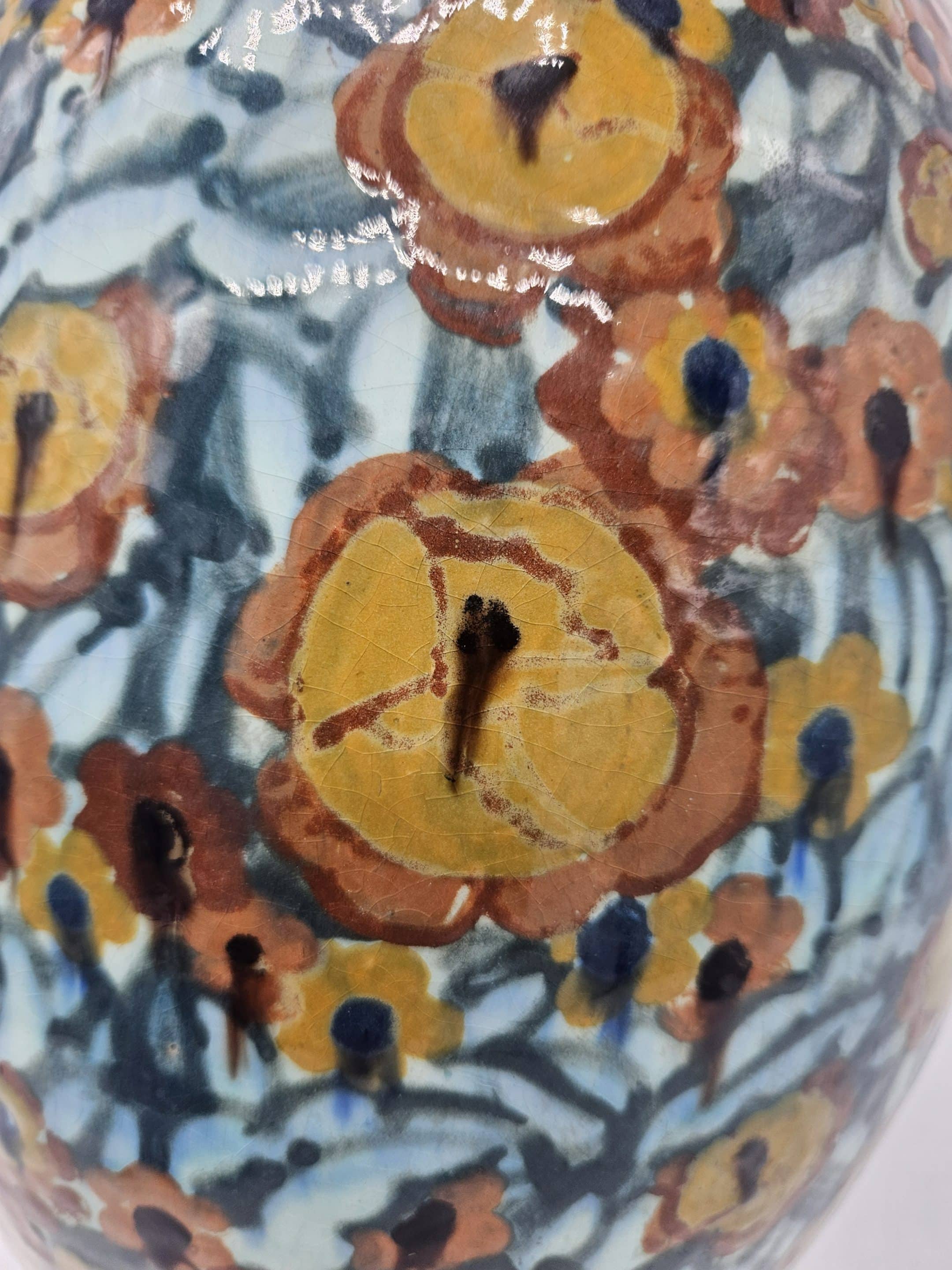
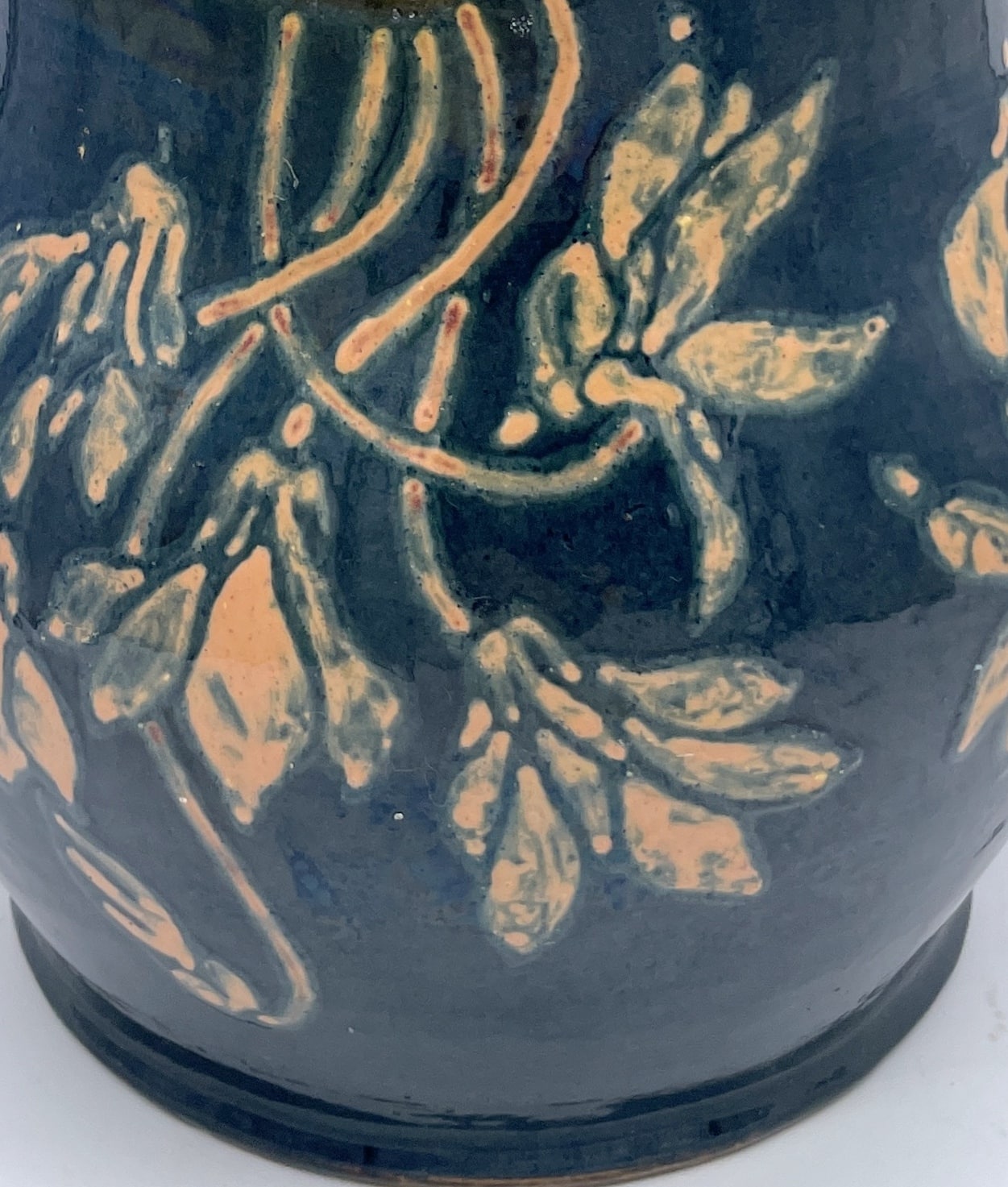
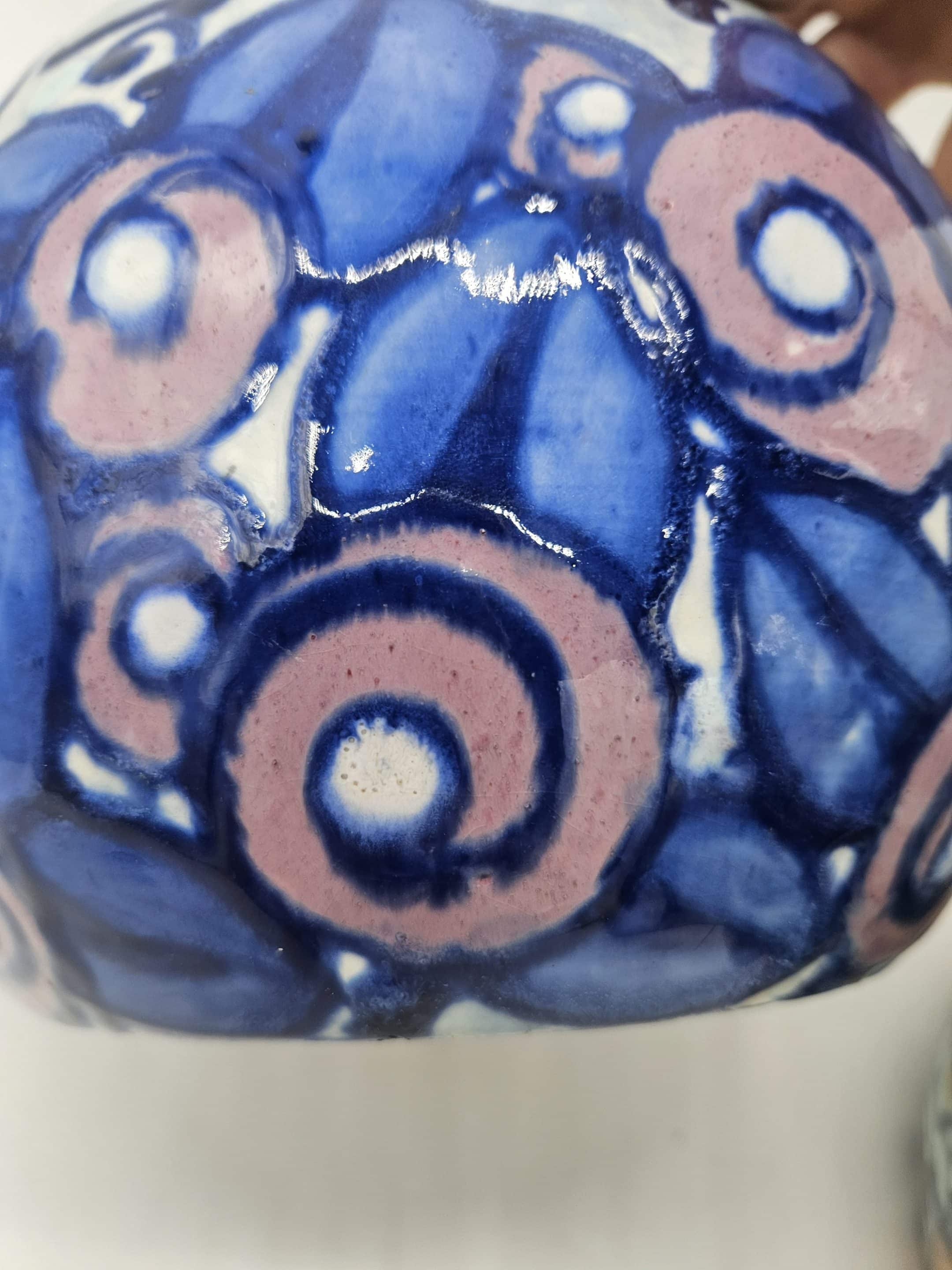
For decors, the sources of inspiration are multiple, fauna and flora, or geometric abstraction in the taste of the styles of the moment, especially Art Deco.
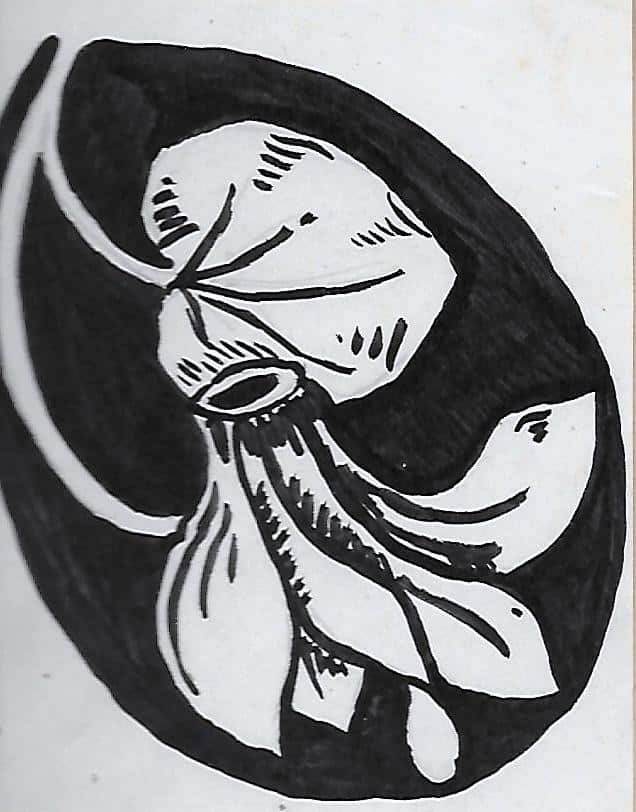
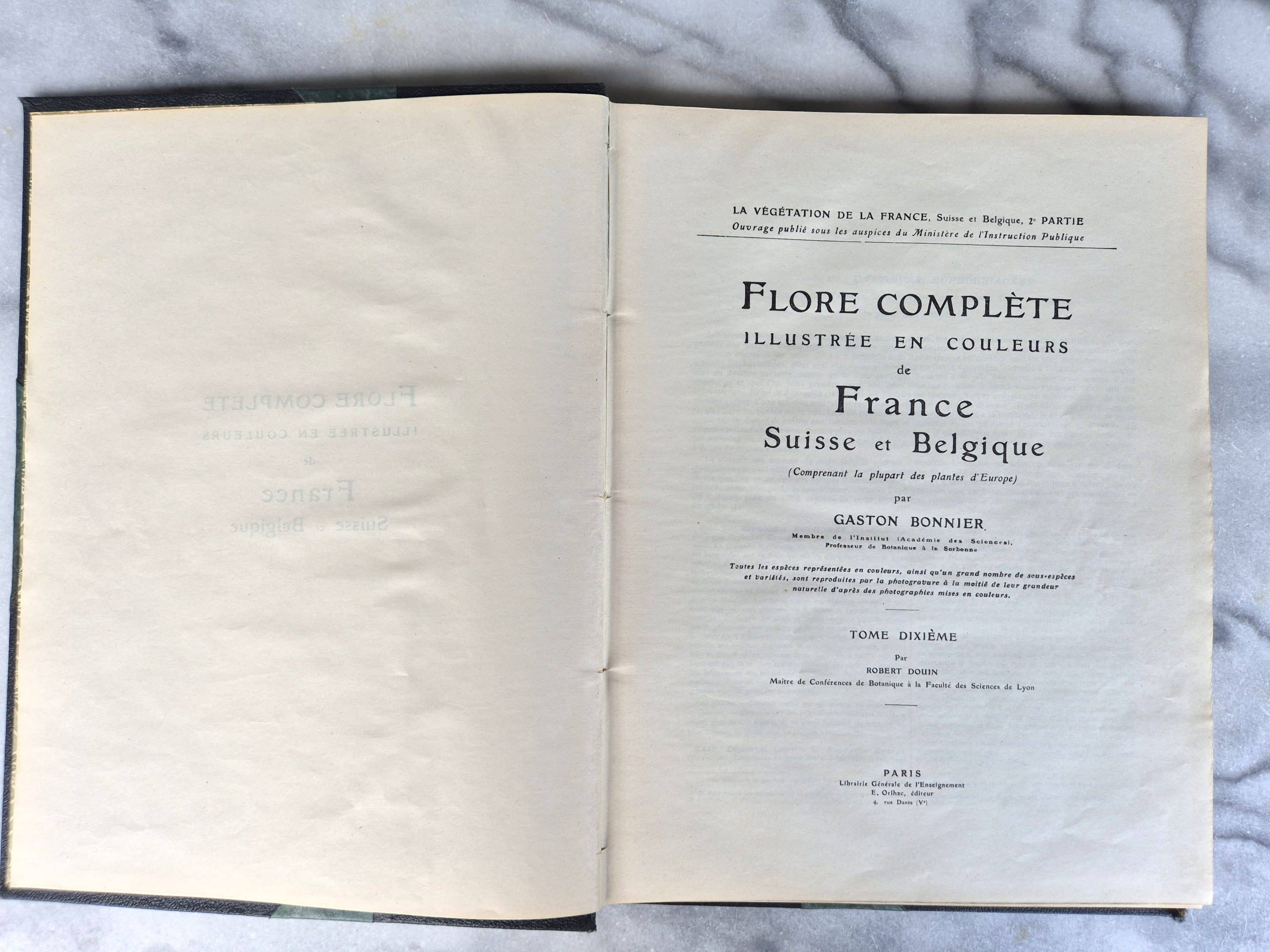
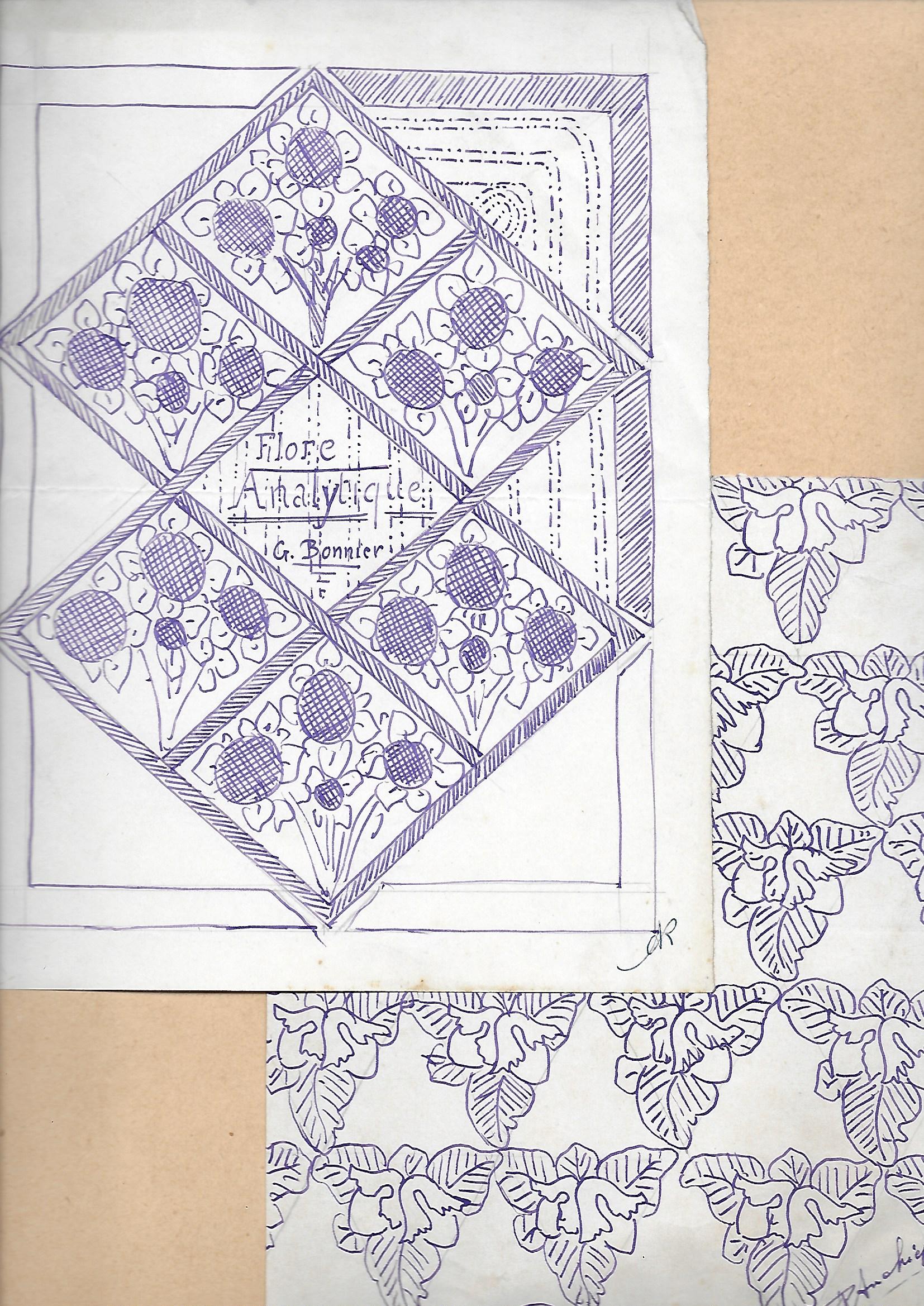
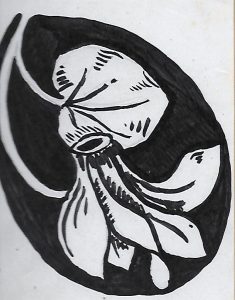
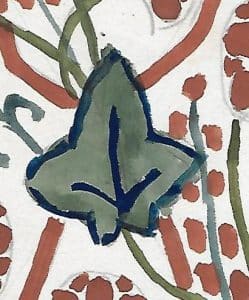
René Anchierri, we have seen before, practiced botany as an amateur and often refers to plants and flowers that he transcribed from the Flora of Gaston Bonnier of which he has a copy.
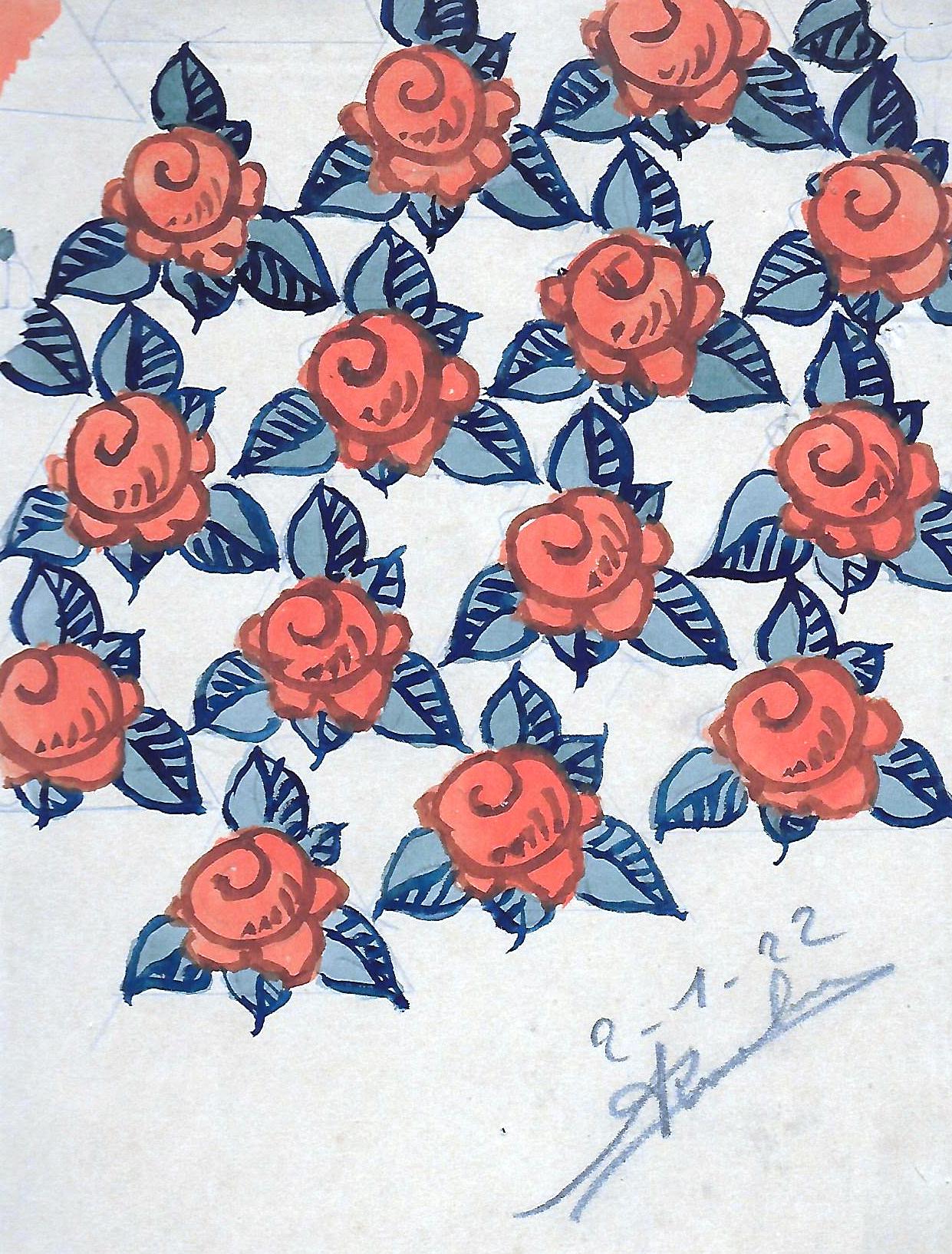
Here are drawings by René Anchierri after Bonnier's work.
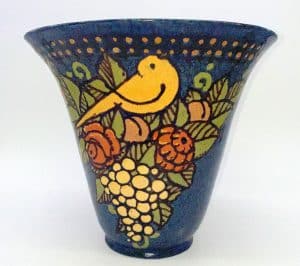
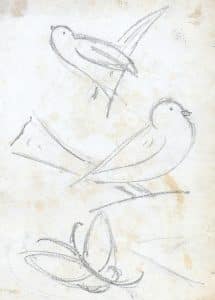
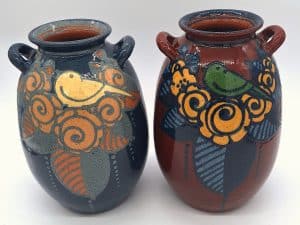
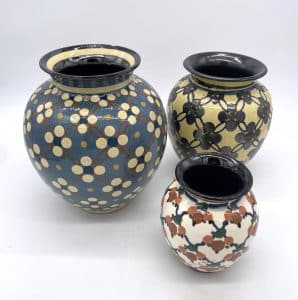
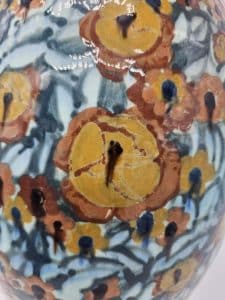
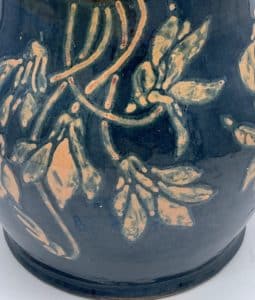
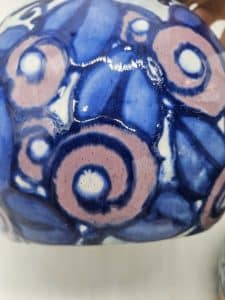
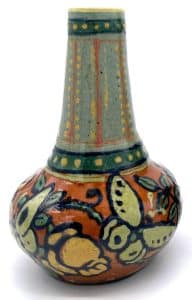
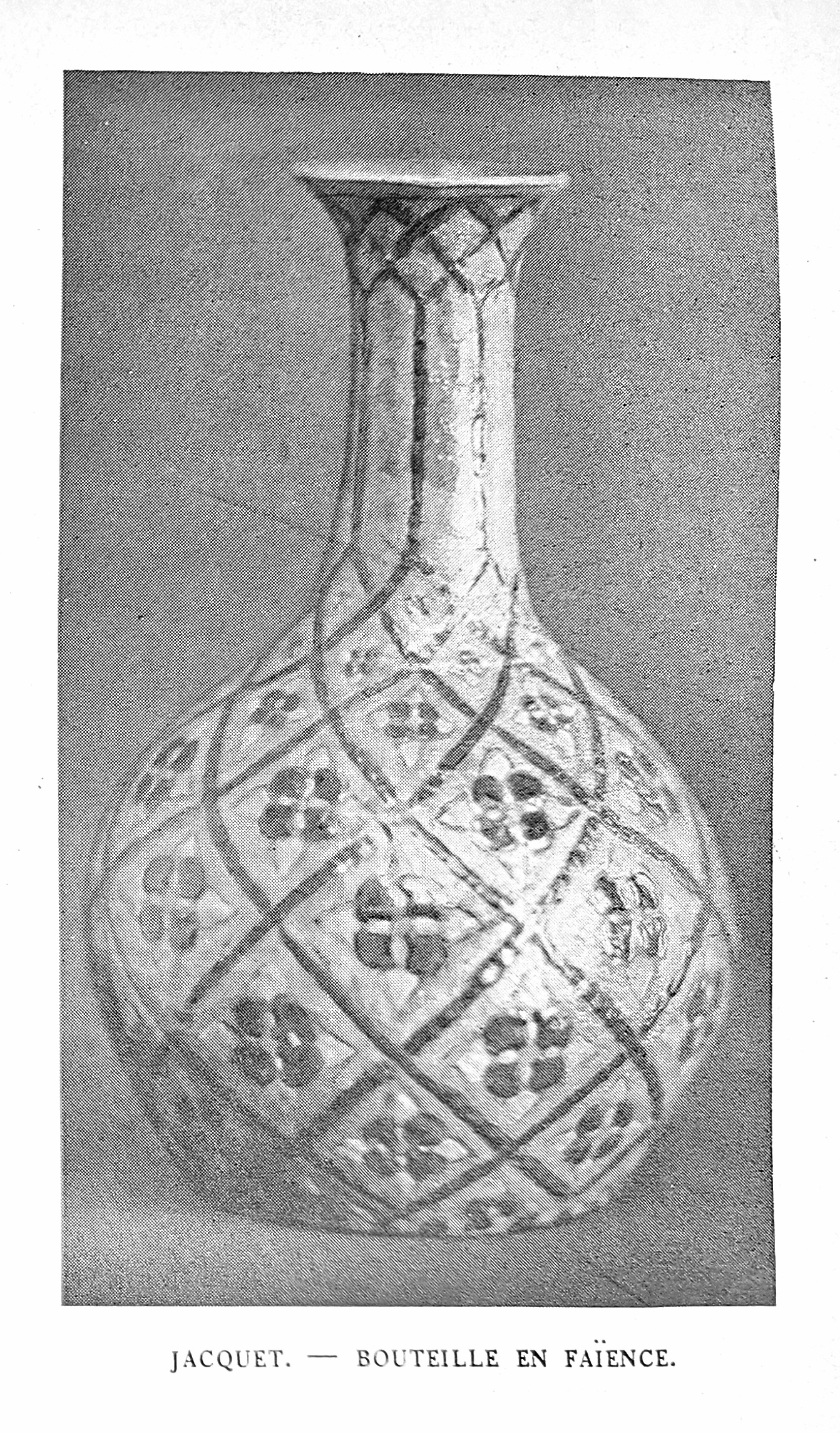
Vase by Paul Jacquet, illustrating the book "The Modern Decorative Arts" by Gaston Quénioux, Larousse 1925.
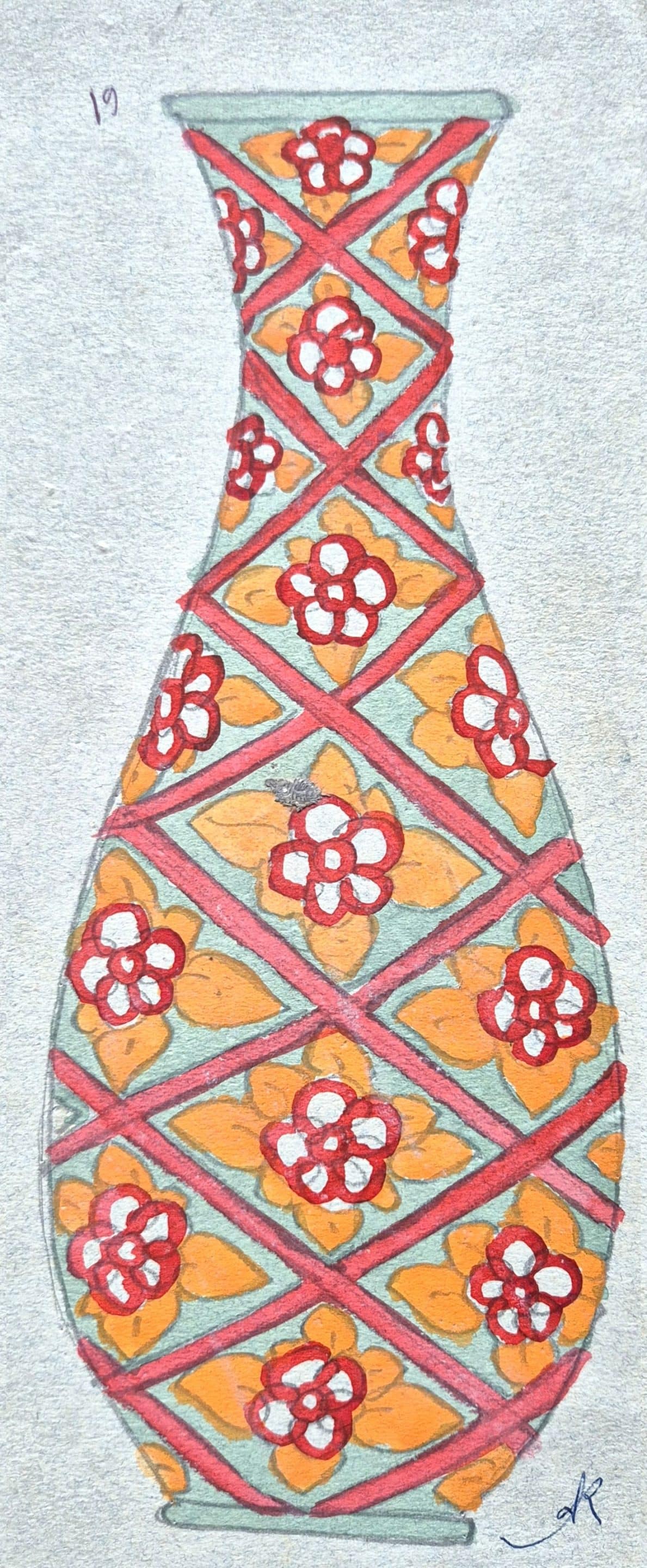
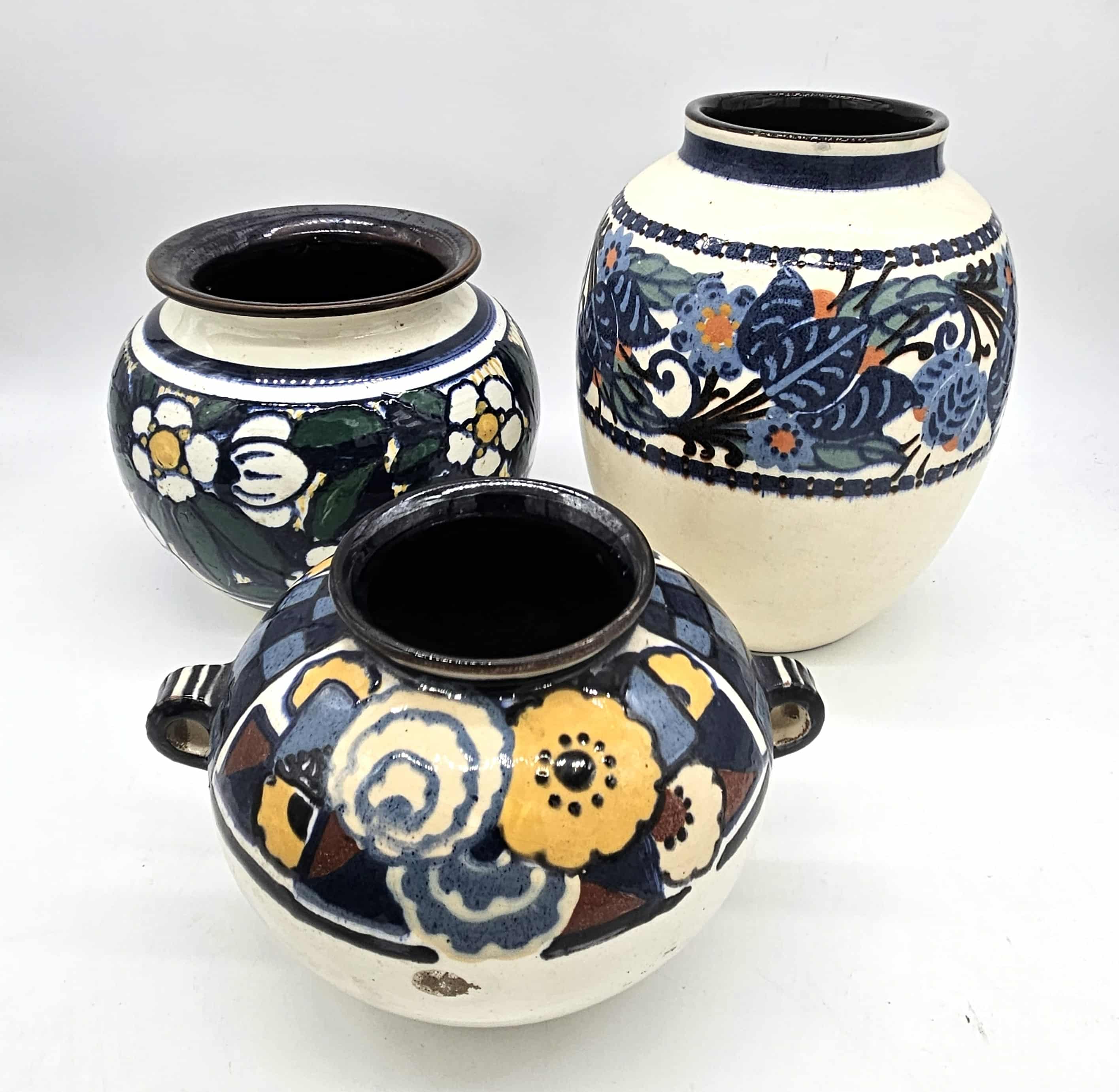
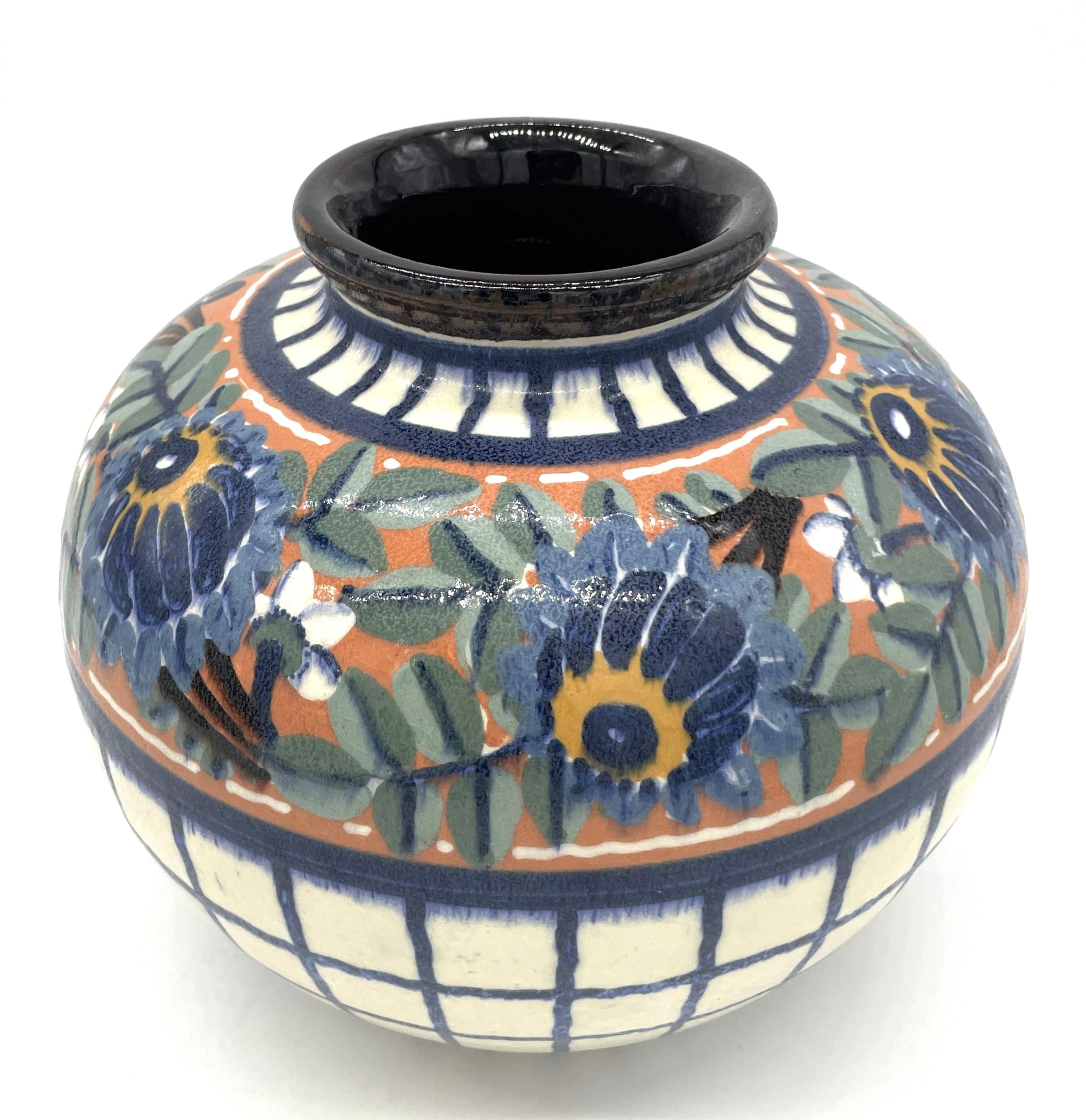
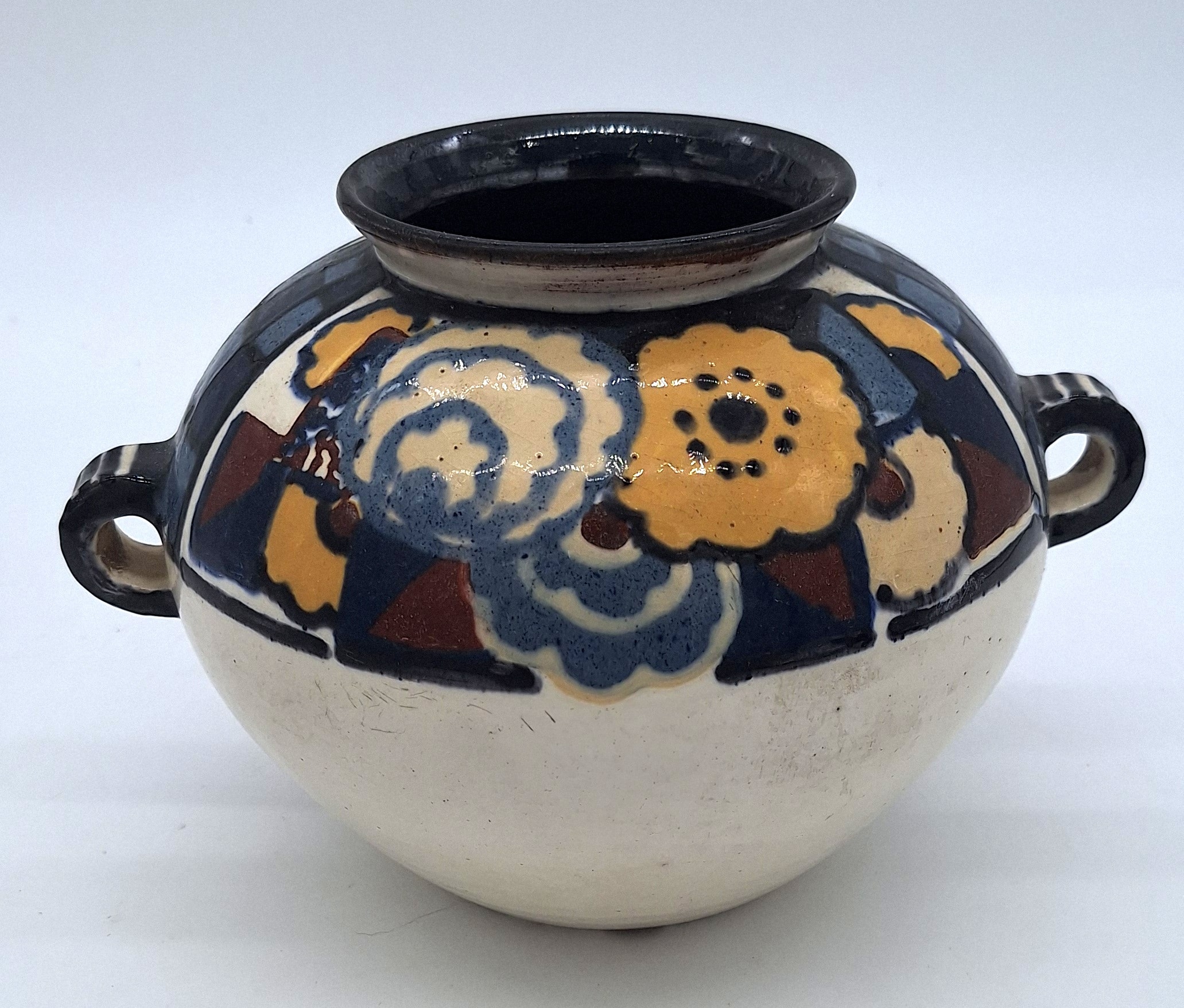
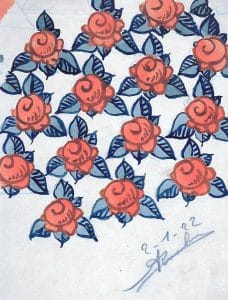
Bands or friezes on a white or coloured background are numerous in the directory of Anchierri, and are applied on the vases of Jacquet. The ones we produce below are all dated 1923.
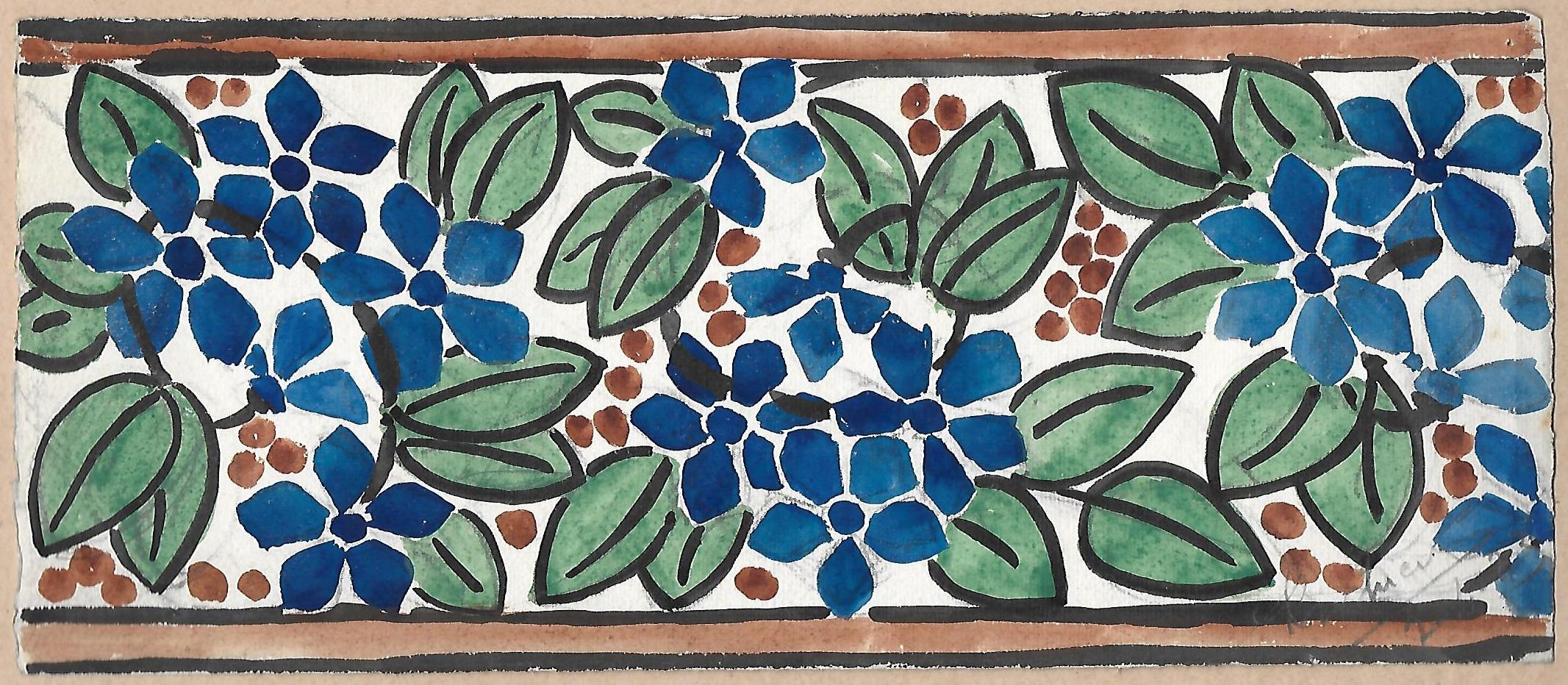
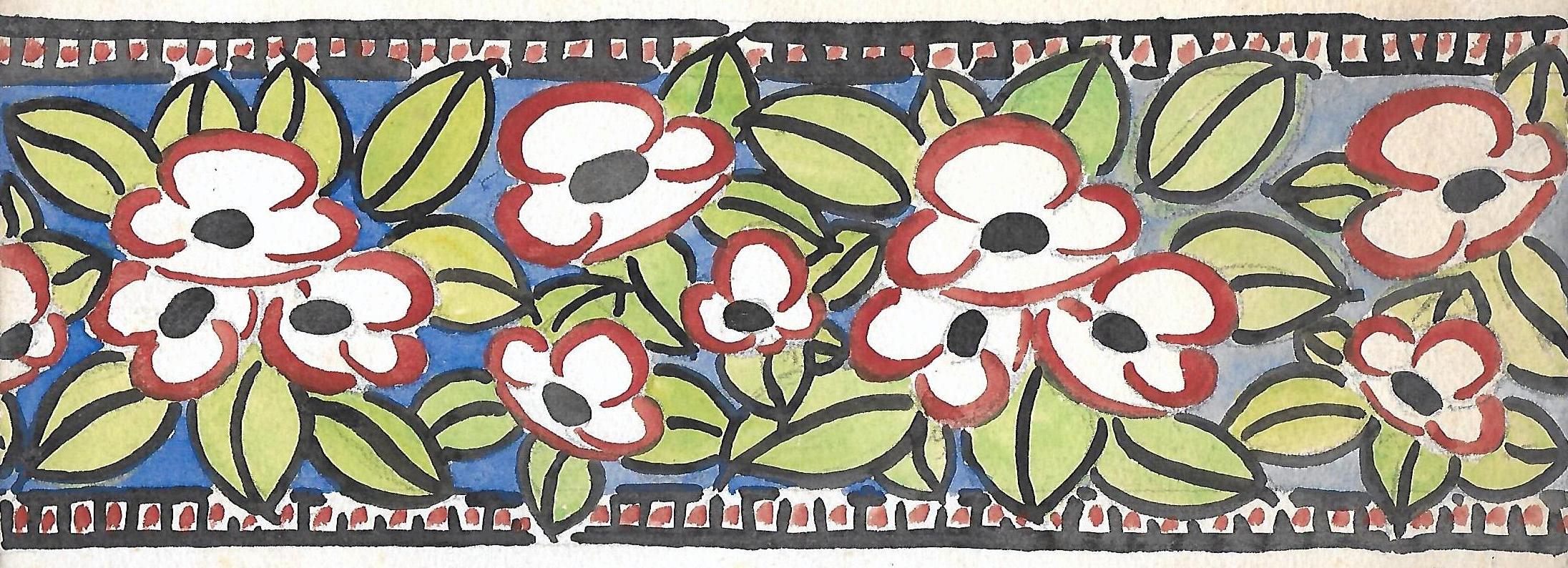
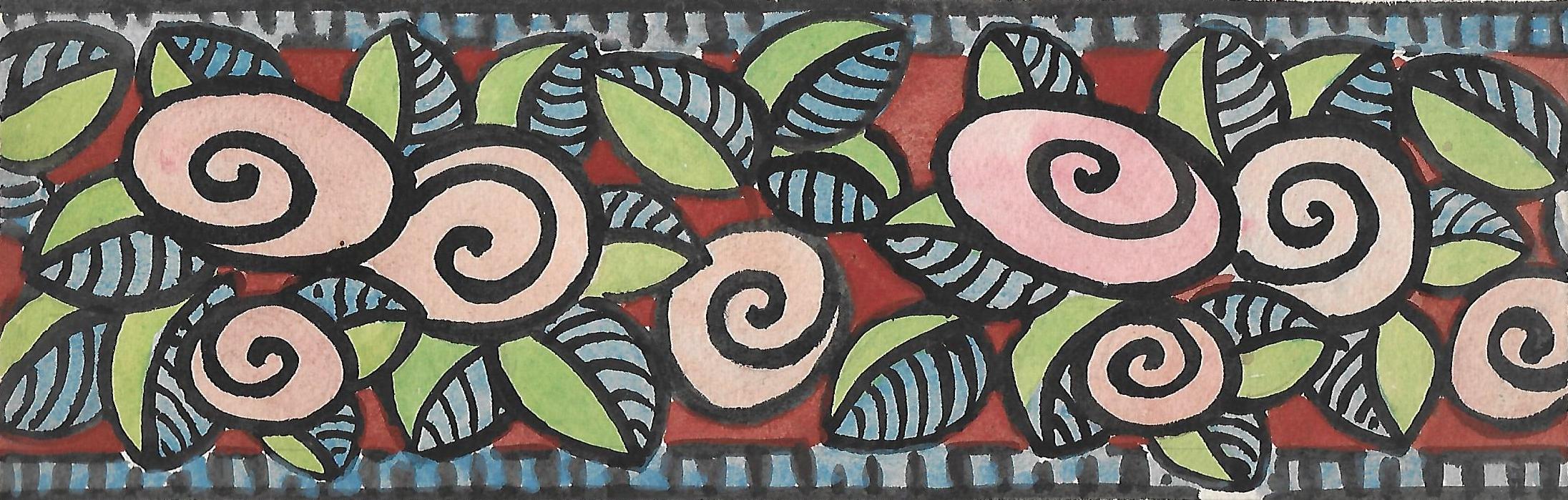
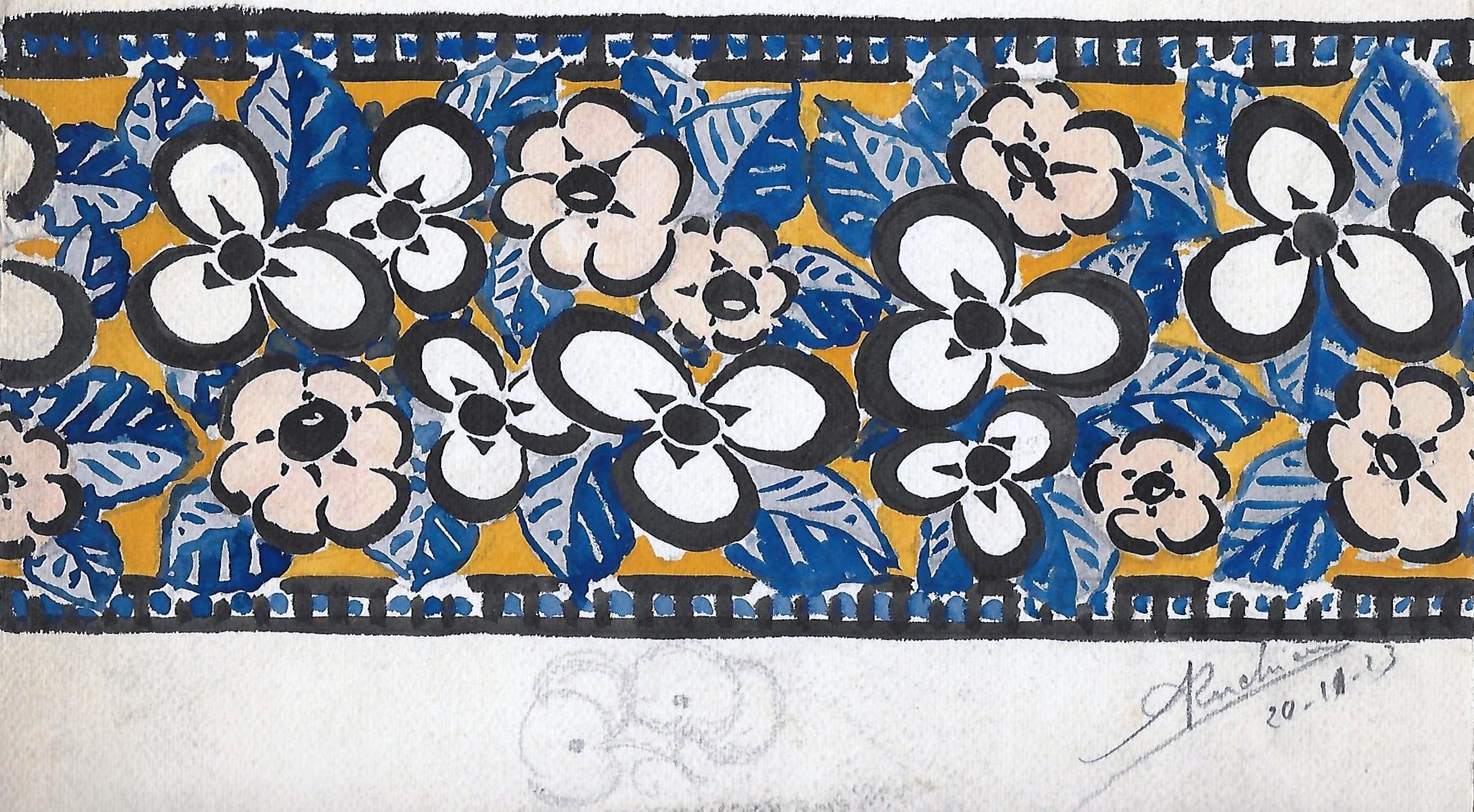
The presence of Anchierri and his skills will enable Paul Jacquet to develop collaborations and thus respond to the orders placed on him by the assemblers Francis Jourdain and René Herbst, and the Parisian department stores like Le Printemps for his collection Primavera (See Prestigious collaborations).
It is not abusive to think that thanks to his young worker, the workshop was able to take on a completely different dimension and radiate nationally and even beyond.
This particularly dynamic period will suddenly stop with the partial destruction of the workshop by a fire in March 1924.
If Paul Jacquet immediately launched the creation of a new workshop with the filing of an application for authorisation for the municipality next week after the fire, René Anchierri seized this period of forced inactivity to advance the call by a few months.
That same week, 15 March 1924, he was received at the OSME (Brevet of Basic Military Preparation) and incorporated the army two months later as a 2nd Class soldier. Then he climbed the steps until he took command of a section.
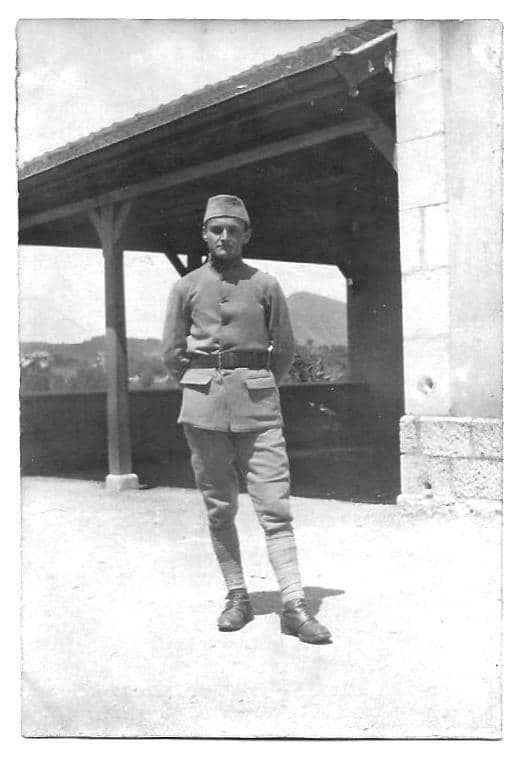
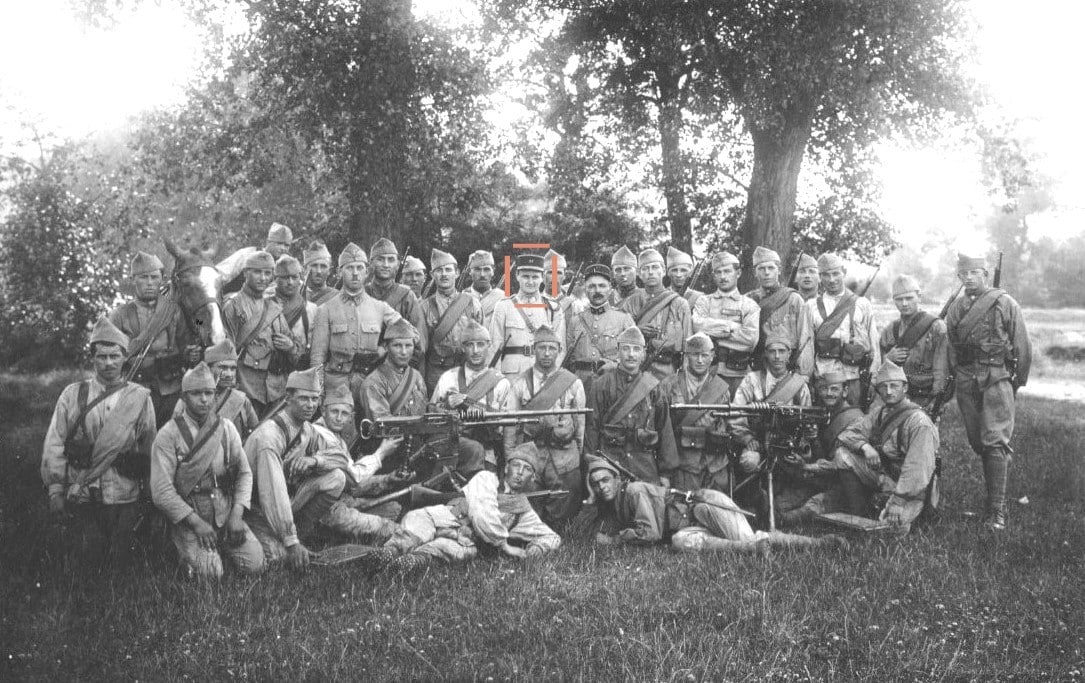
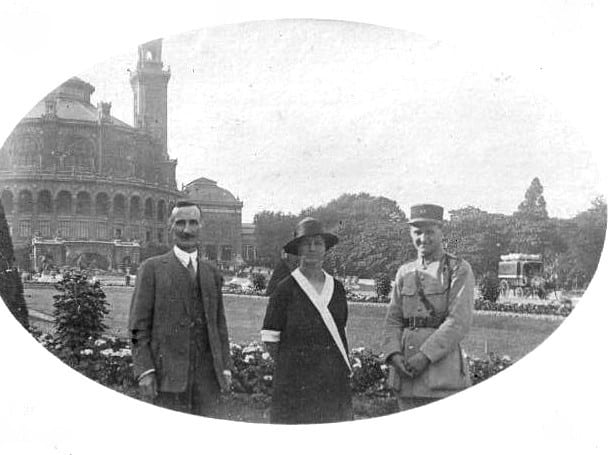
On permission, he visits Paris and Versailles with his parents and goes to the International Exhibition of Decorative Arts probably in part to see his work because Several ceramics of the Jacquet workshop are displayed in 3 different windows: that of Paul Jacquet of course, but also those of Jordan and Herbst.
We can see him here with his family in front of the Palais du Trocadéro.
Demobilized on November 10, 1925, he returned to his parents' home at the 4 Chemins in Cran-Gevrier.
Then he returns see his former boss Paul Jacquet who received a Diploma of Honour at the awards ceremony of the International Exhibition of Decorative Arts, to work in the new workshop built right next to the family home.
He went to work there for a few more months as attests to a letter from René Herbst, dated December 1925 and found with Mrs Anchierri, with whom Paul Jacquet had been working since 1923. Ms. Anchierri will also testify later that her husband asked at that time to be able to sign his achievements, and that Paul Jacquet would oppose him.
It is difficult today to know with certainty the reasons that push Jacquet to this end not to accept. IIt is certain, however, that this refusal has precipitated the departure Annecy de René Anchierri, to give new impetus to his ambitions.