FORAH Workshop
by René Anchierri
1929-1939
Rapid expansion
The year 1929 begins with a project of enlargement.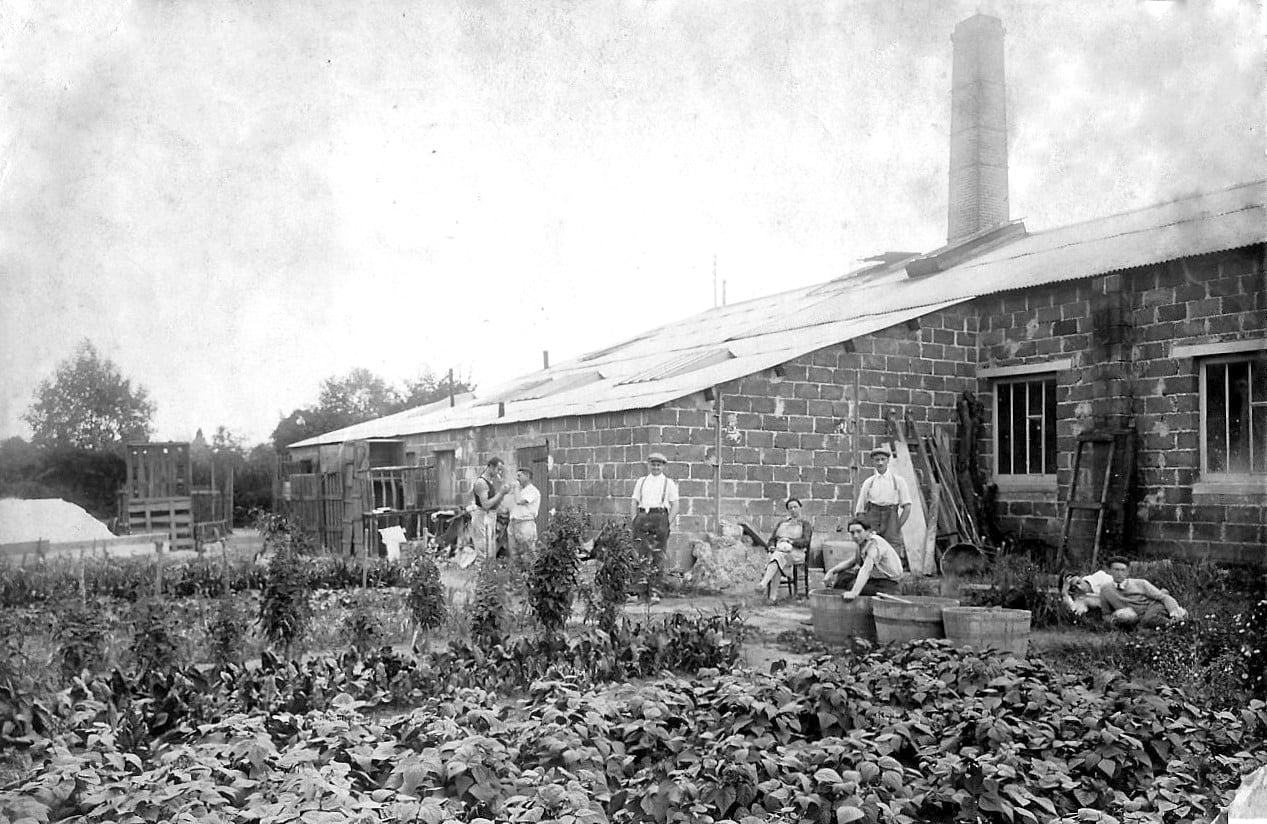
In the spring, René Anchierri began the work of extending his first workshop by adding a wing on the side, and expanding the building. This workshop becomes the FORAH for Fshelter ORomanian Rine ANchierri.
In August of the same year, a petition from the residents of the neighbourhood collected some 20 signatures from residents who were bothered by the black smoke of the factory which triggered an investigation by the administration.
Anchierri will have to comply with these health recommendations by enhancing its chimney and filtering its fumes.
At that time, in order to respond to the steady increase in the volume of its production, Anchierri recruited turning and decorating workers in its immediate environment.
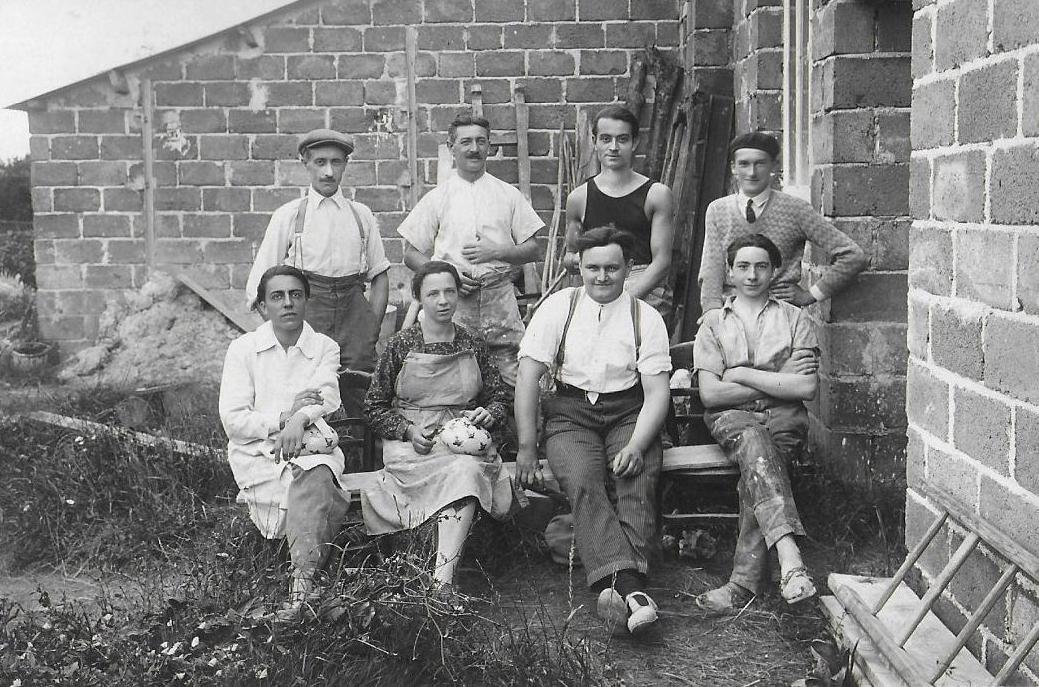
The beginning team
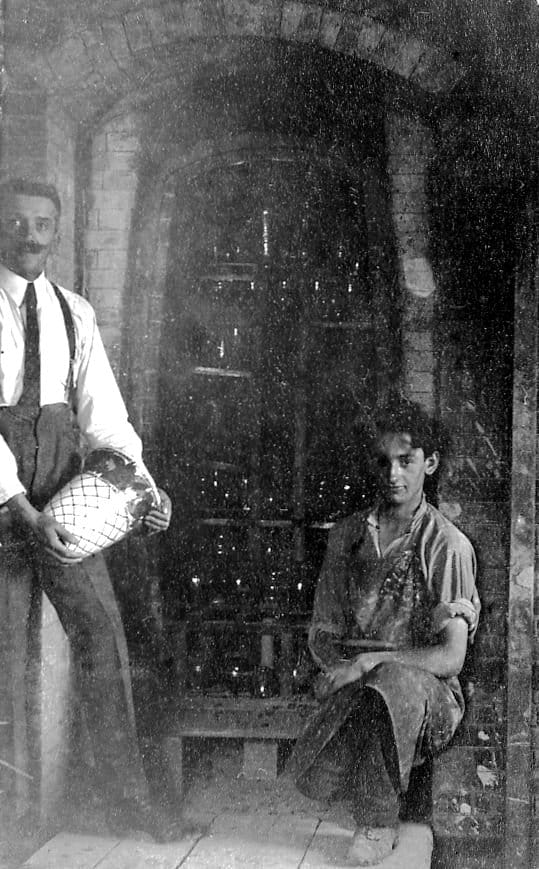
As you can see in this 1929 photo, from left to right and from top to bottom:
Mr. Reuilly (tourner), Maurice Goguelat (tourner), Louis Aubort (tourner), Mr Baud, Roland Brice (decorator), Mrs Reuilly (decorator), Anchierri (tourner, decorator, boss), an unidentified apprentice.
Roland Brice (1911-1989)
Roland Brice will complete a 6-month apprenticeship as a decorator with Anchierri during 1929. He was 17. Then he moved to Paris, where he enrolled as a free student at the École des Beaux-Arts in Paris.
He met painter Fernand Léger, of whom he became one of the close collaborators. After World War II, at the request of Léger, he moved to Biot, in the Alpes-Maritimes, where he created a ceramic workshop.
Together, they produced several iconic public and private ceramic wall paintings.
His legacy is marked by a unique blend of artistic innovation and craftsmanship, making him an important figure in French ceramics from the mid-20th century.
Roland Brice told by Rodolphe Cosimi,
President of the Association of Friends of Roland Brice:
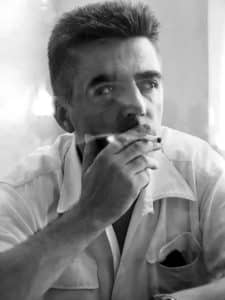
Roland Brice photographed by Denis Brihat
« A scrupulous craftsman as well as an intrepid inventor, Roland Brice knew, through the mastery of large fire sandstone, the bold use of polychromy and the luminous integration of glass slabs, to open a singular path in the history of modern ceramics. Too often reduced to Fernand Léger's disciple and interpreter, whose inspiration he masterfully translated into three dimensions, Brice cannot be confined to this performing role. Far from exhausting his career, the years spent with the Norman master are only the prelude.
If his personal work remains less known to the general public, it is because the artist was able to remain faithful to his commitment to Fernand Léger until the latter's disappearance, agreeing to devote his forces to the realization of the inspiration of the master, rather than from the outset seeking the recognition proper to his personal approach. Yet, the artist, through obstinate research and insatiable curiosity, renewed in depth ceramic art, prolonging in his own way the liberation initiated by Picasso. Brice, heir to a tradition that was certainly influenced by the Légerian universe, was nevertheless able to open new paths, new and essential, exploring an unprecedented relationship between matter and light. He reached a plastic dimension where no artist had yet ventured, transforming the earth into a vibrant receptacle of radiance and contrast.
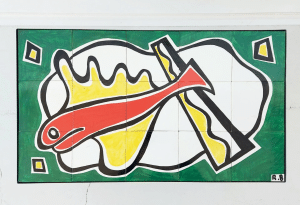 Thus, the work of Roland Brice, always animated by a fruitful inventiveness, is imposed by his discreet power and nobility. It bears witness to an unwavering fidelity to art, pursued in the shadow, without concession to fashions or easy glory, until it rises to the rank of the great monumental adventures of modernity. »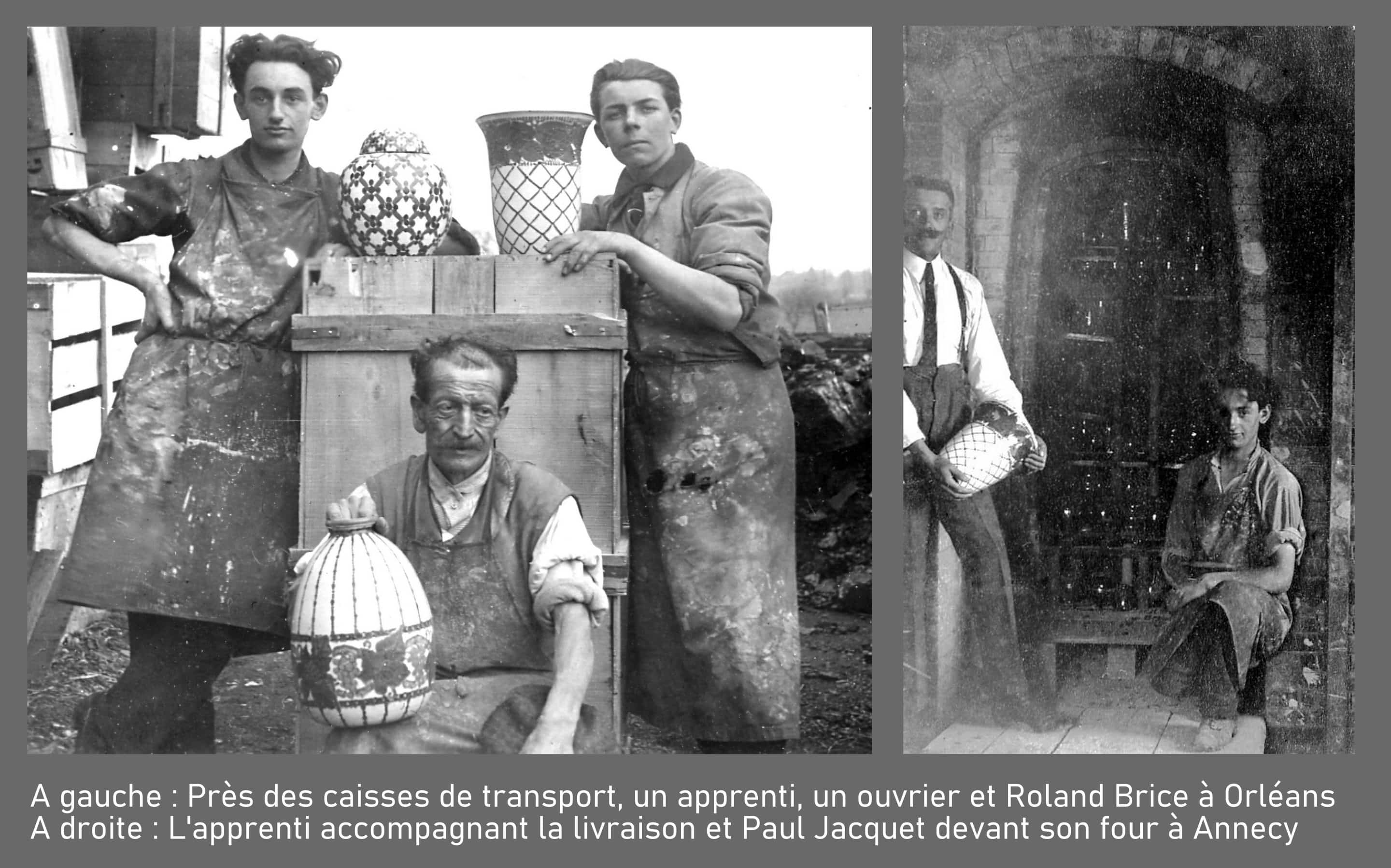
Anchierri also continues to manufacture and decorate large pieces for Jacquet which will be transported by cases to Annecy.
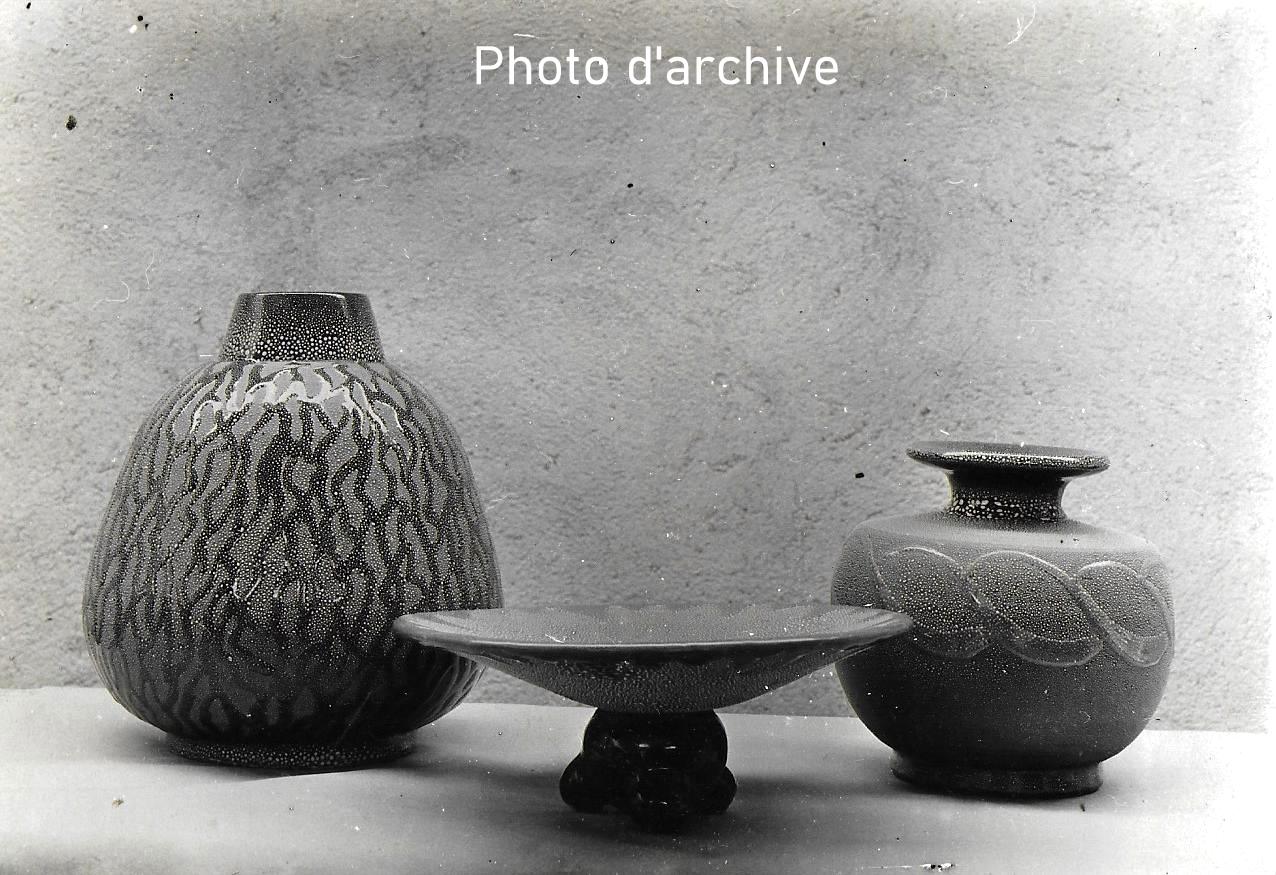
Models in the air of time
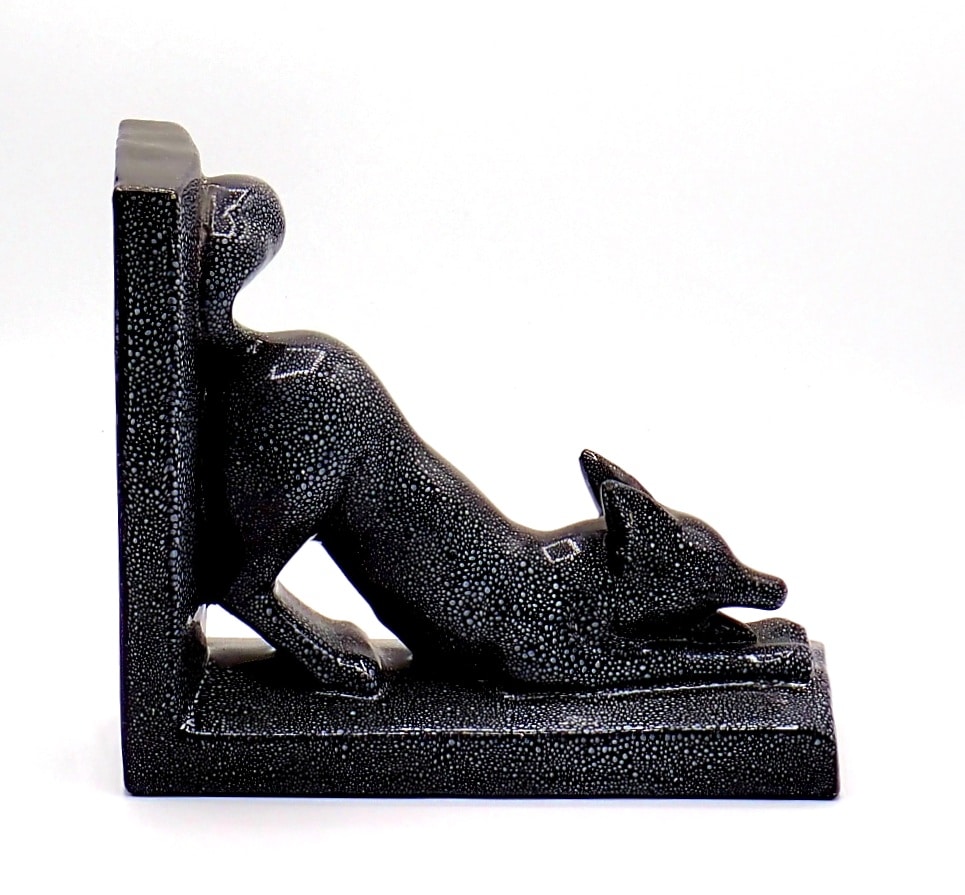
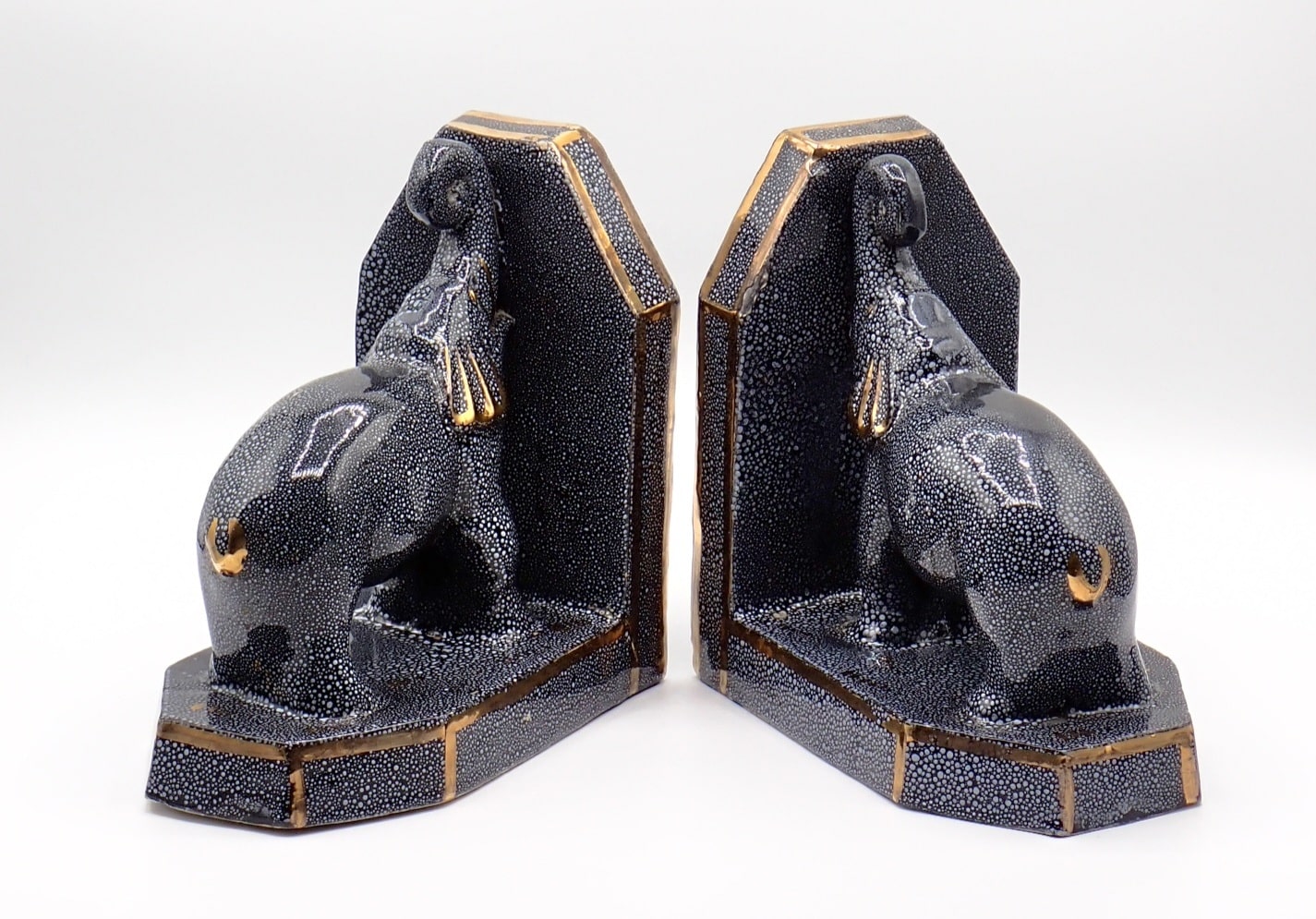
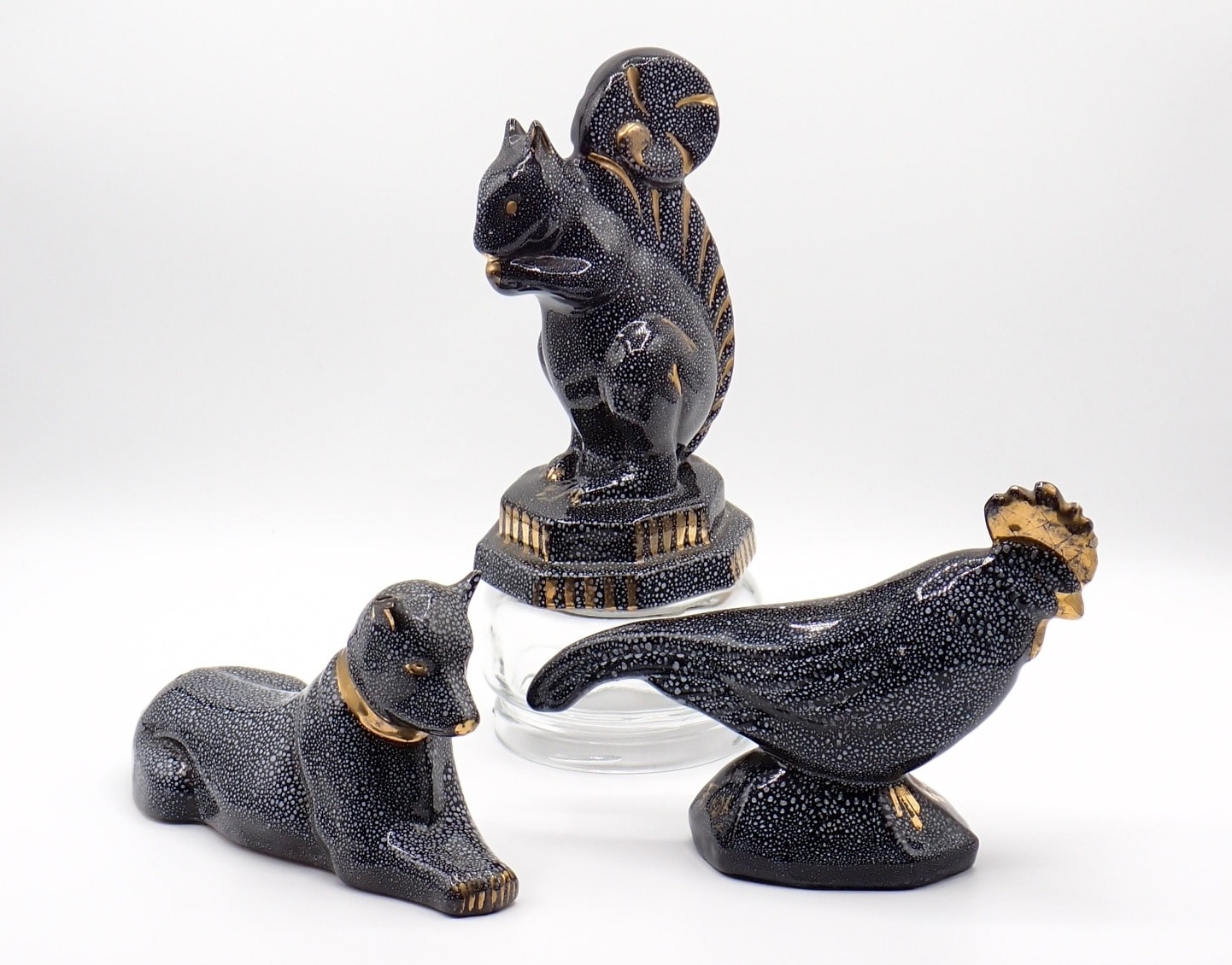
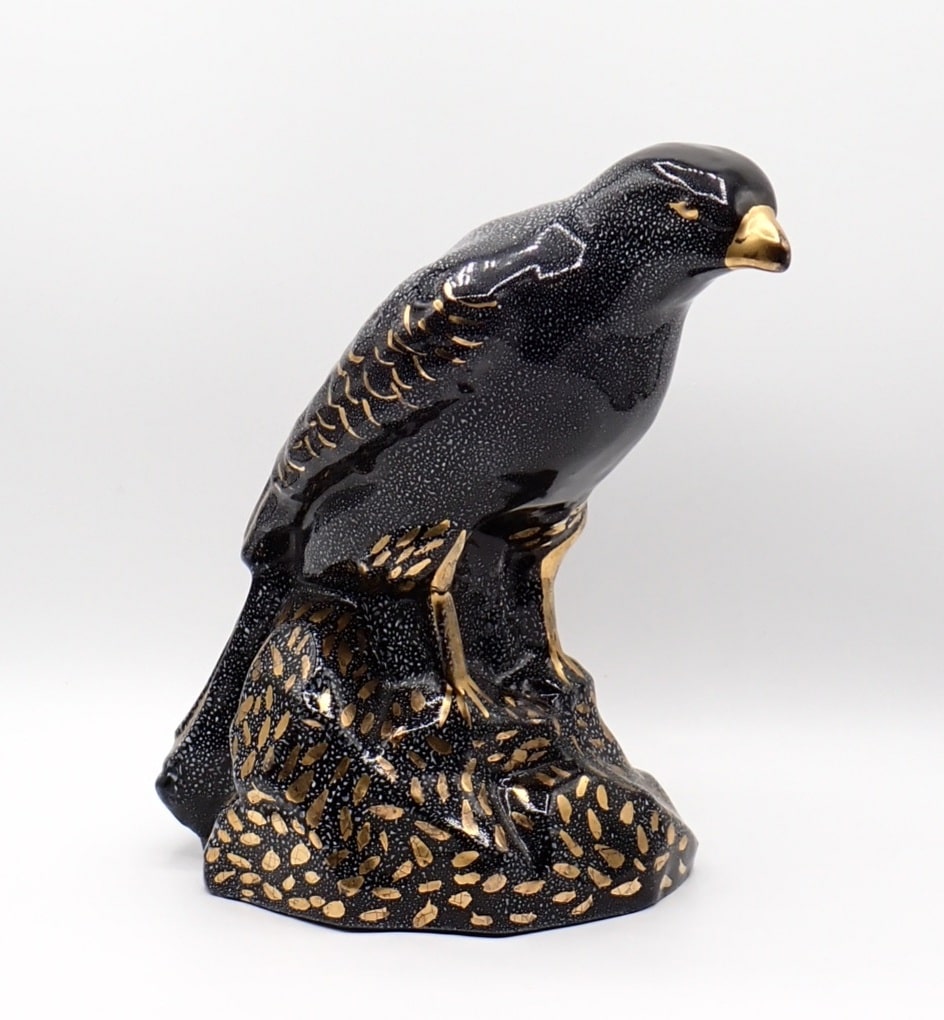
It now develops various production styles, with the creation of animals in volume, intended for the Parisian department stores, lamp feet that are exports to the United States.
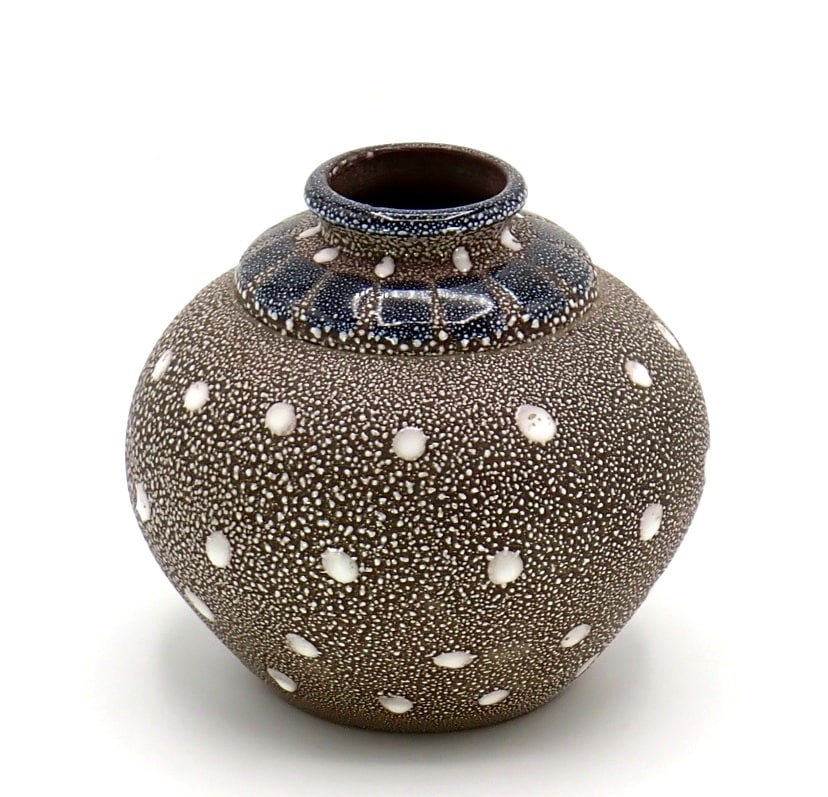
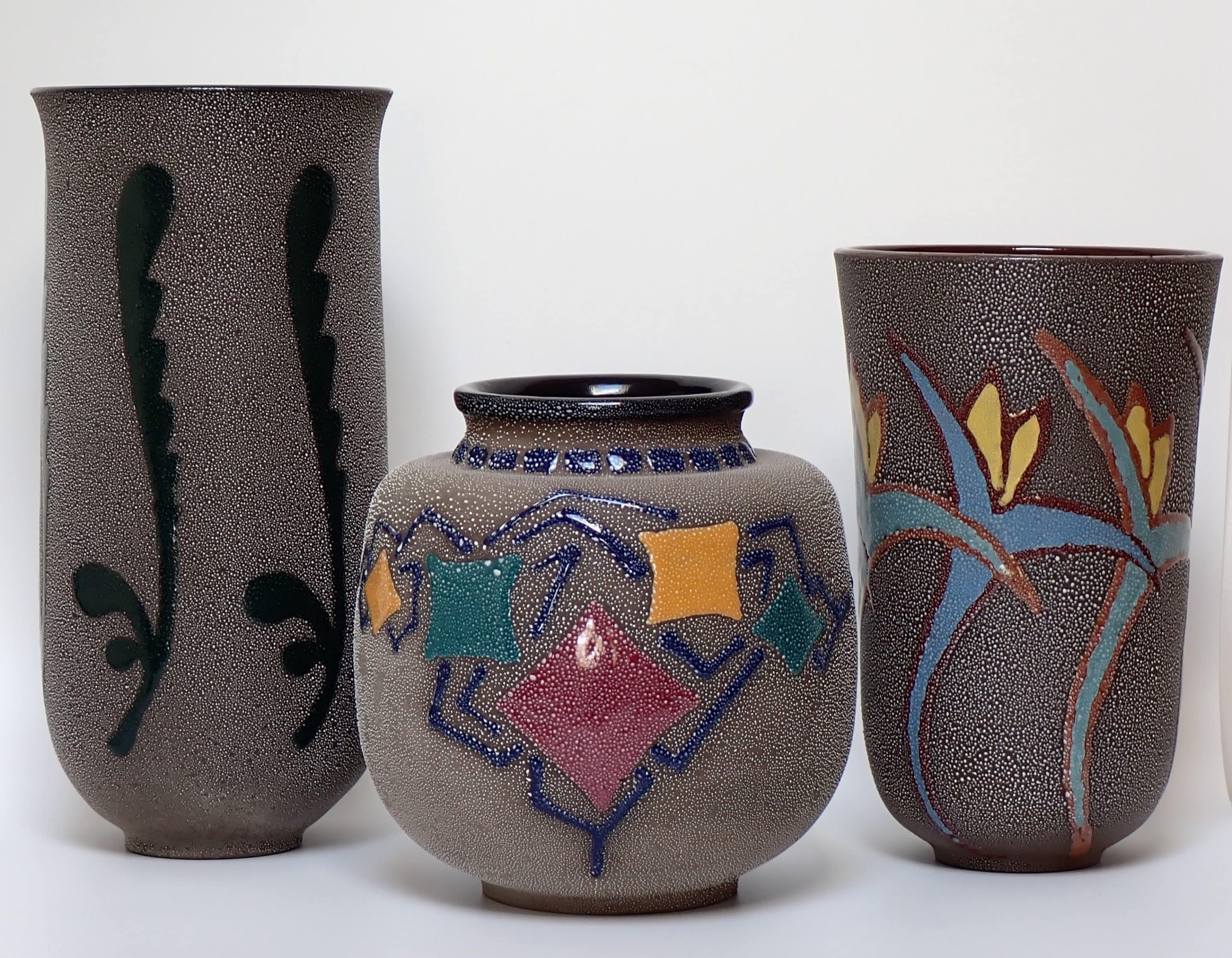
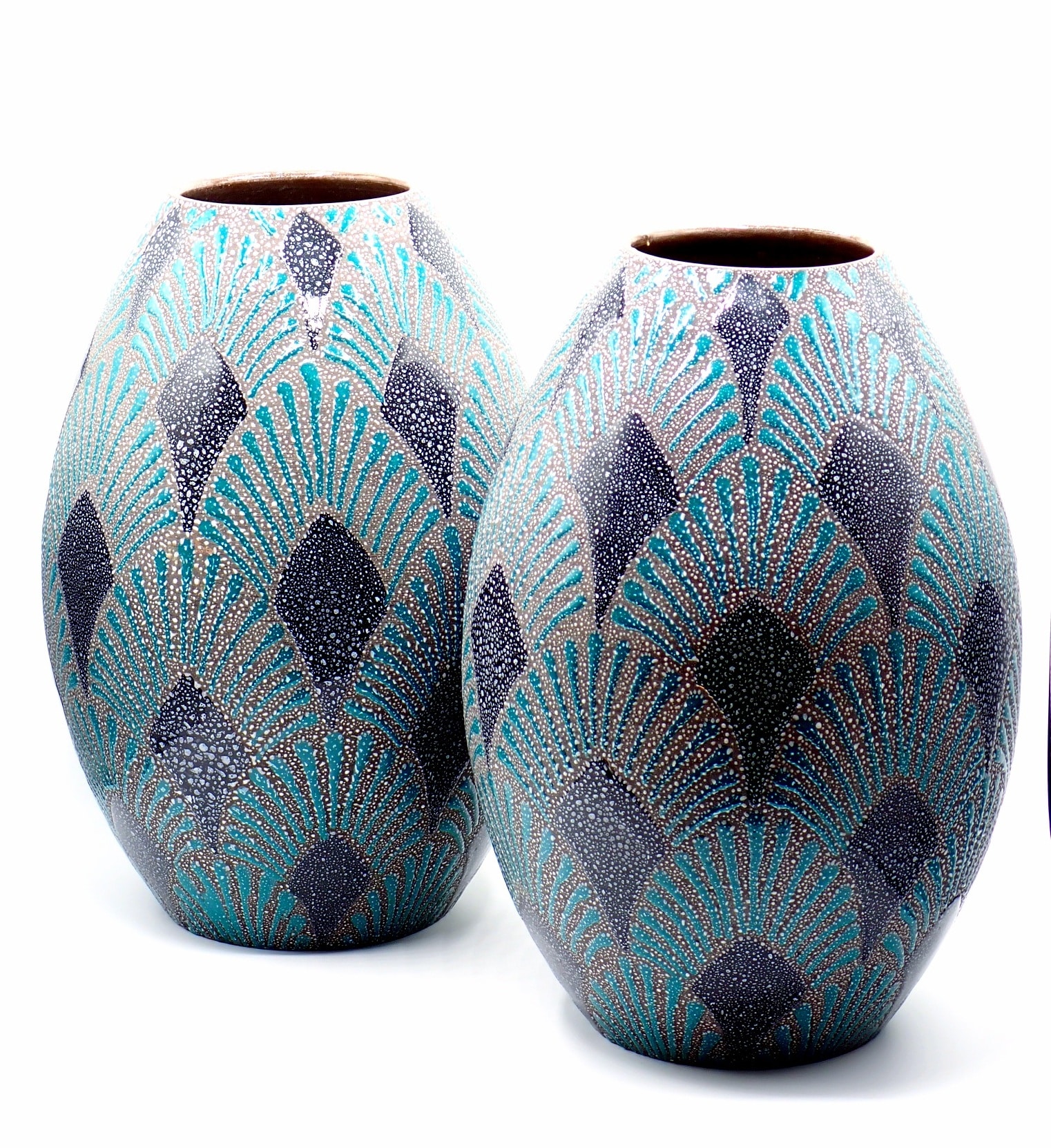
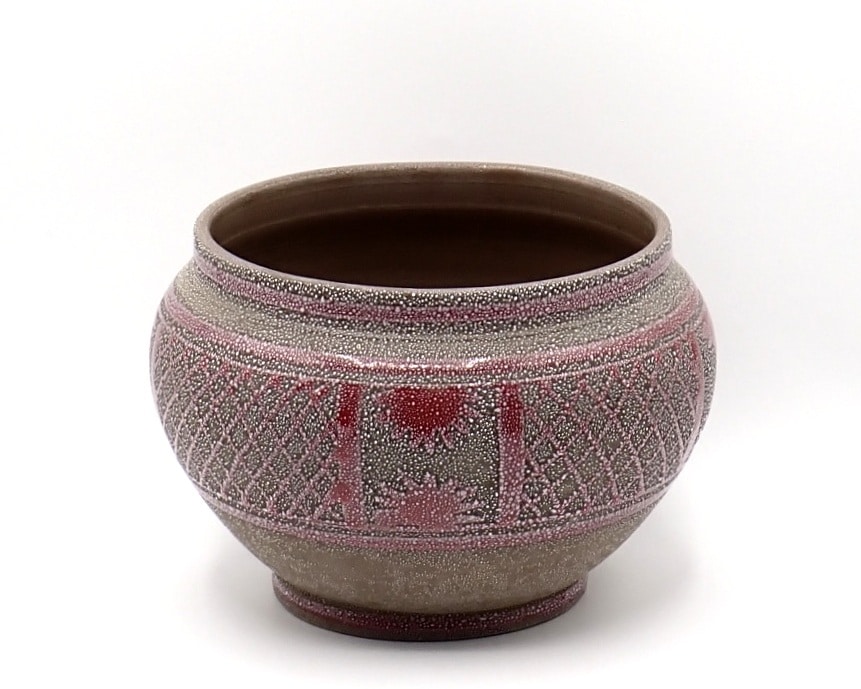
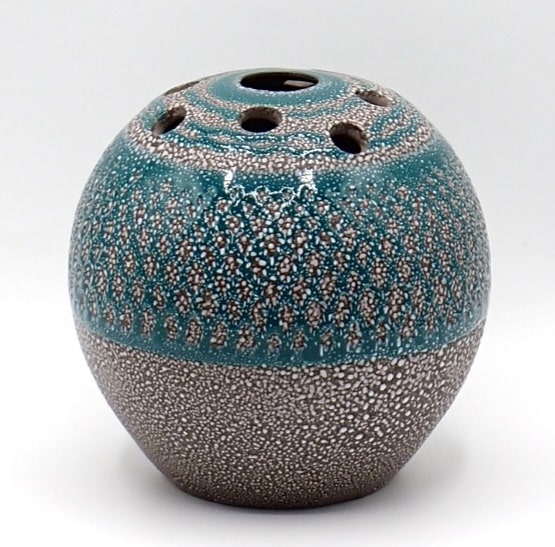
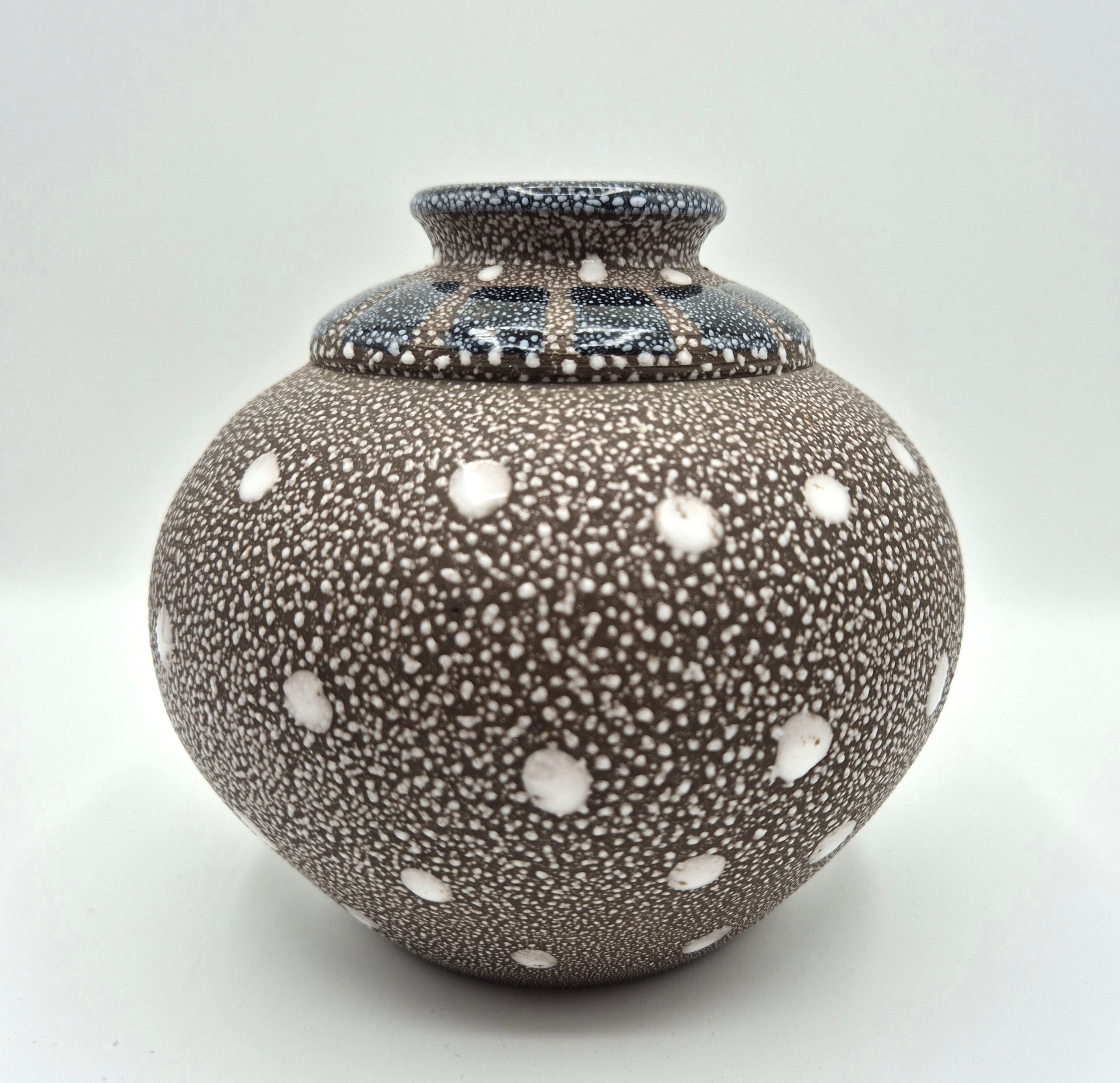
He will develop original, cracked, granite, or modernly decorated covering processes for which he will patent.
Lamp feet
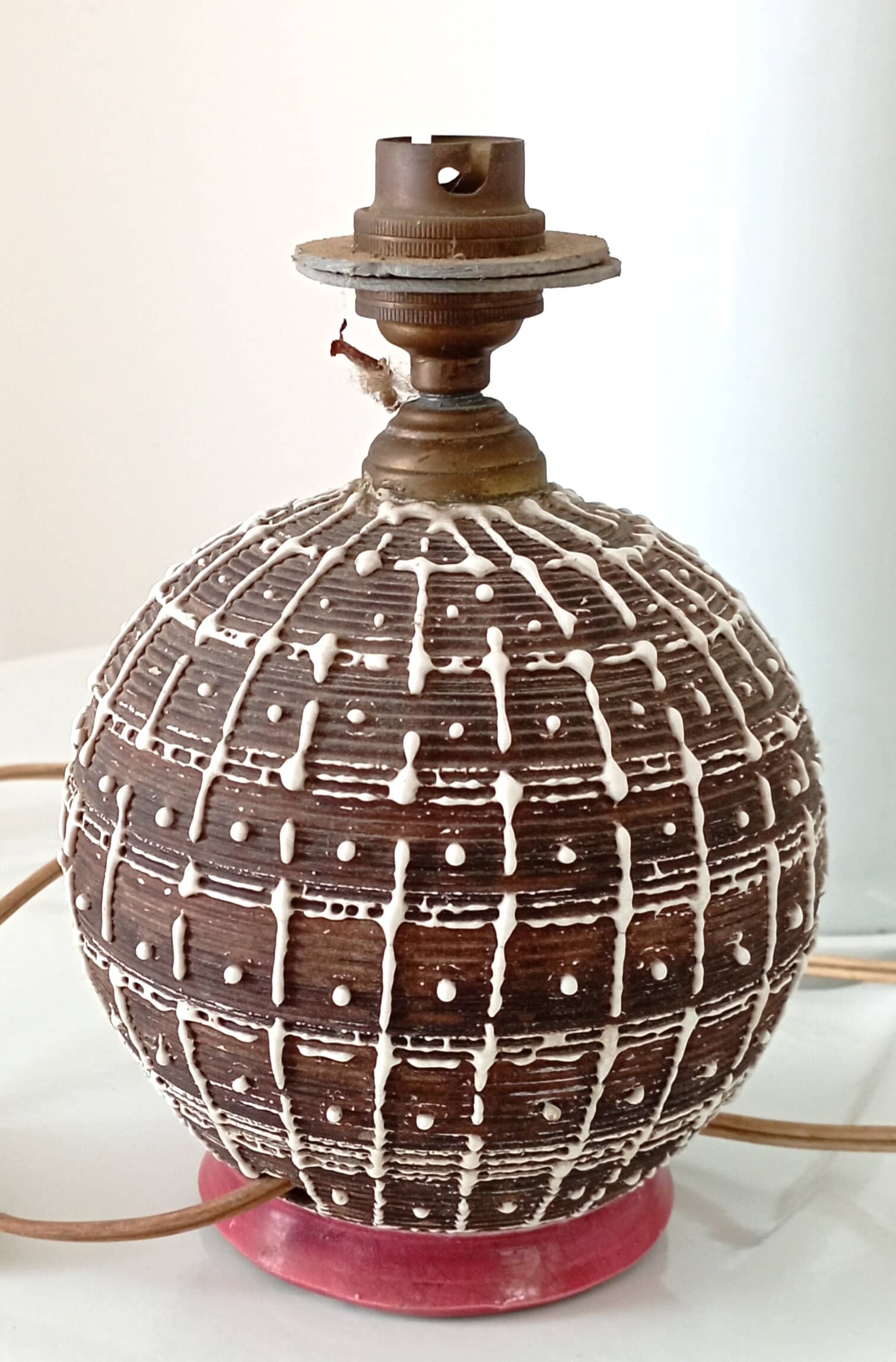
Cracked lamp foot Forah
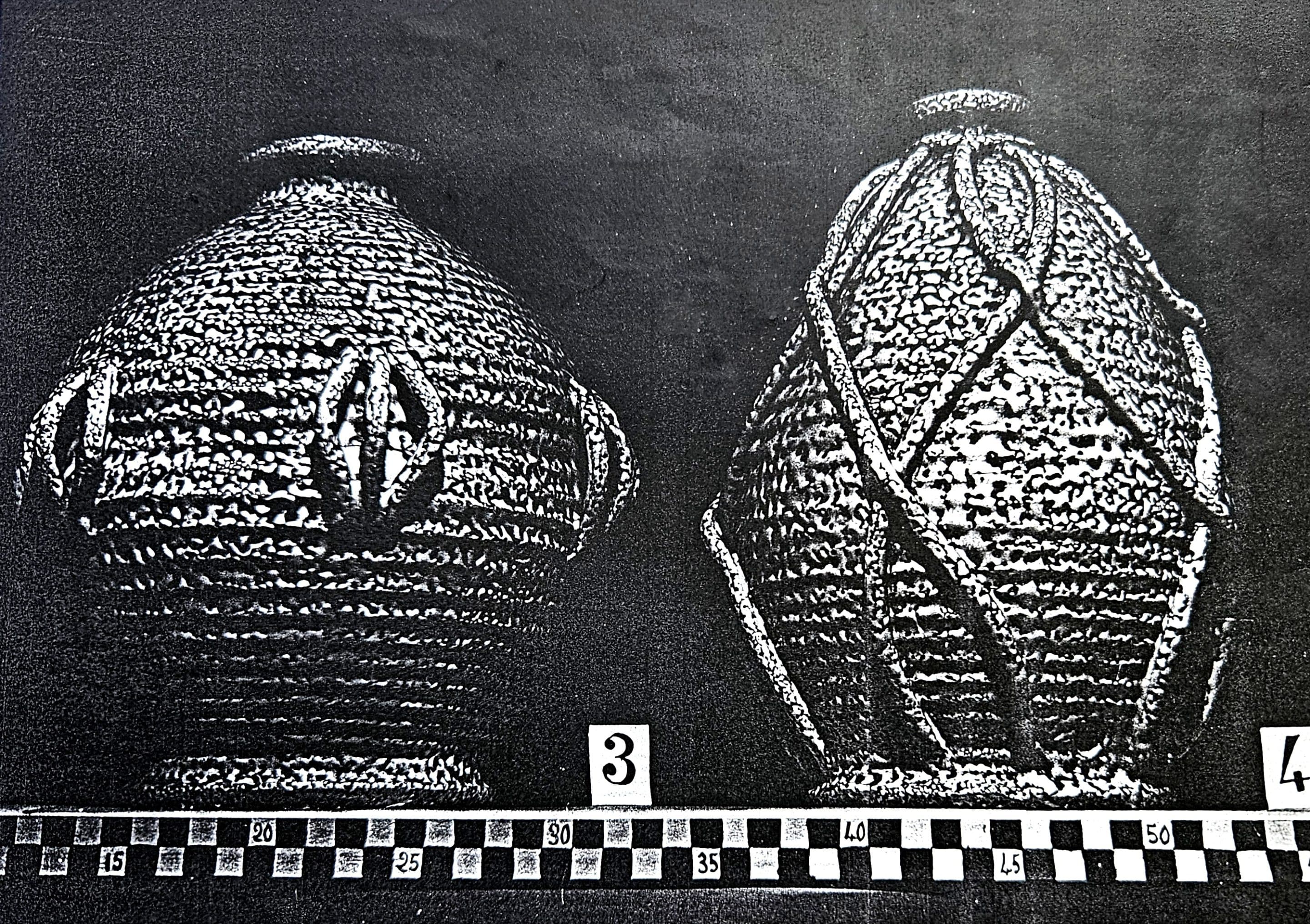
Extract from Forah catalogue
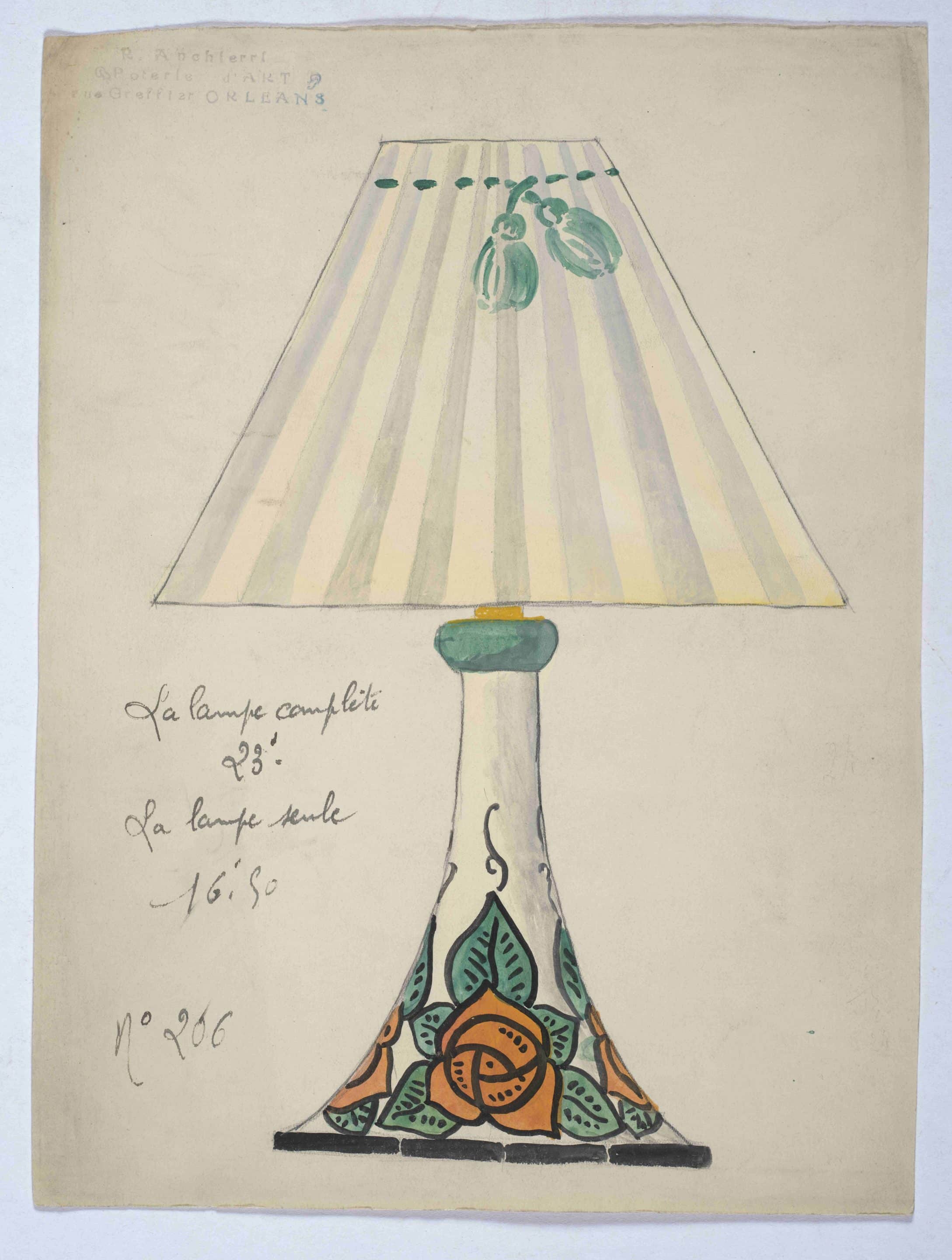
Musée des Beaux Arts Orléans sketch Forah lamp n°206
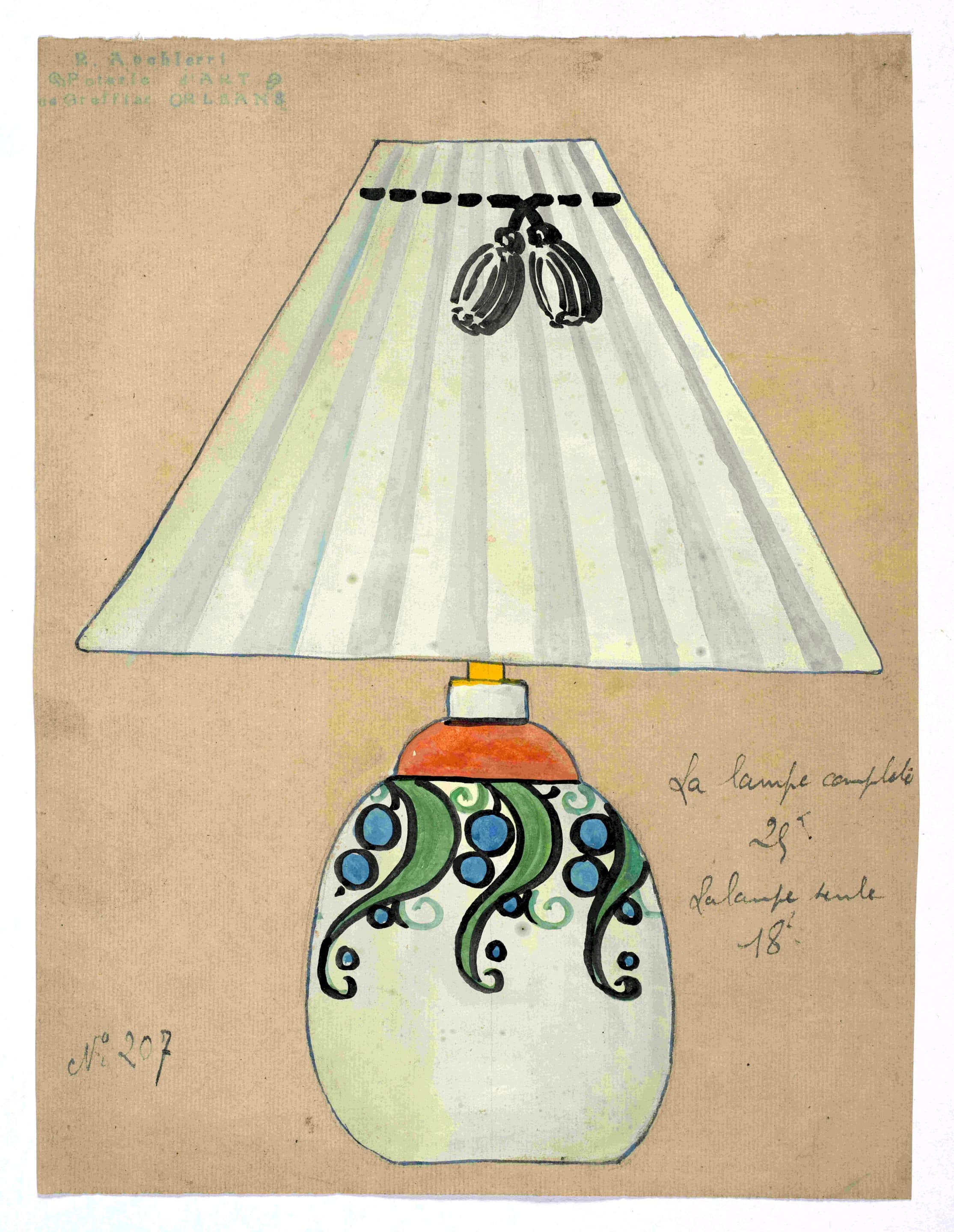
Musée des Beaux Arts Orléans sketch Forah lamp n°207
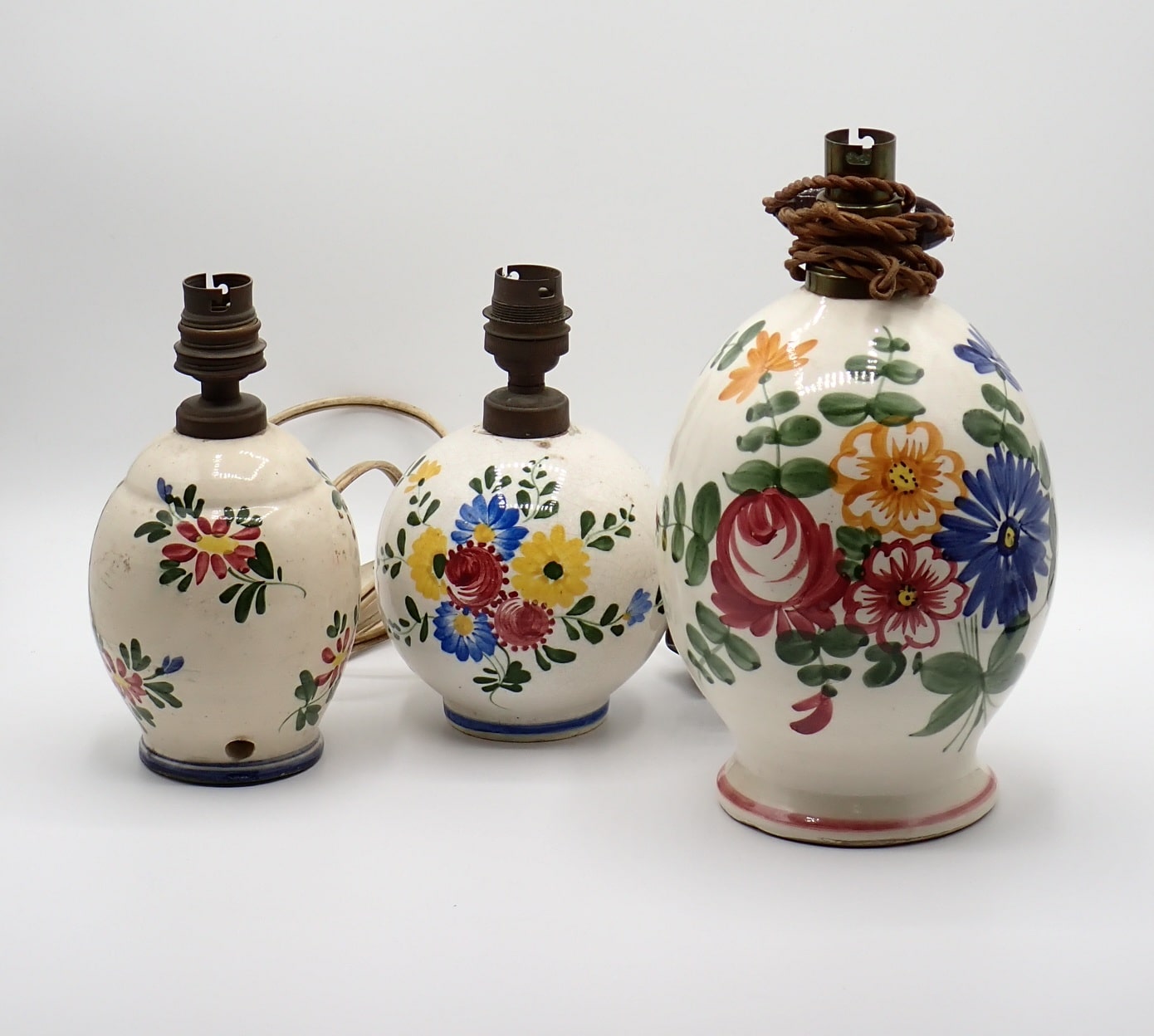
Lamp feet floral decoration Forah
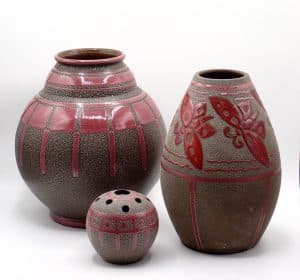
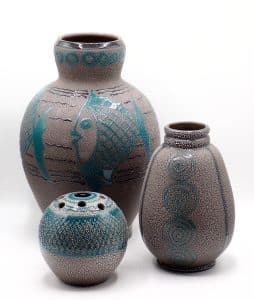
Granities
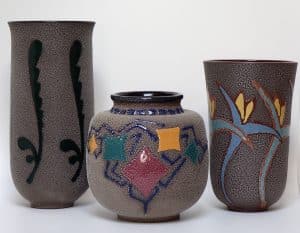
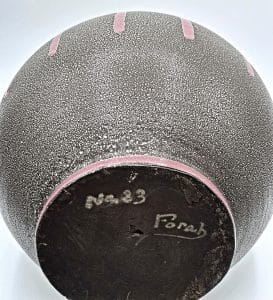
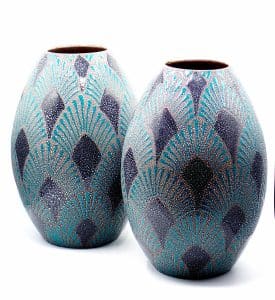
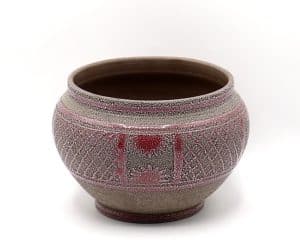
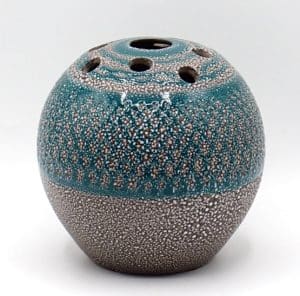
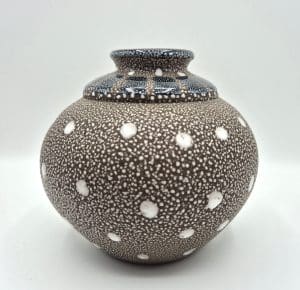
Scared
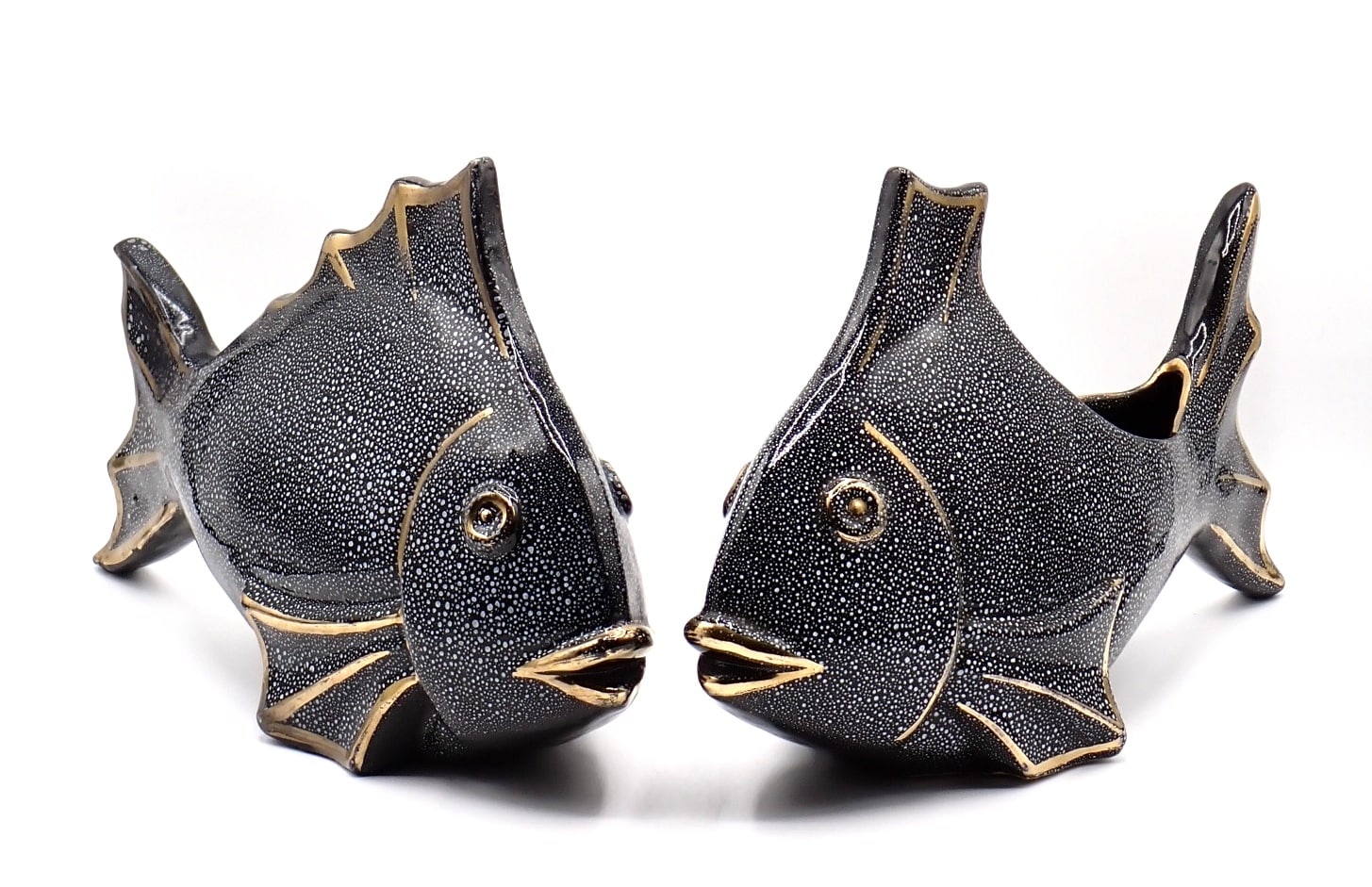
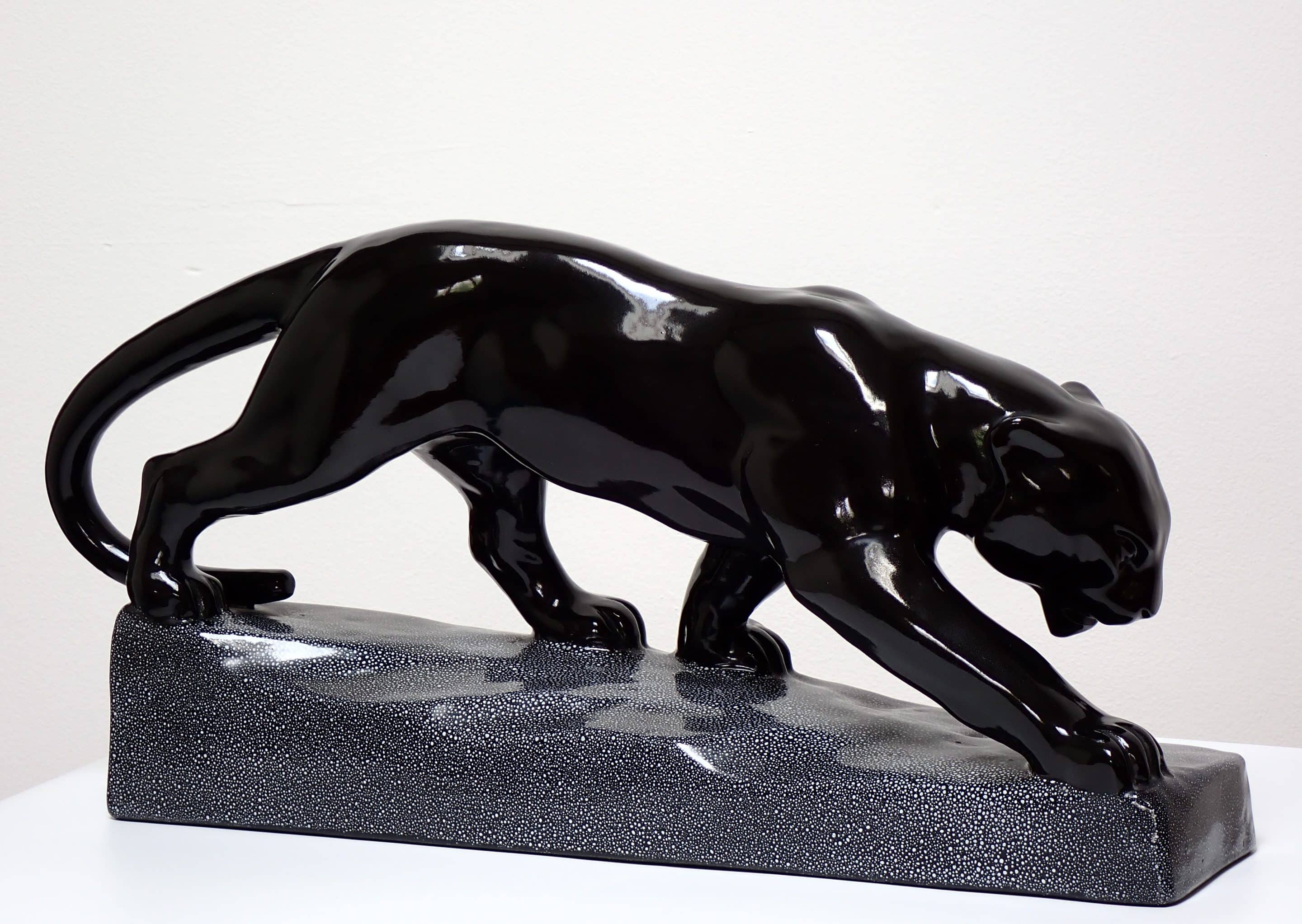
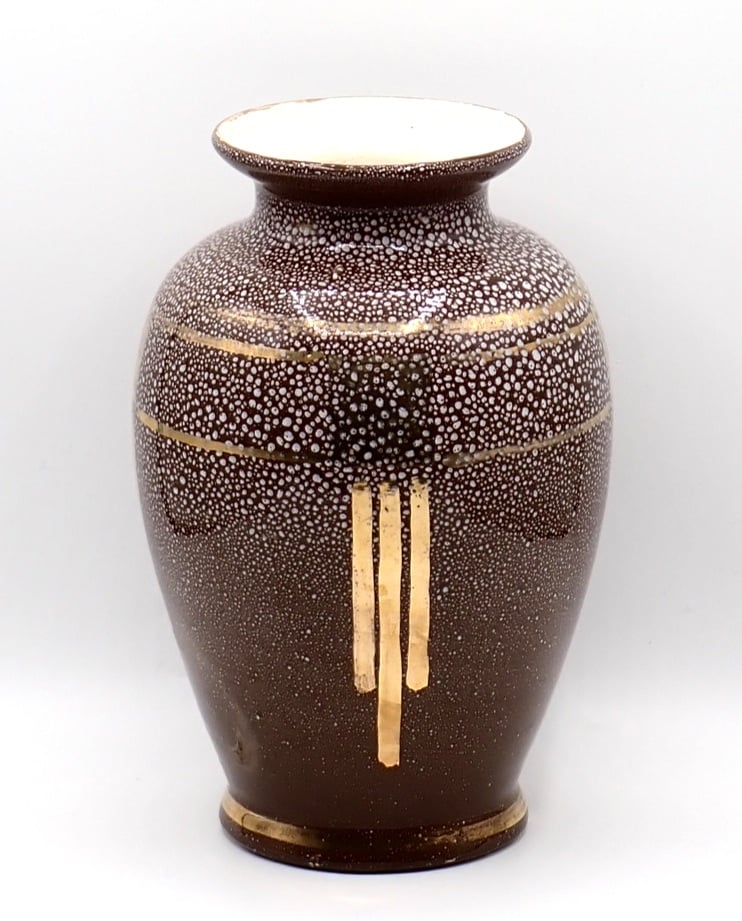
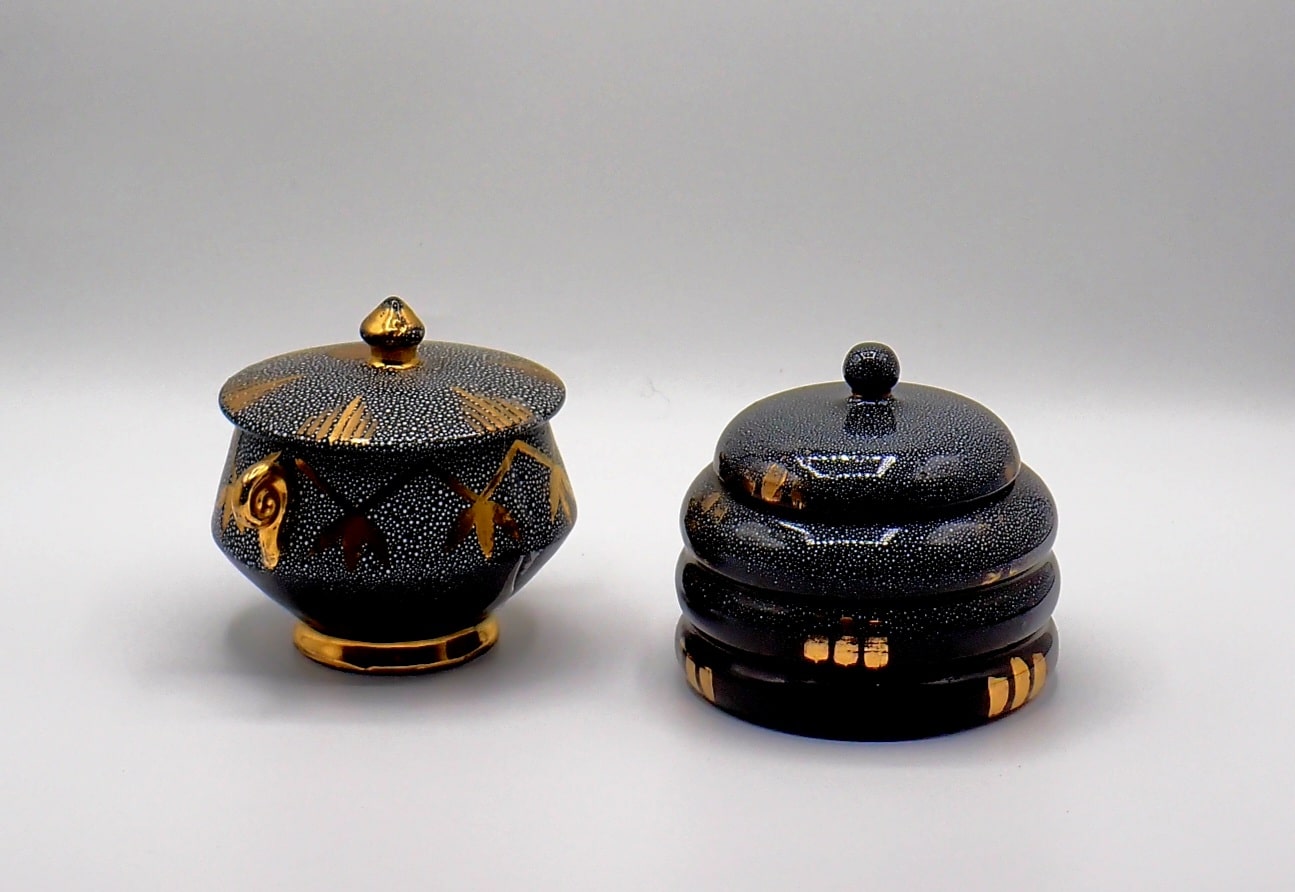
Paris exhibitions
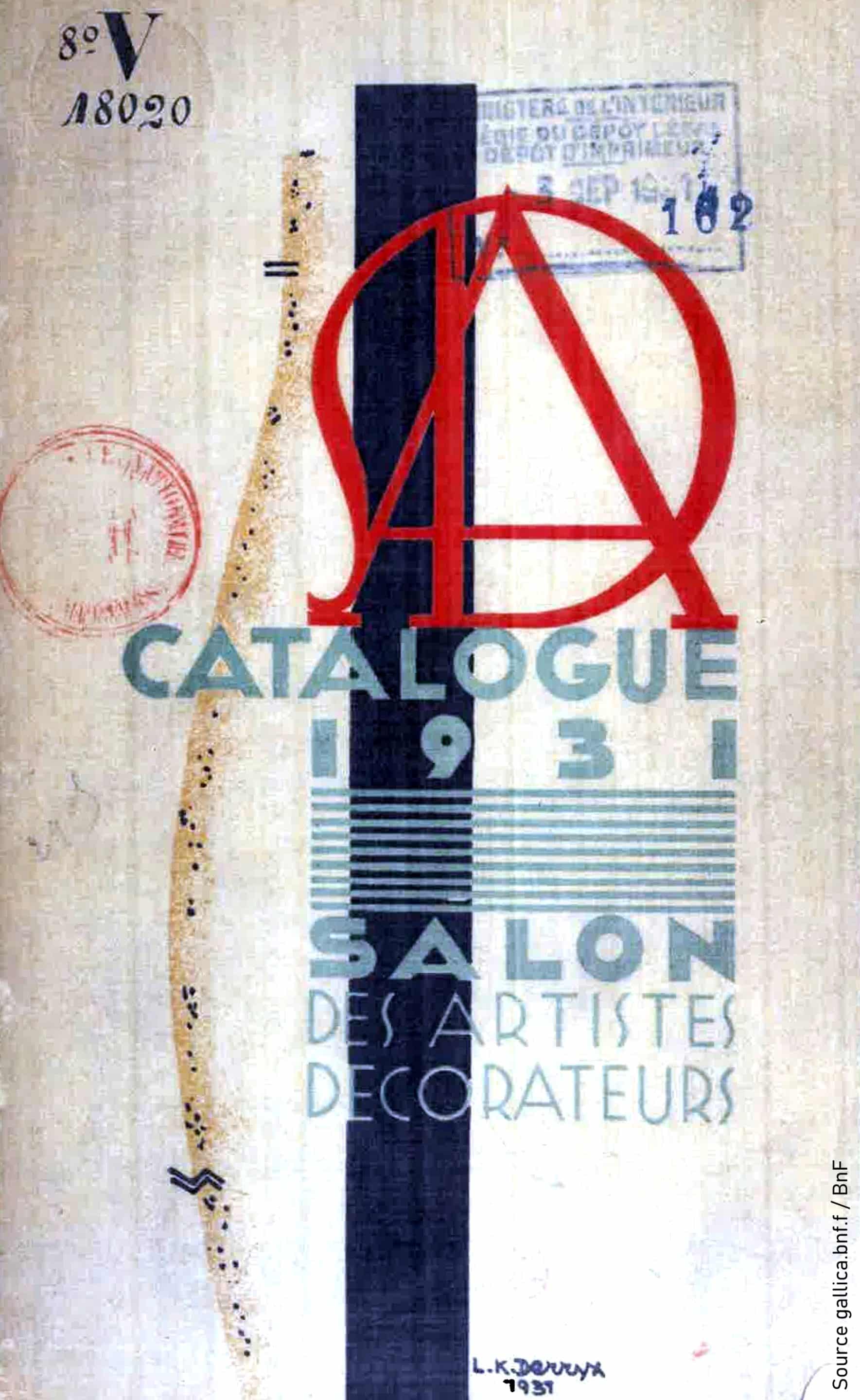 In 1930 he joined the SAD, Société des Artistes Décorateurs. The annual fair that she has organized every year since 1905 is a Parisian event bringing together, through a huge exhibition, all the greatest architects and decorators of the moment and thus the new trends in terms of decoration. Over the years, these fairs have become the major event in the field. The artists had to present their project to a jury composed of board members and delegates from each category who, after making a selection, then decided on admissions.
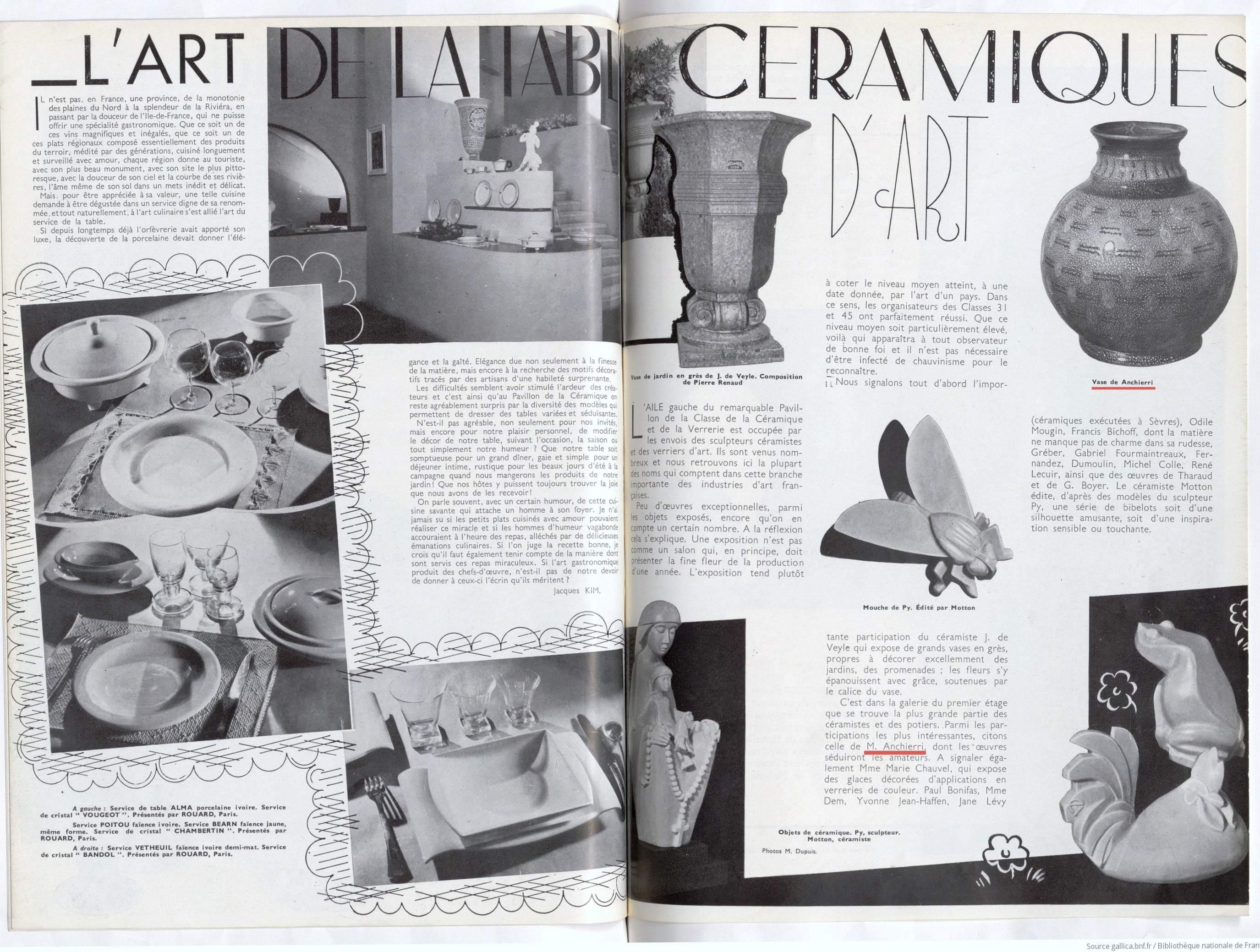
In 1931, René Anchierri exposes 3 black paste vases to the 21st SAD Show at the Grand Palais in May and July. We can find the catalogue of this show on Gallica Here (Anchierri cited p.87)
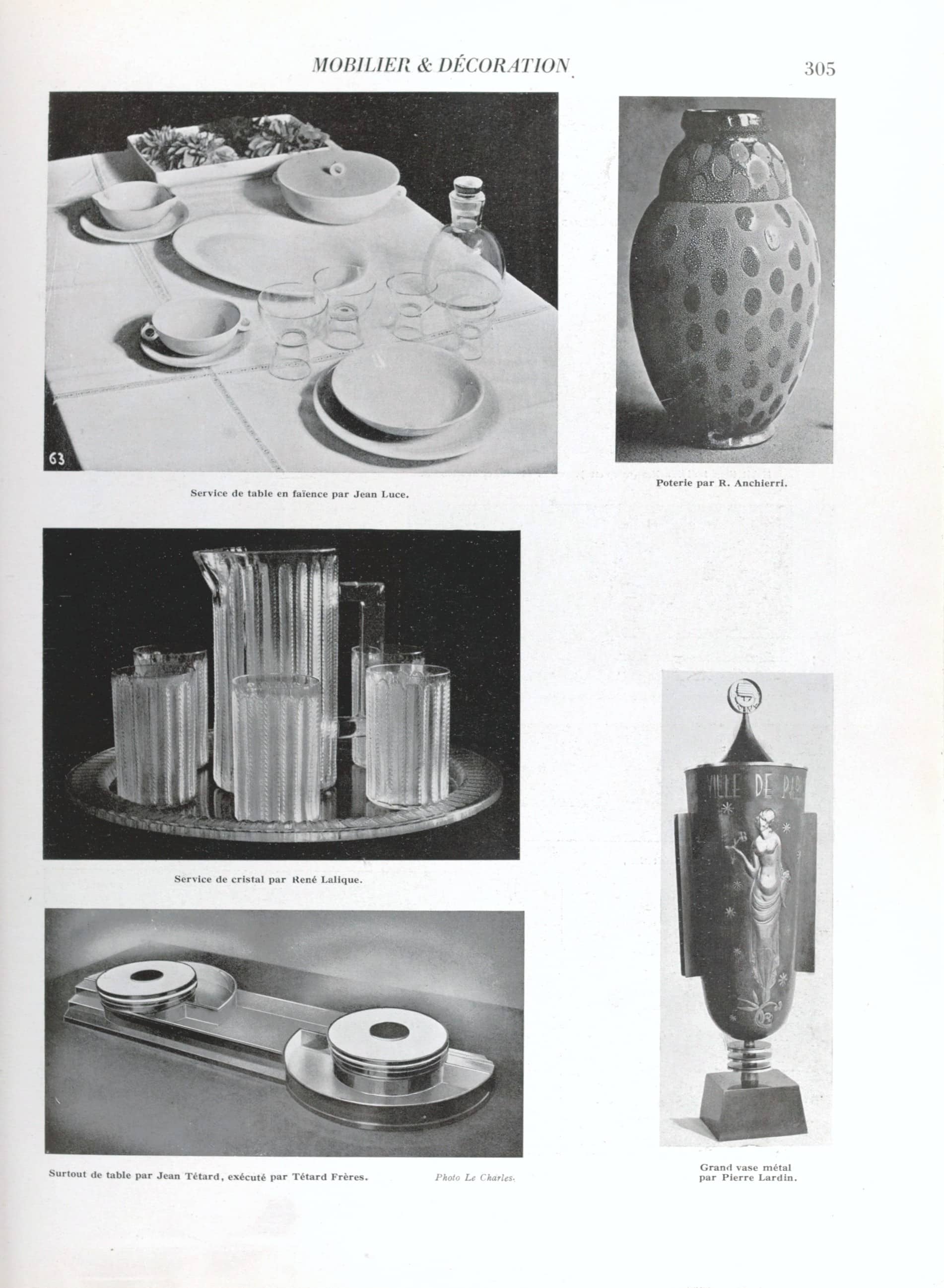
in : Review Furniture and Decoration Jan 1931
Granite vase of R. Anchierri on top right
La revised Furniture and Decoration: Monthly Review of Applied Decorative Arts and Modern Architecture This will be reported with the photo of one of these vases in its January 1931 issue.
(Integrity of the issue on Gallica Here)
The stock market crash of 1929 will have repercussions until Orléans because it puts a stop to export orders. René Anchierri will have to dismiss his staff in 1931.
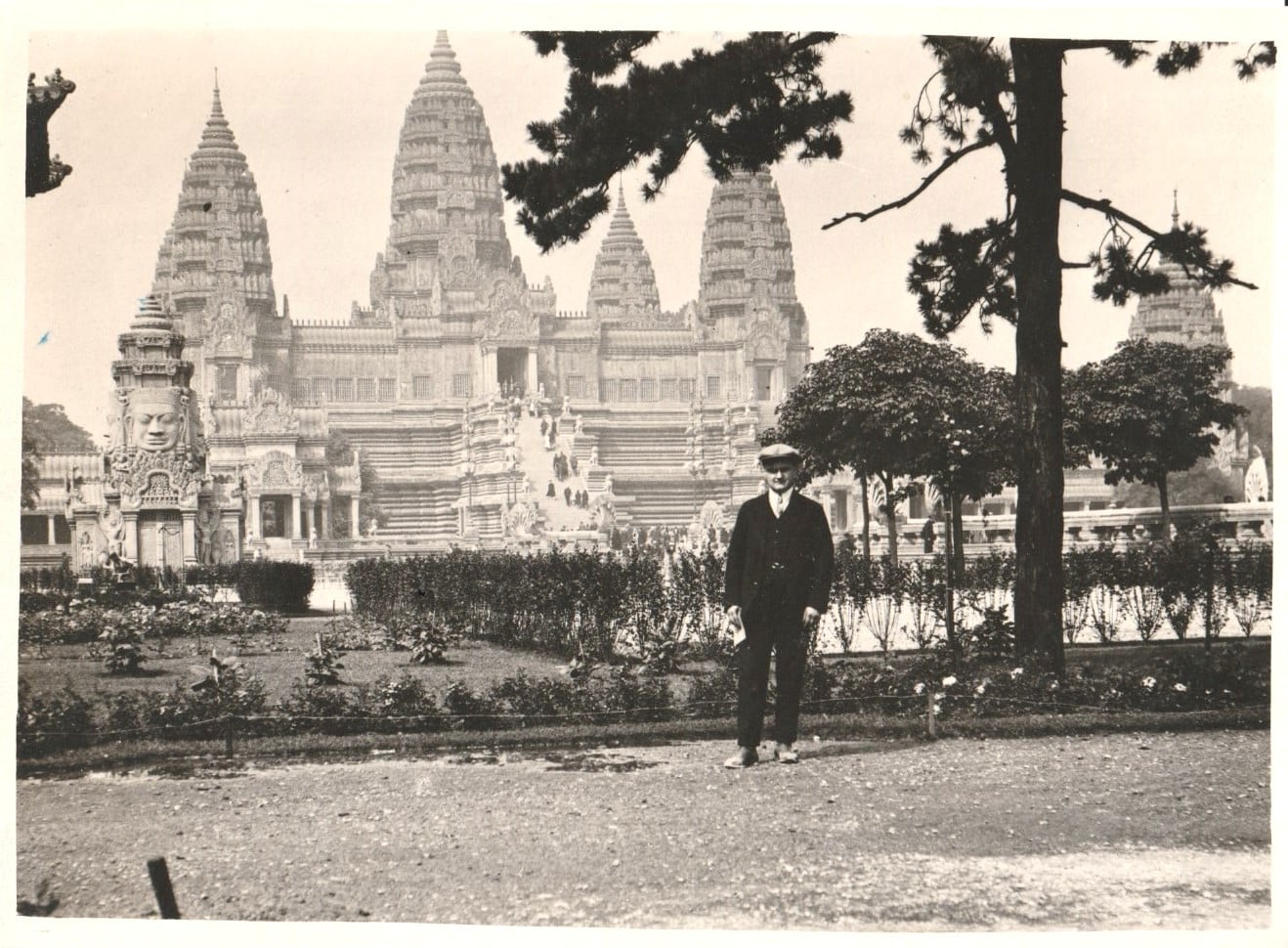
René Anchierri before the reconstitution
of the temple of Angkor in 1931
In the same year, he went to the Exposition coloneand its ceramic section in Paris. He imbued himself with the culture and arts of the various nations present, which he later translated into his own work. (panthers,...)
Read Here search memory Animal in the 1931 Colonial Exhibition by Gregory Lemaître.
Anchierri is not discouraged by this economic setback and reopens the workshop surrounded by only 2 or 3 people, including a representative.
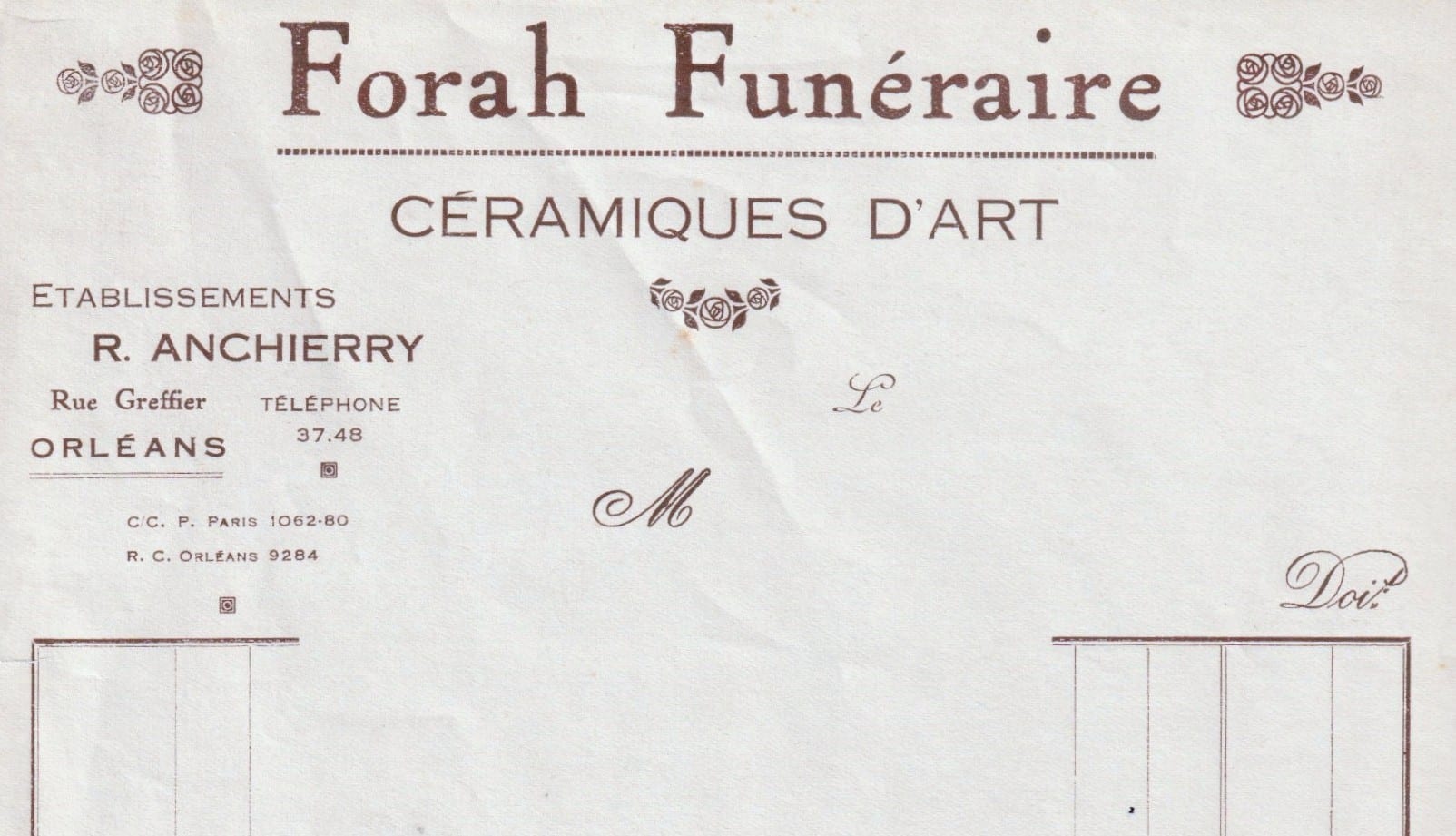
He expands his fan with a funeral production, cross of cemeteries, gardeners, non-gelive ceramics for which he makes numerous laboratory tests.
In 1933, he hired René Laristan as the first decorator. (See Here his career)
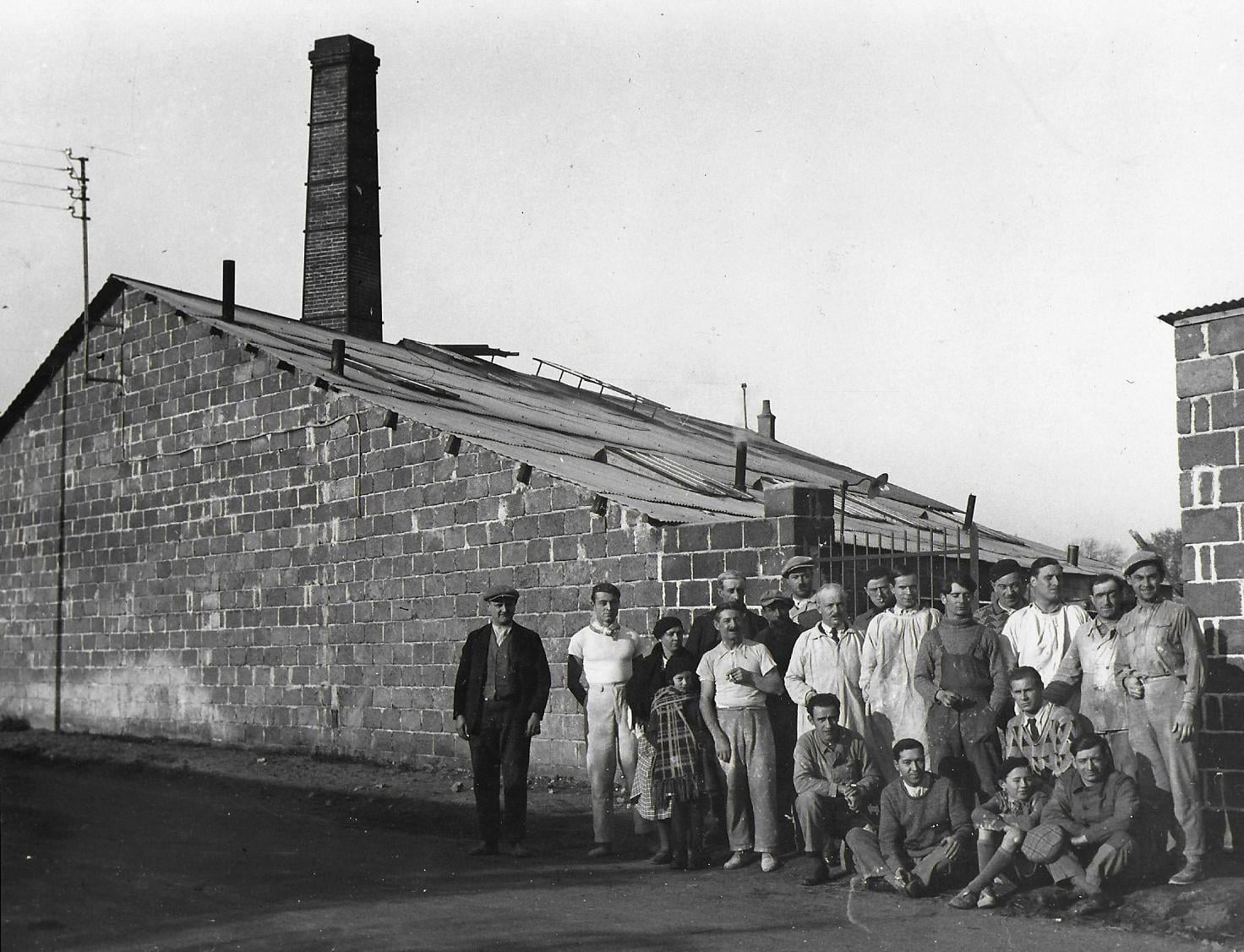
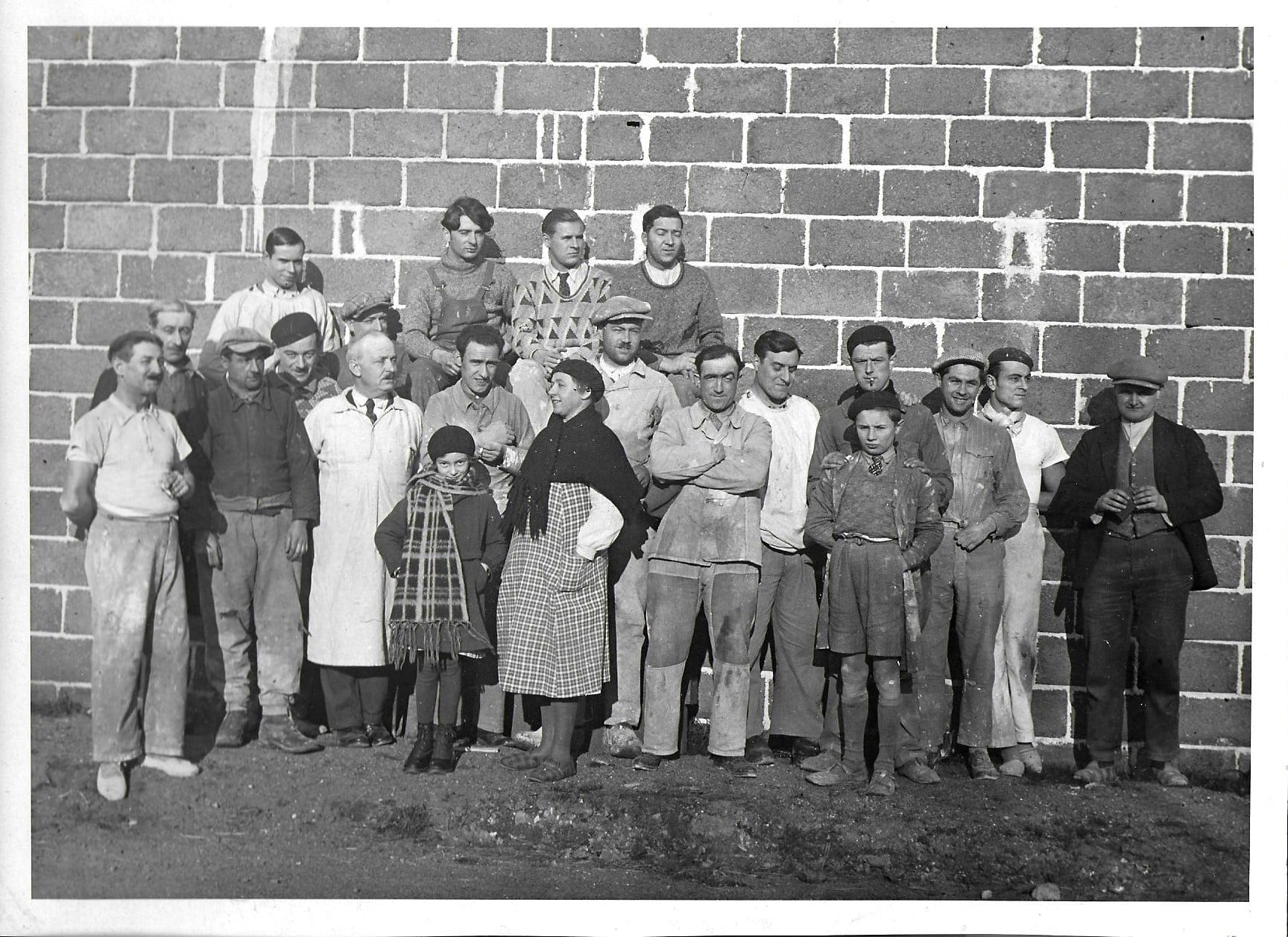
The modest workshop of the late 1920s has now become a factory employing more than 20 people to meet the increase in its personal production and the demands of the various sponsors.
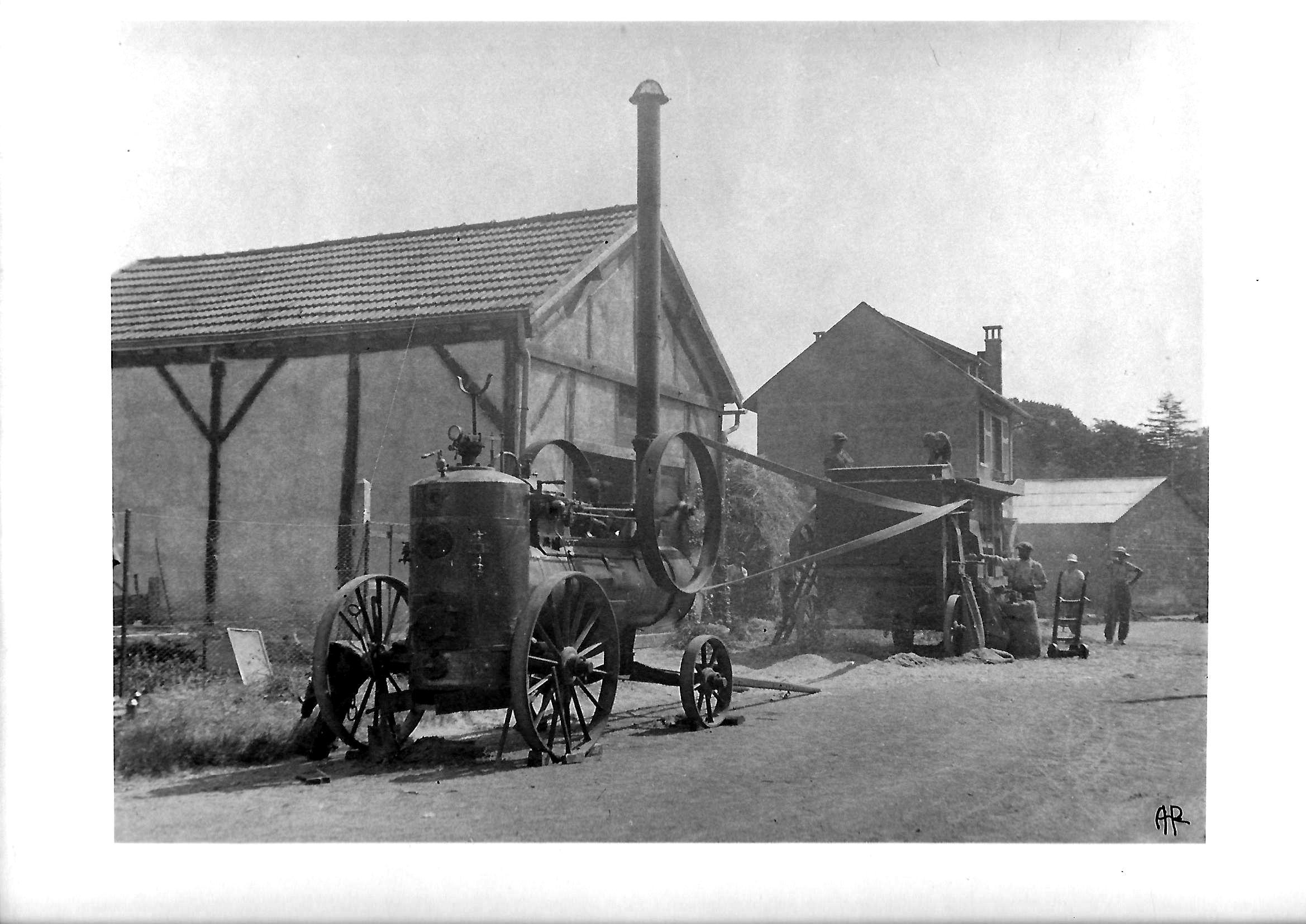
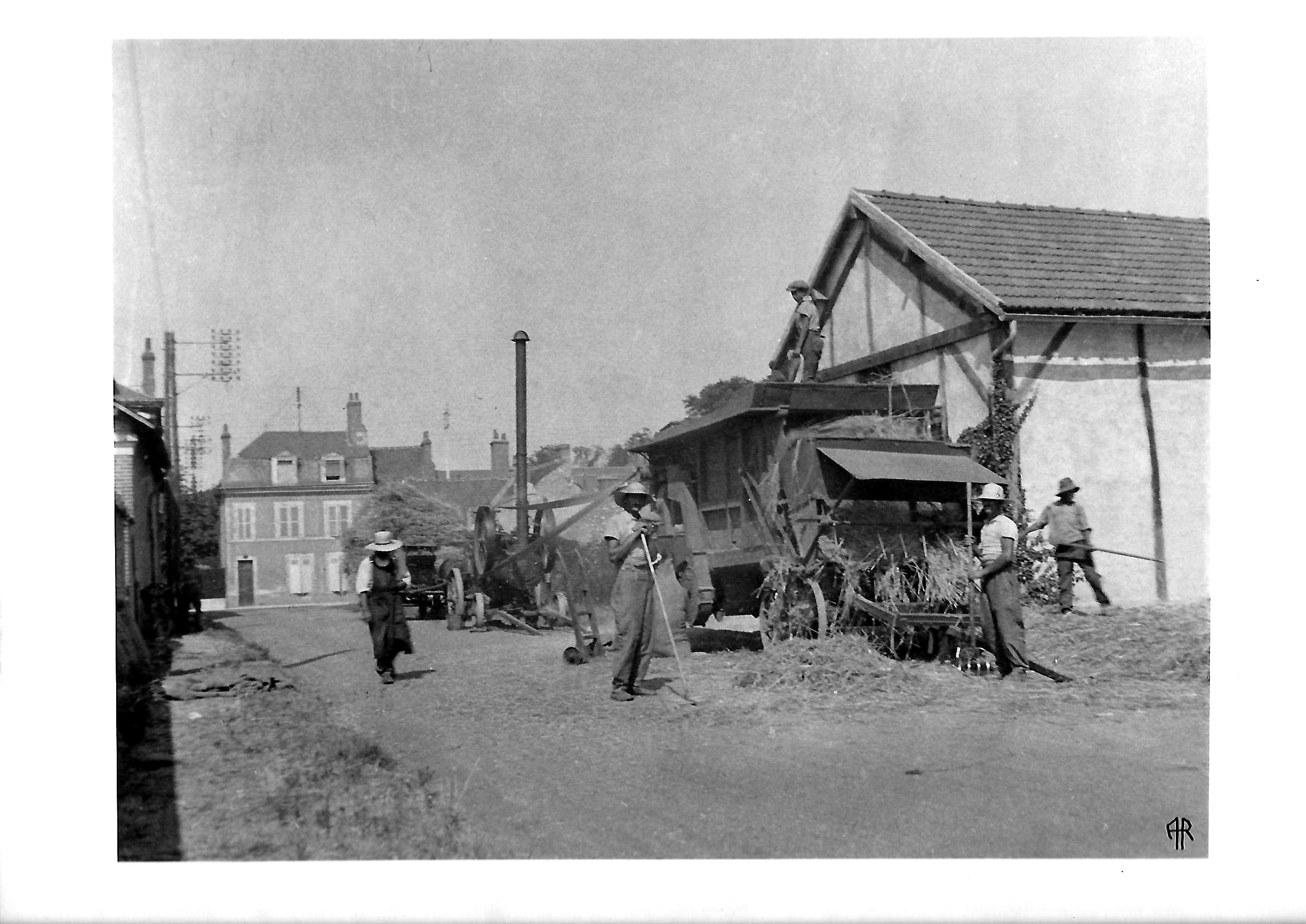
René Anchierri also devoted himself to photography, and immortalized the harvests on the Registrar Street in 1932.
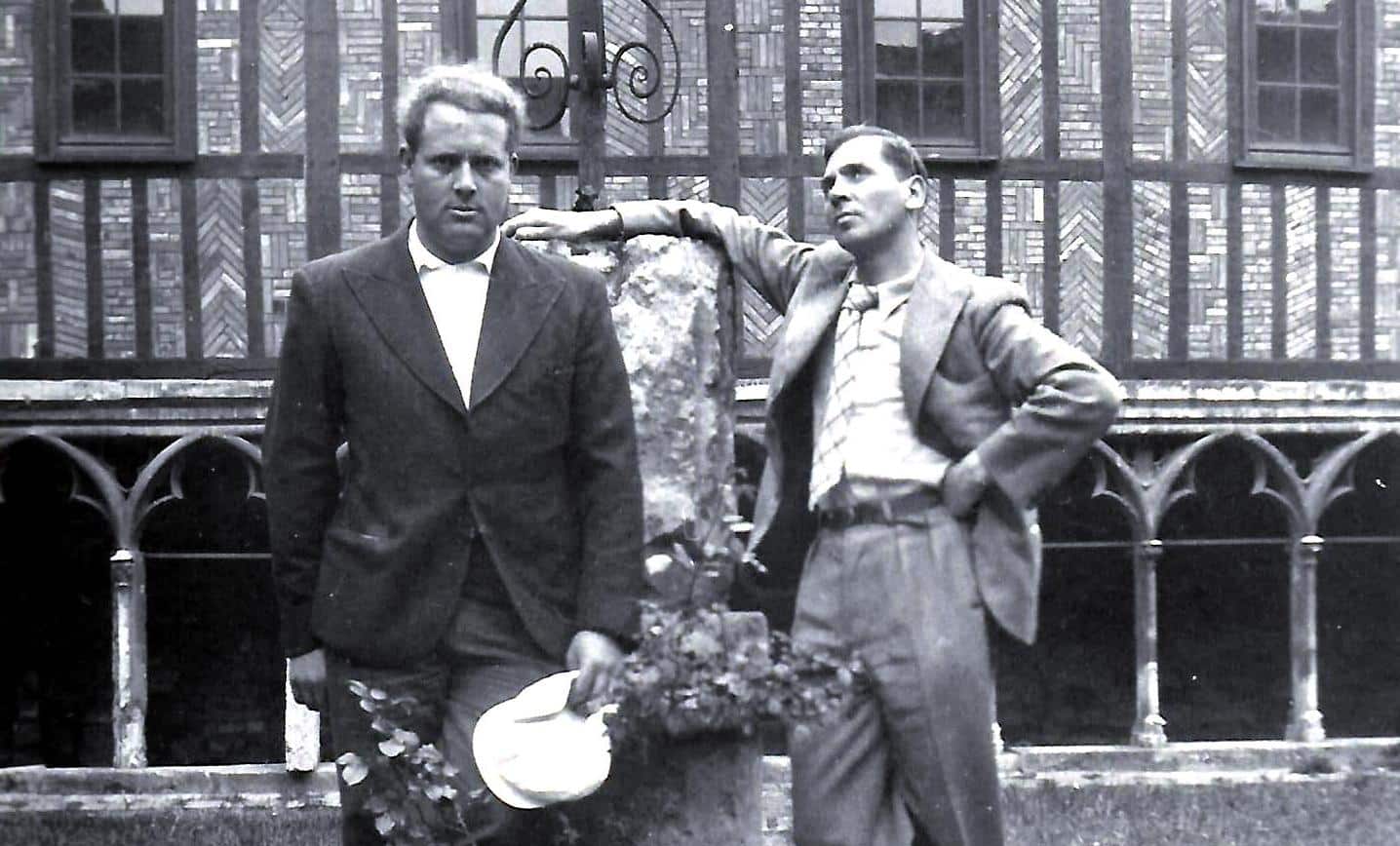
The house has 2 travel clerks, sales representatives who travel France, Mr Blancheteau and Mr Duhamel, While the department stores Le Louvre, Printemps, Galeries Lafayette are responsible for broadcasting this production in Paris.
Picture from 1936
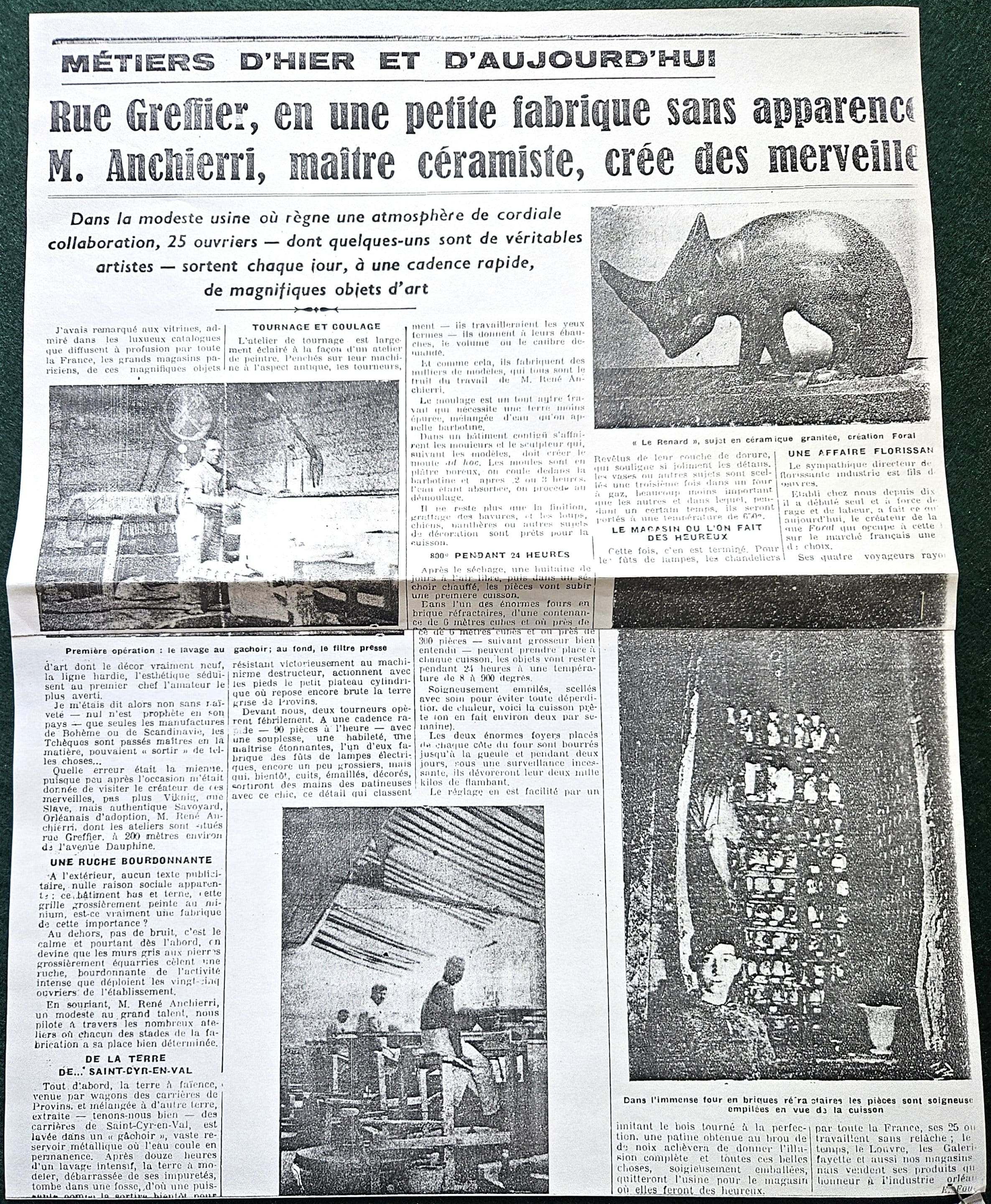 In this 1934 article published in daily life The Republican Orléan, we are invited by the journalist to a guided tour of the ceramic factory FORAH, commented by the master of the place, René Anchierri, «modest to great talent»assisted by 25 workers.
First, we discover the work of the earth, coming from two different quarries, Provins and Saint-Cyr-en-Val. This soil is washed in a mess box for about 12 hours, then passed into a press filter, then into a mixer that produces boudins of 10 cm diameter.
Note the quasi-industrial dimension of these devices and the volume of production they involve.
Through the presentation of the next steps, we read in watermark the organization of the buildings. First of all the boudins are entrusted to the shooting workshop, a large room illuminated by glass windows, in which are arranged three towers on foot and the potters that serve them, producing about 90 pieces per hour per person.
In a contiguous building, it is the moulding workshop where the earth is added with water to produce barbotin that will be used to sink sculptures and objects. The moulds are made of plaster by the sculptor, on instructions and followed by drawings, while the moulders carry out the works (wolves, dogs, panthers, etc.), and ensure their finishes by scratching the boils.
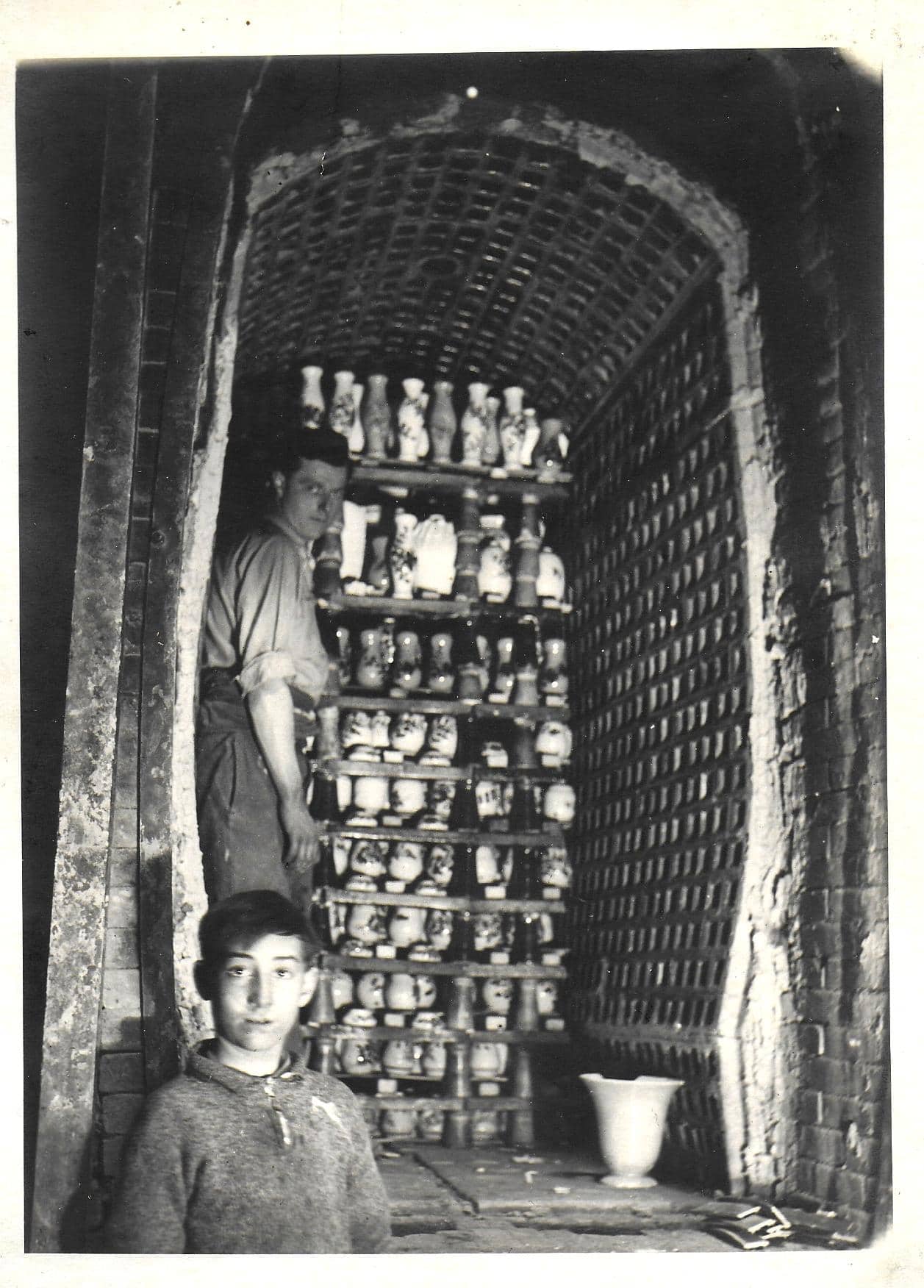
The apprentice André Lanson 14 years in front of the muffle oven (1934)
These achievements will first be put to dry in the open air for 8 days in a heated dryer, then entrusted to the 6m3 muffle oven which can hold about 300 pieces, for a period of 24 hours, at a temperature of 800/900 degrees.
Two cookings per week, 600 parts per week, are made in this double-fired oven, thus swallowing 2000 kg of coal.
Next comes the time of decorators in another part of the workshop, which will first place a quickly drying enamel before decorating with metallic oxides.
For effects « Granite » or « Frosted », creations of the Anchierri house, projections are made with a sprayer type paint gun, before experiencing a second cooking, at 1000 degrees this time, in the same oven, while enriched creations of gilding will pass into another oven, smaller that one, and gas. 24 hours later, the vases, ashtrays, lamp feet and other decorative items will be ready for shipping or sales counter and Orléan stores.
The 1937 Universal Exhibition

Drawing by Robert Delaunay (1937) Source Wikipedia
Universal exhibition, officially International exhibition of arts and techniques in modern life held in Paris from 25 May to 25 November 1937. It consists of 190 pavilions.
It aims to celebrate technological and artistic advances, in a tense political context marked by the rise of totalitarianism.
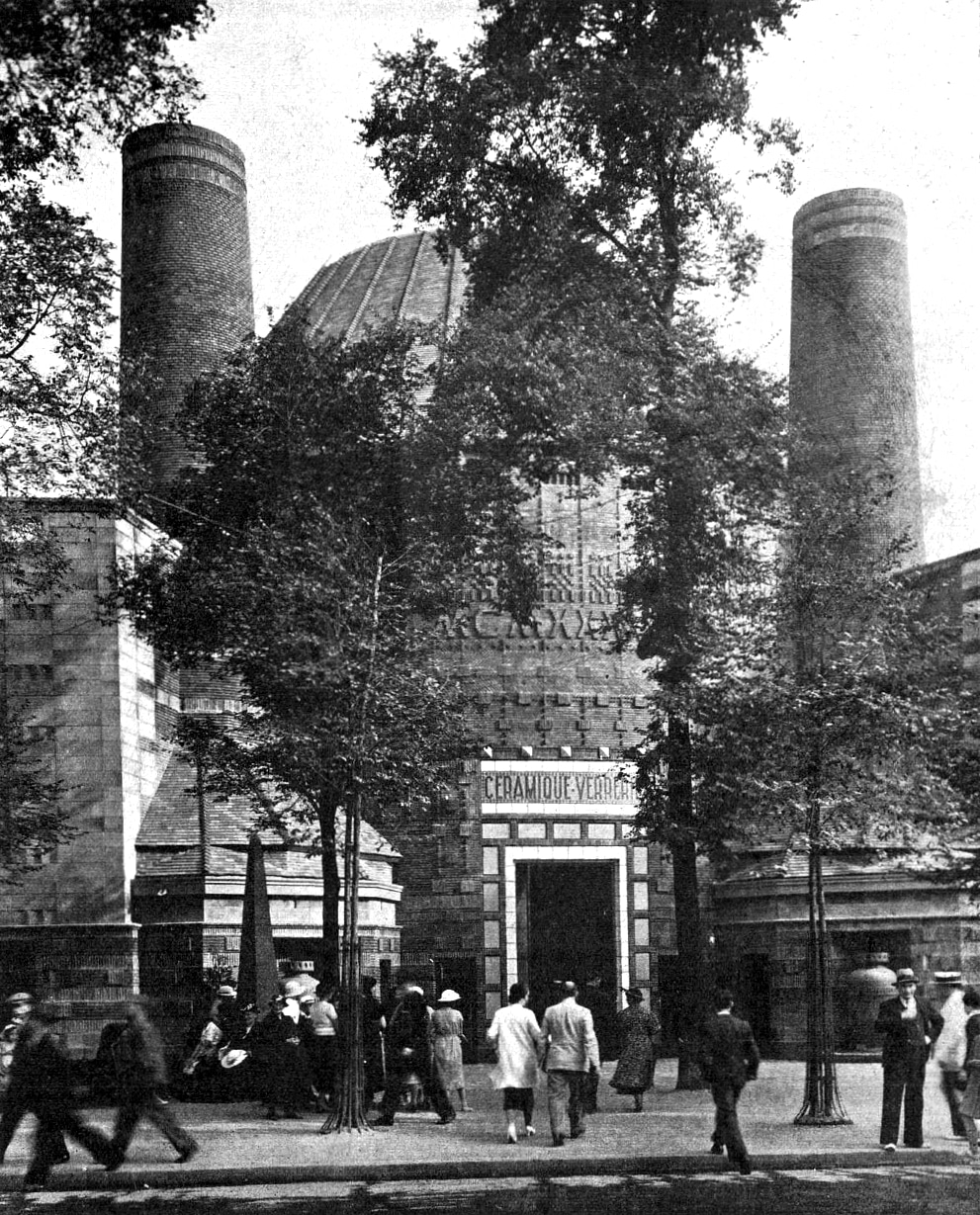
Pavilion of ceramics and glassware – International Exhibition 1937
© Ministry of Culture (France), Media Library of Heritage and Photography Rmn
The Pavilion of Ceramics and Glassware is part of the decorative arts section and aims to highlight the richness, modernity and artistic renewal of the French production of the 1930s in the fields of faience, porcelain, sandstone and architectural ceramics. It thus presentsparts from National manufacturers (Slips, Limoges), dworks of artcontemporary ceramic artists, in the wake of Art Deco,t Industrial Applications (carrels, decorative elements).
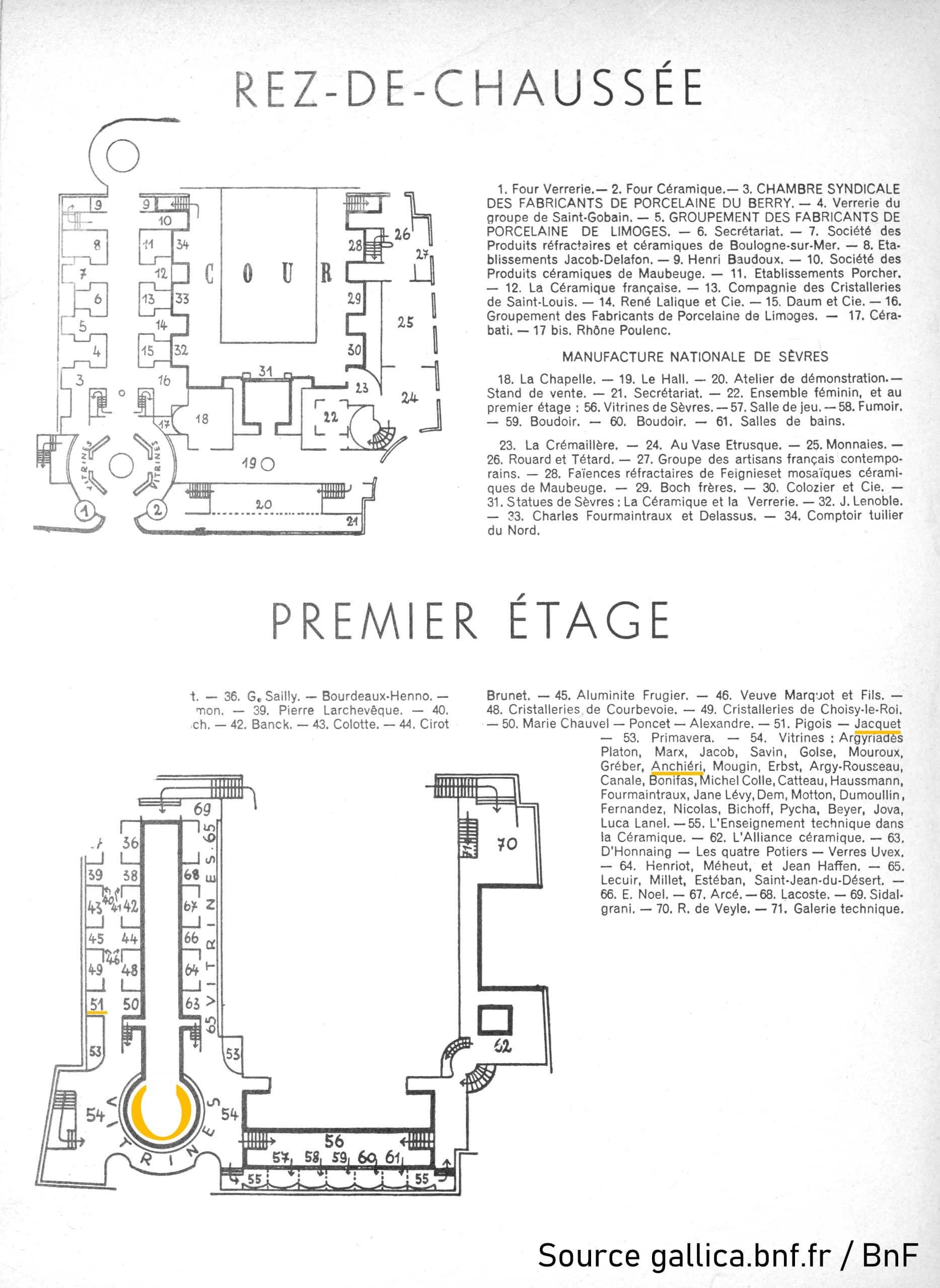
Plan of the ceramic pavilion of the universal exhibition
In : Revue L
This pavilion will be a major place for the recognition of ceramics as a full art, at the crossroads of craftsmanship and industrial design.
Several French ceramists were rewarded with medals or diplomasaccording to a rating system established by an international jury.
Along a gallery were the stands of major firms and regional groupings.
A rotunda of vast dimensions constituted the salon d'honneur and its dome was supported by columns between which there were windows lined with works of ceramic and glass artists, panels of glass worked. It's in these windows, in the location 54, which will be exhibited the ceramics of René Anchierri. (See map opposite)
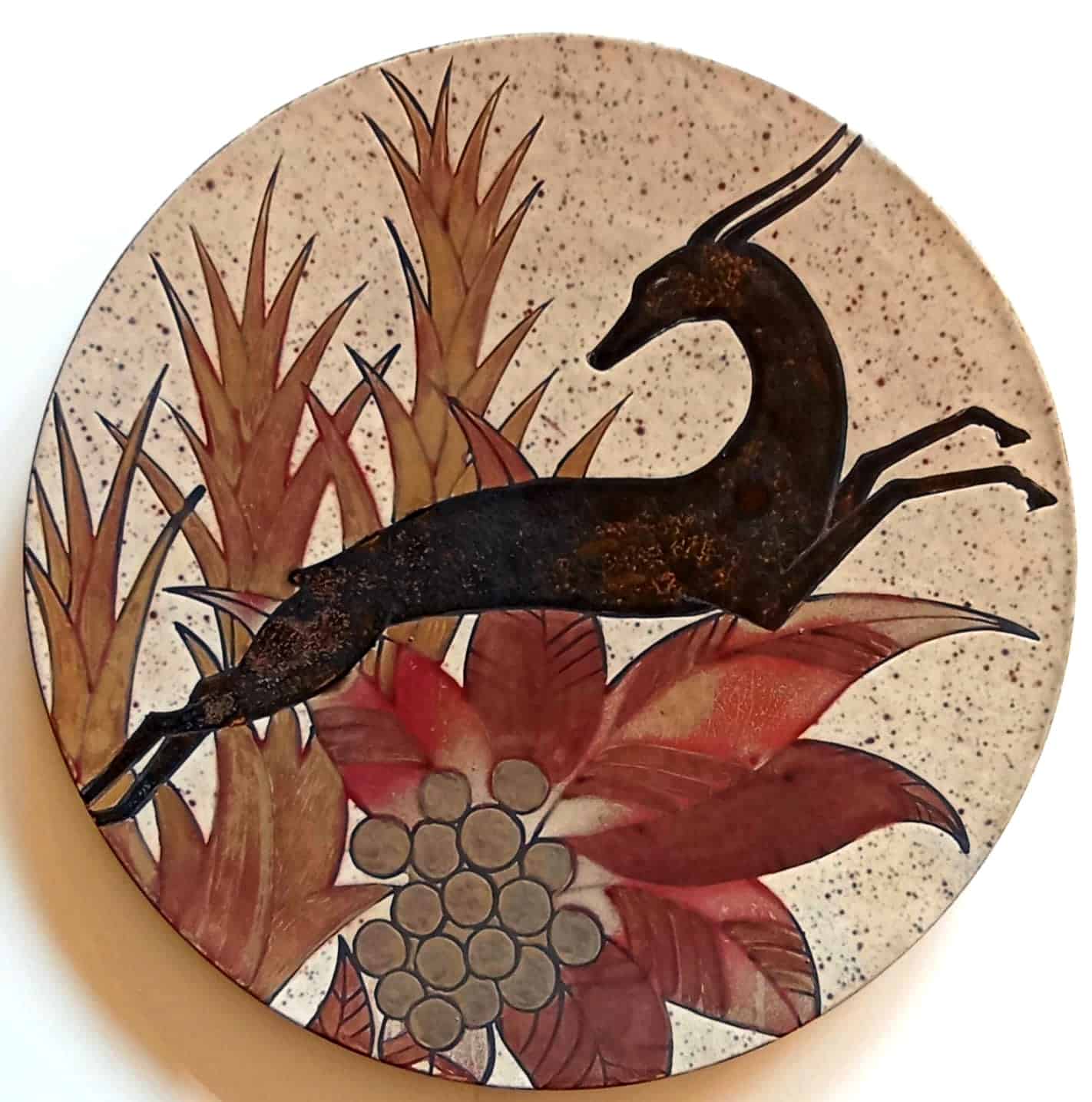
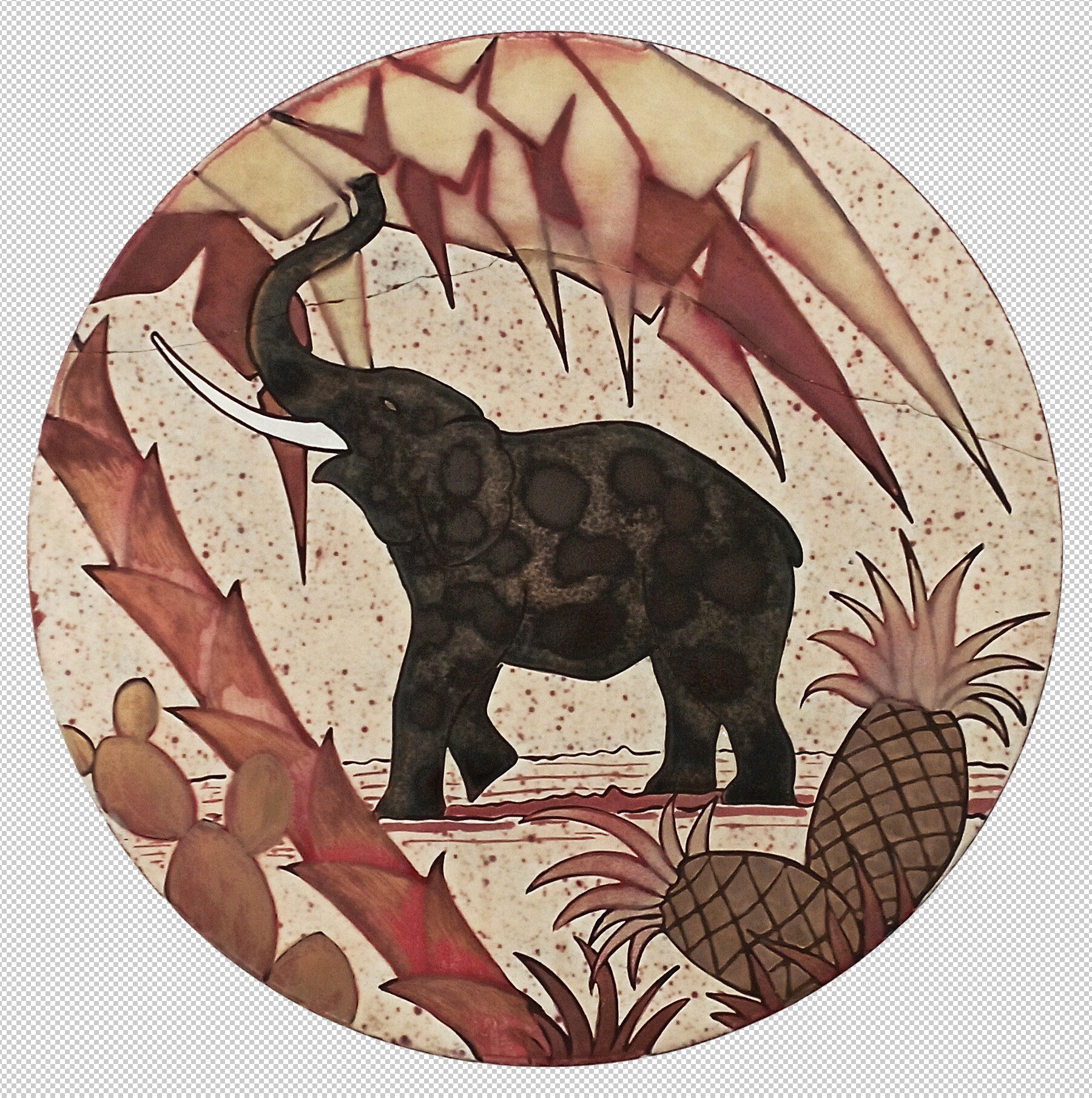 In 1937, Anchierri returned to the maturity of his art, he was 32 years old, almost half of whom passed behind a tower. In reality, as we have already mentioned, he is a man of shadow, rather silent, indefatigable worker who constantly pursues his research on forms, decorations, enamels. He who worked a lot for others, decided to show up and chose to compete in the Universal Exhibition of Paris that year, in the ceramic pavilion, class 43, alongside the greats of the moment: Artigas, Bonifas, Cattle, Gerbino, Mayodon, Lenoble, O-Kin, Locked, Simmen…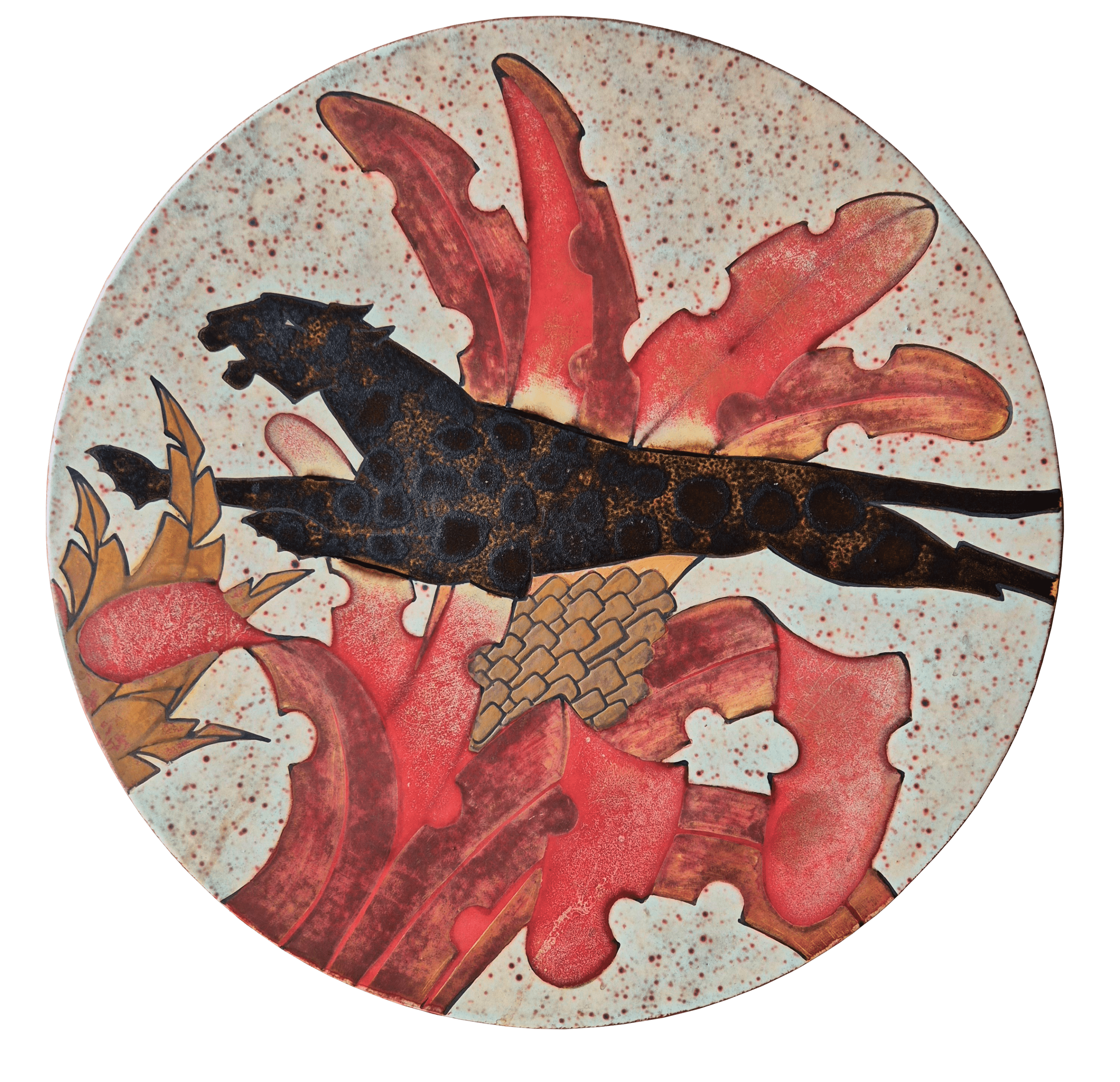
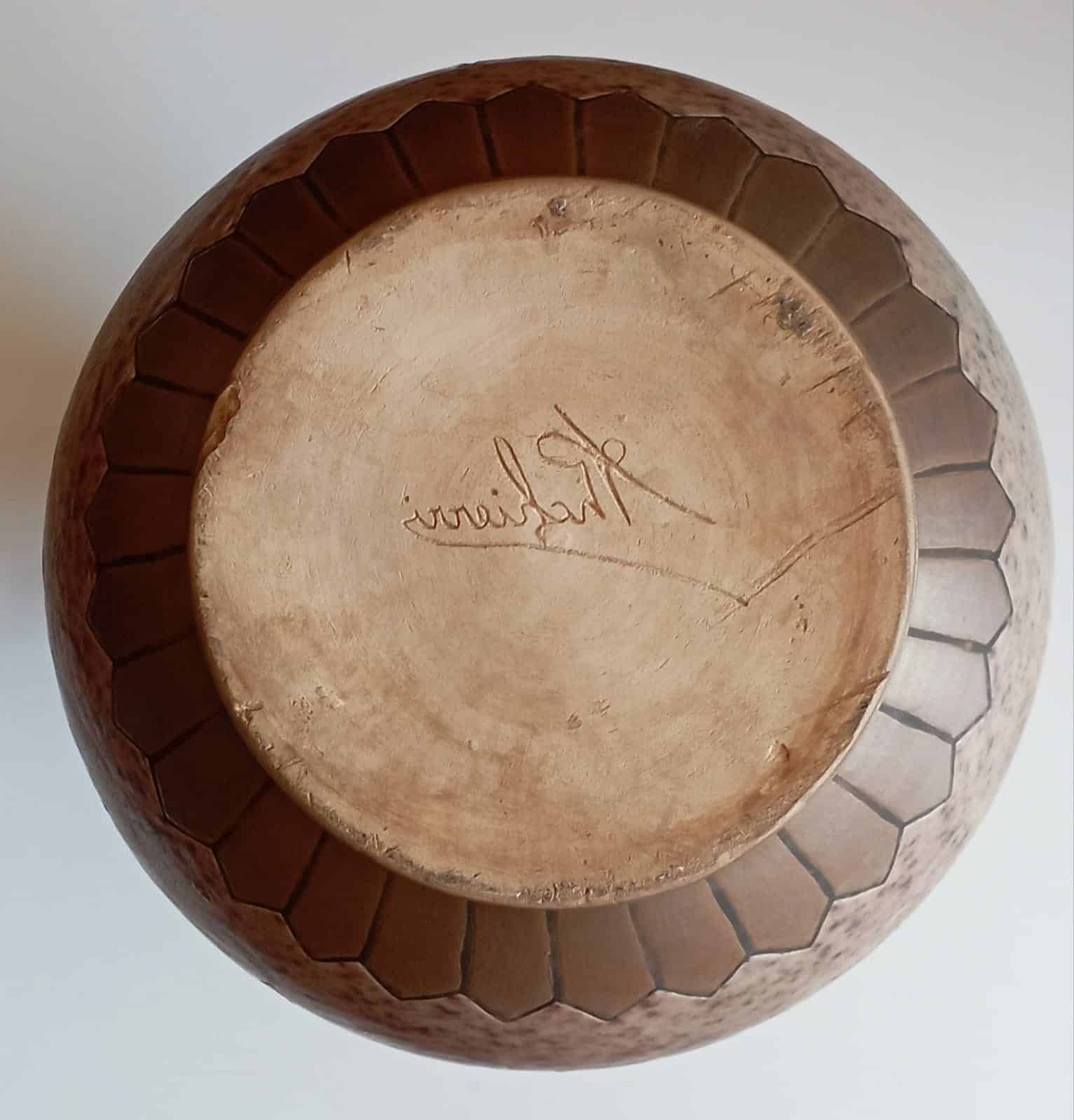
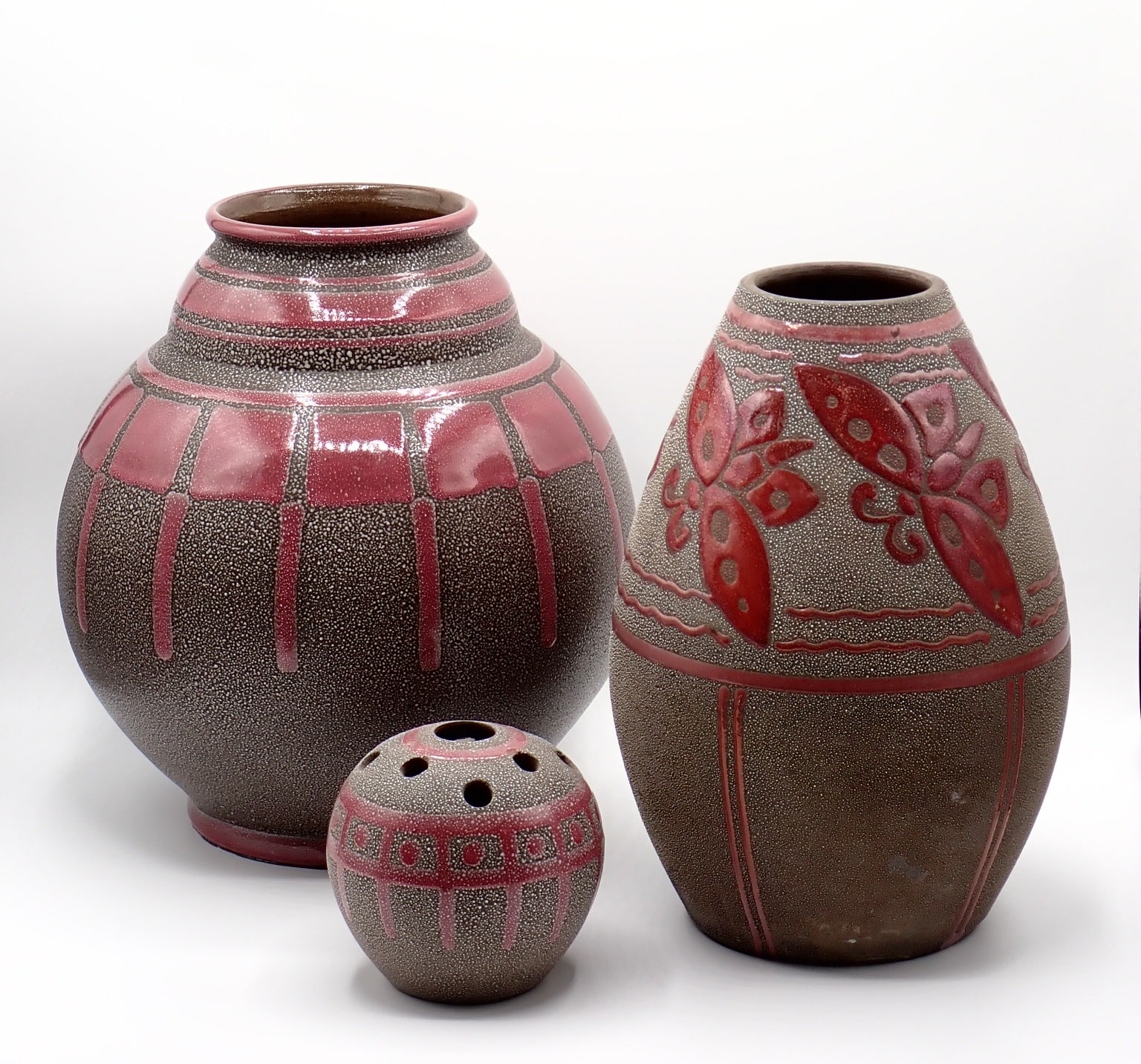
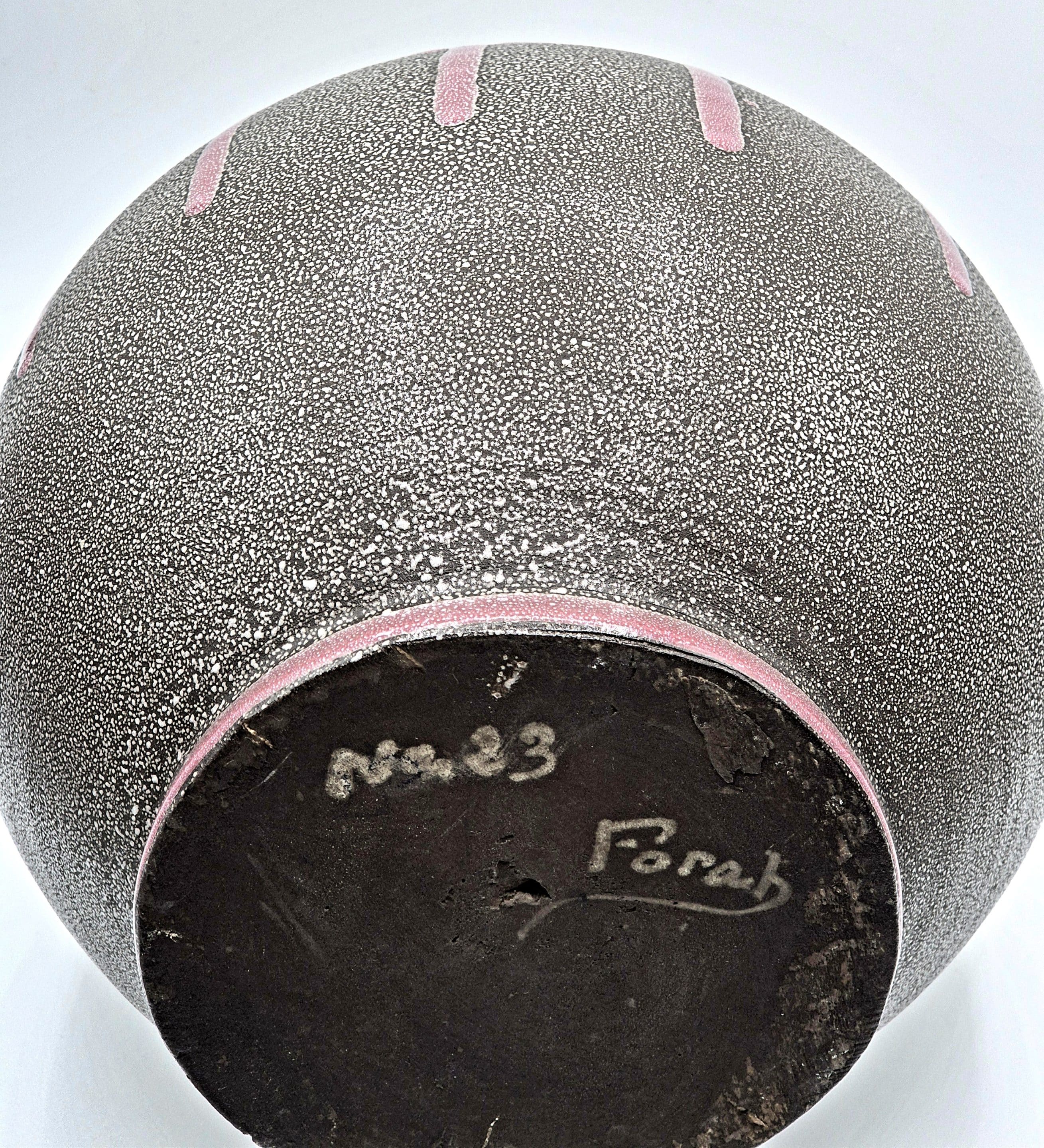
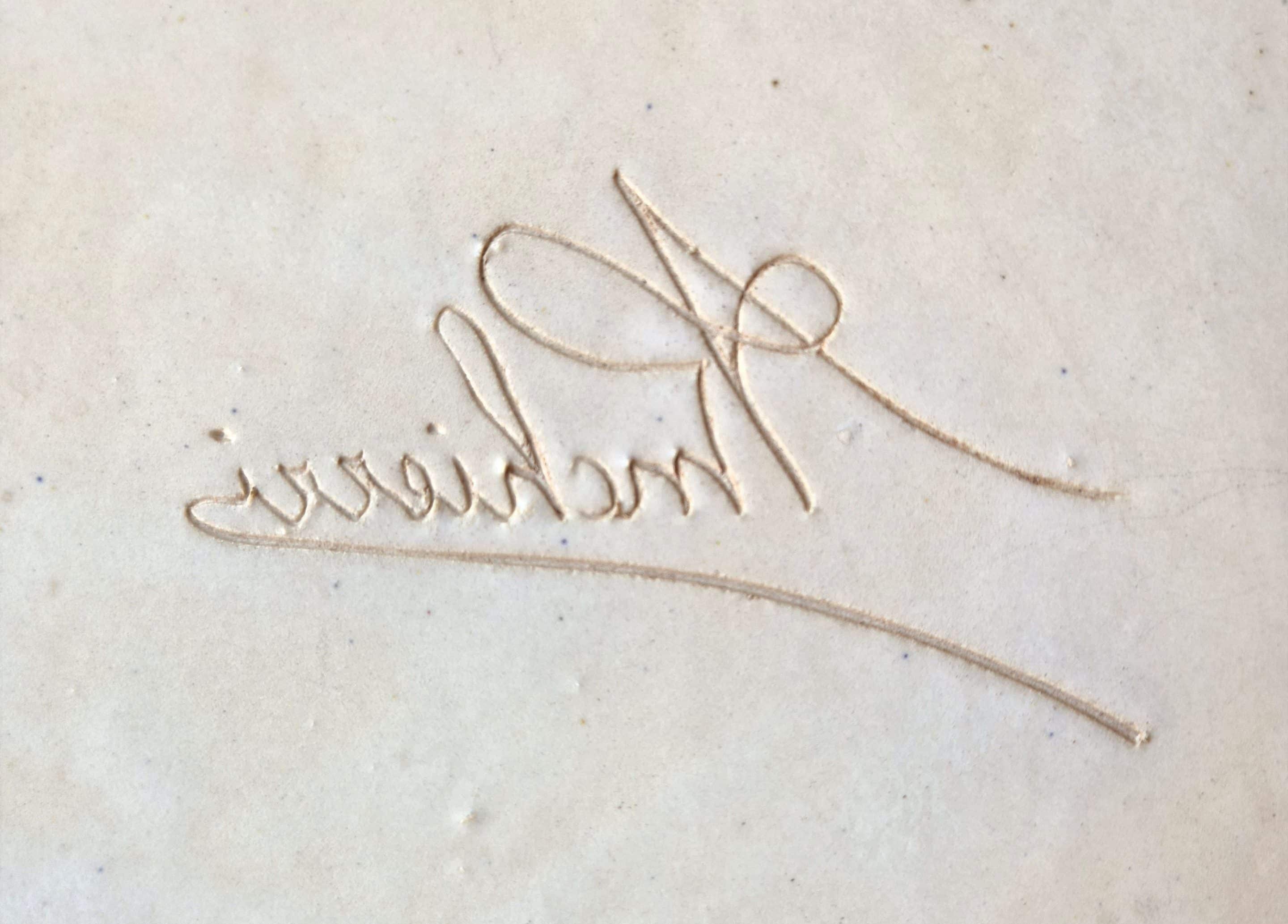
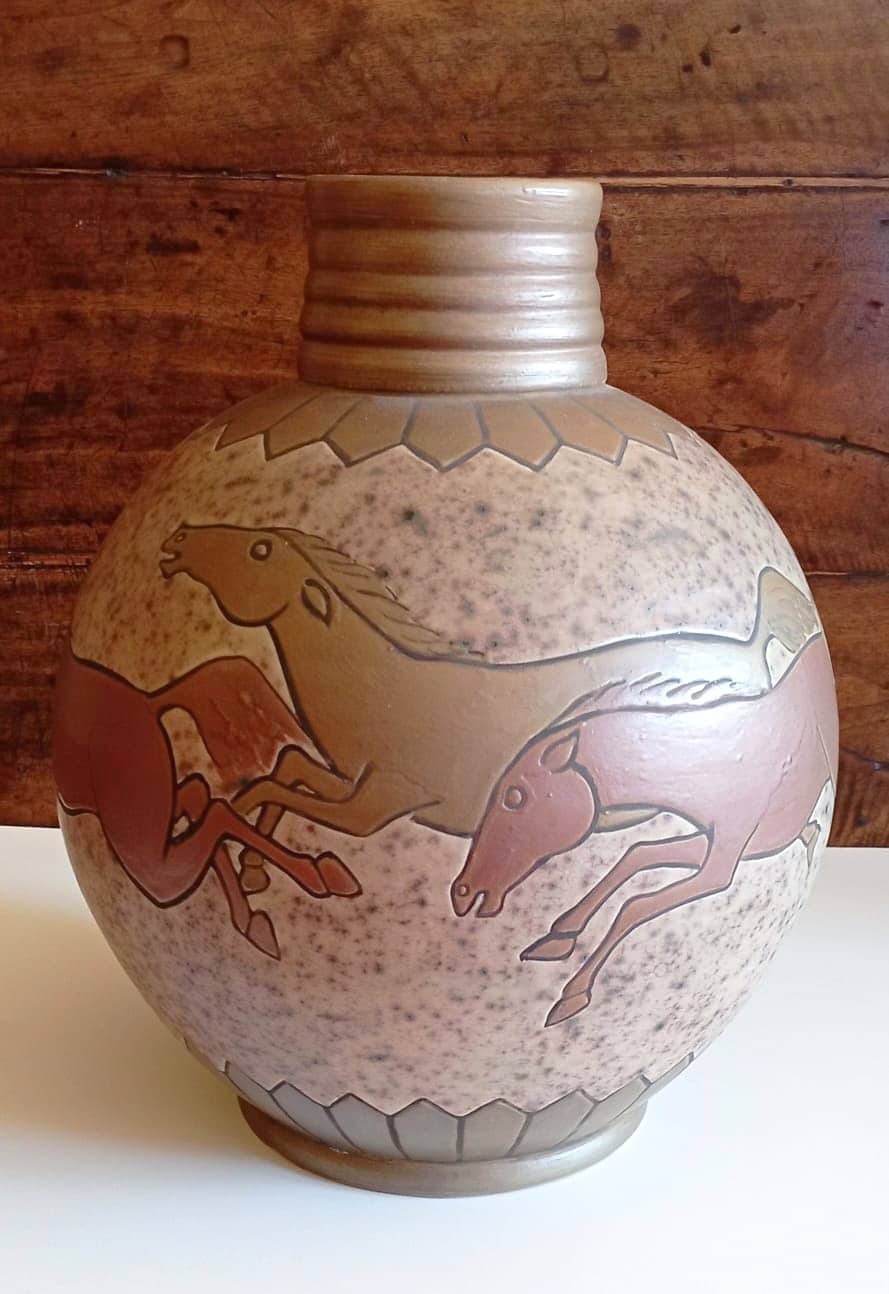 For this occasion, he created new collections, very large dishes with animal decor in Art Deco taste and covered pots with red dominant. He also developed a new artistic signature, bearing his entire name backwards, called "in the mirror".
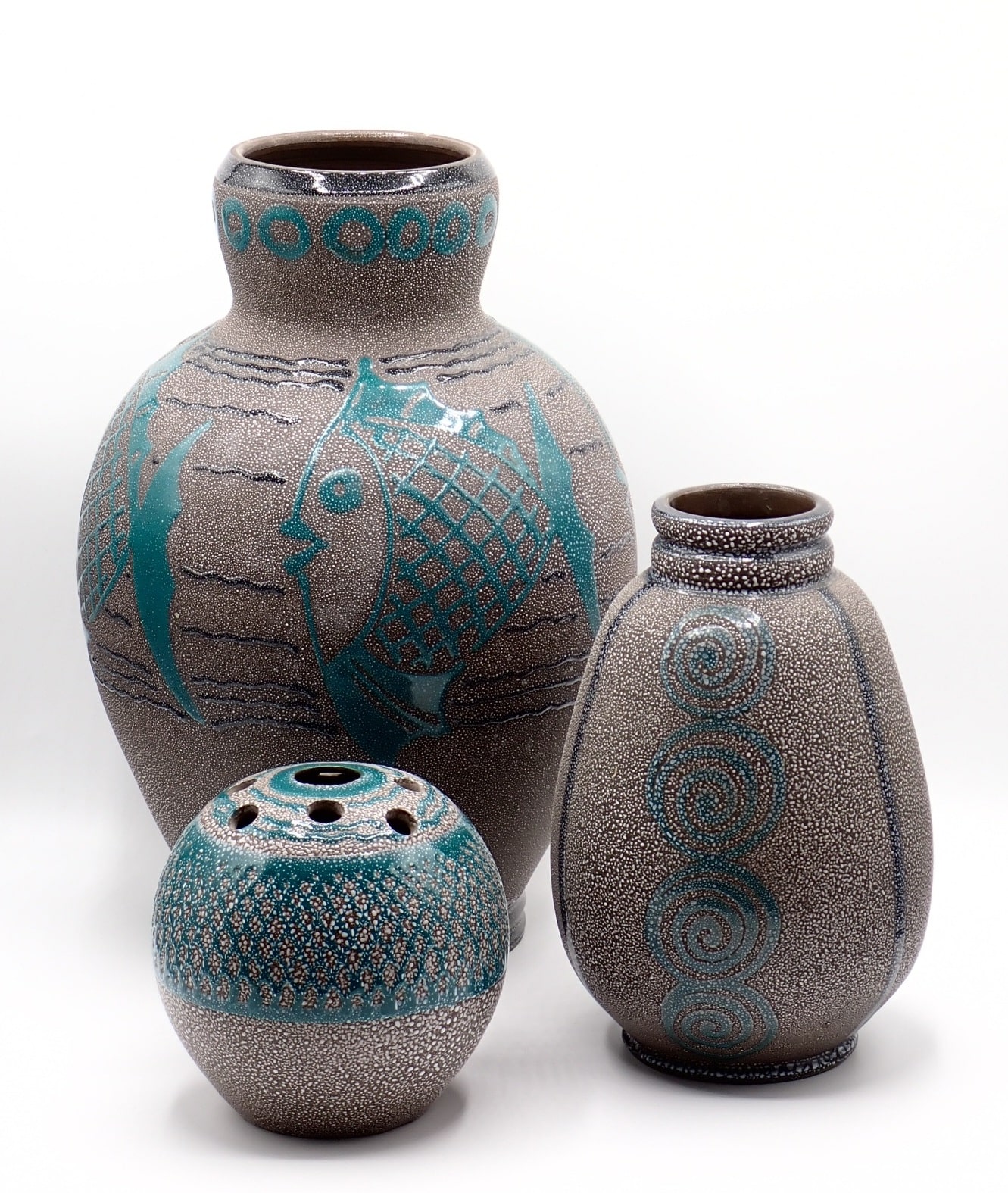
 It also presents vases, urns, covered pots, with other decorations and original covers that will be appreciated by the jury.
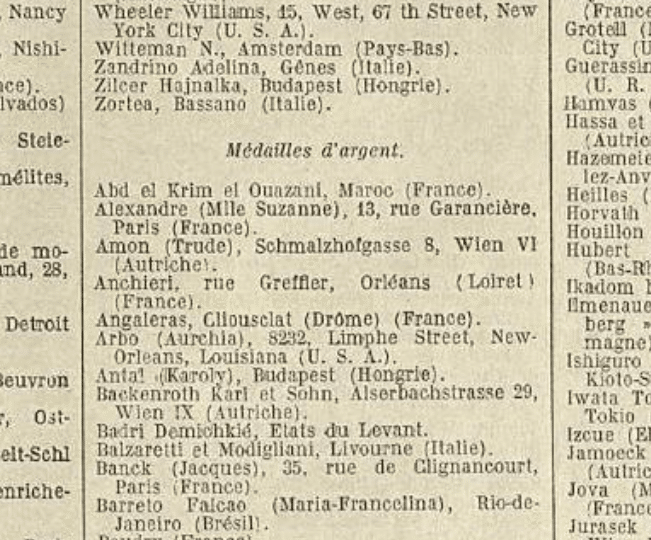
Extract from the list of International Exhibition Awards
Source Gallica.bnf.fr / BnF
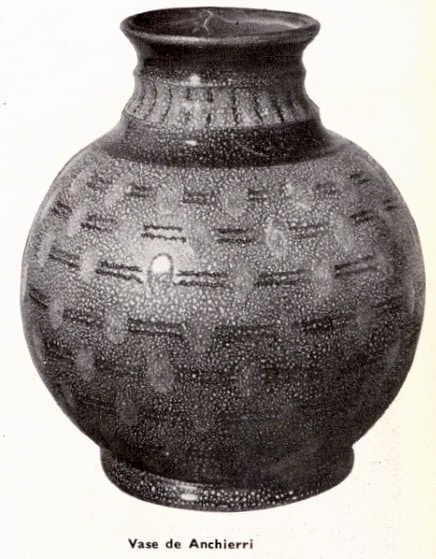
His efforts will be crowned with success since he is distinguished by a silver medal for his granites and noticed by the specialized press.
Readable Here The journal article Living Art November 1937.
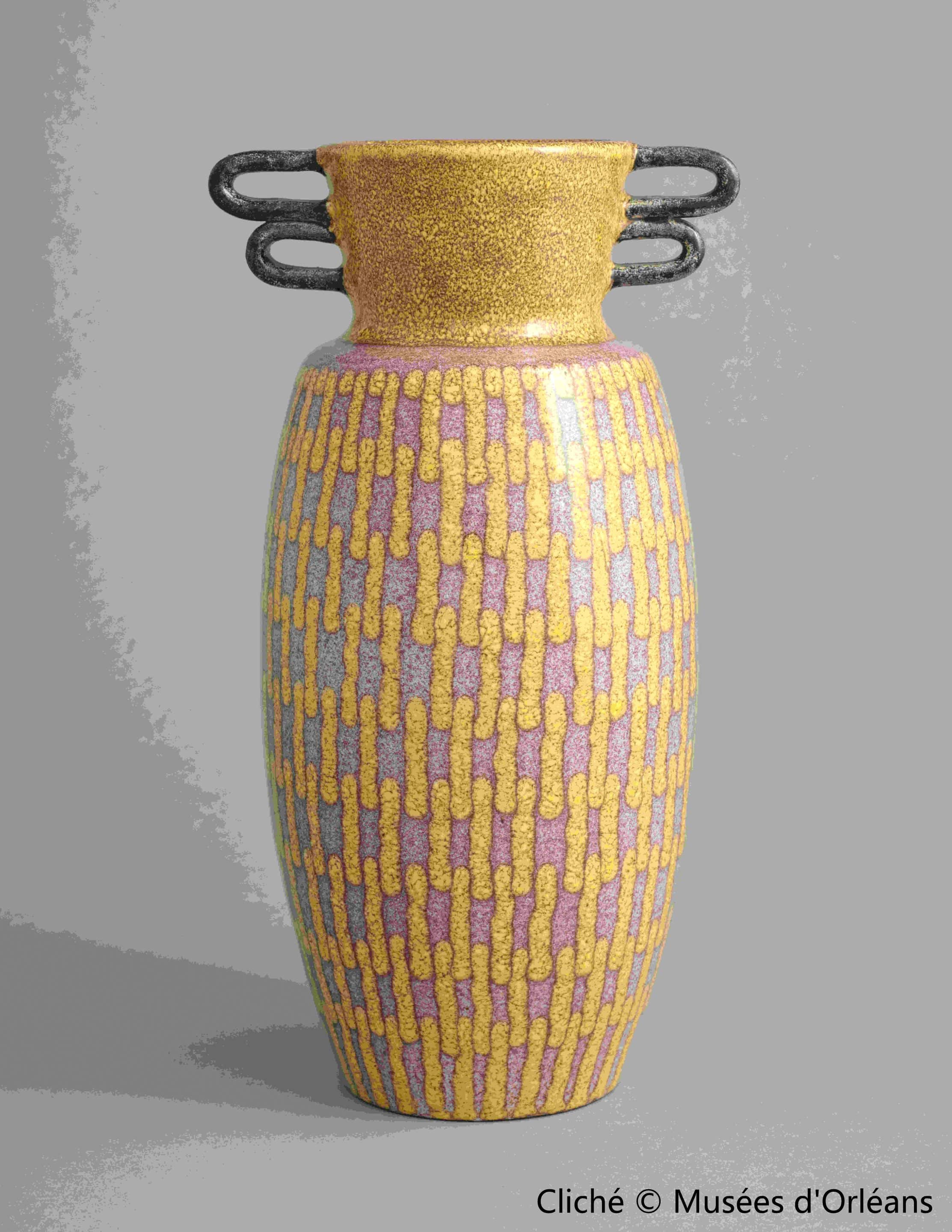
Paul Jacquet, also present at the exhibition, proposes a series made by Anchierri in Orléans, which bears his signature encrypted with the now identified "a" in print type. He will receive a gold medal for this work.
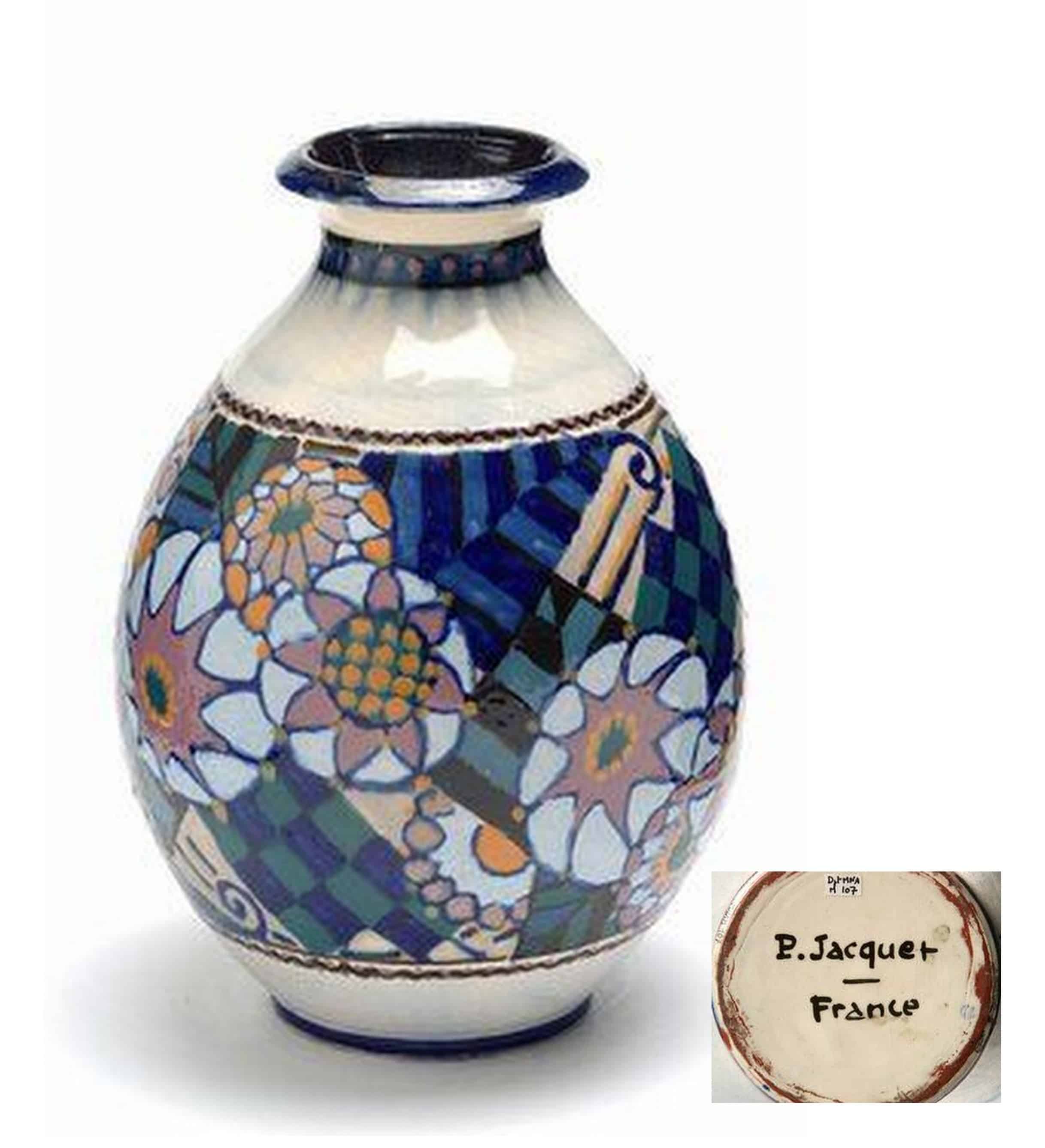
Vase by Paul Jacquet bought in 1937 at the International Exhibition of Arts and Techniques Depot of the Pompidou Centre at the Museum of Decorative Arts, Paris
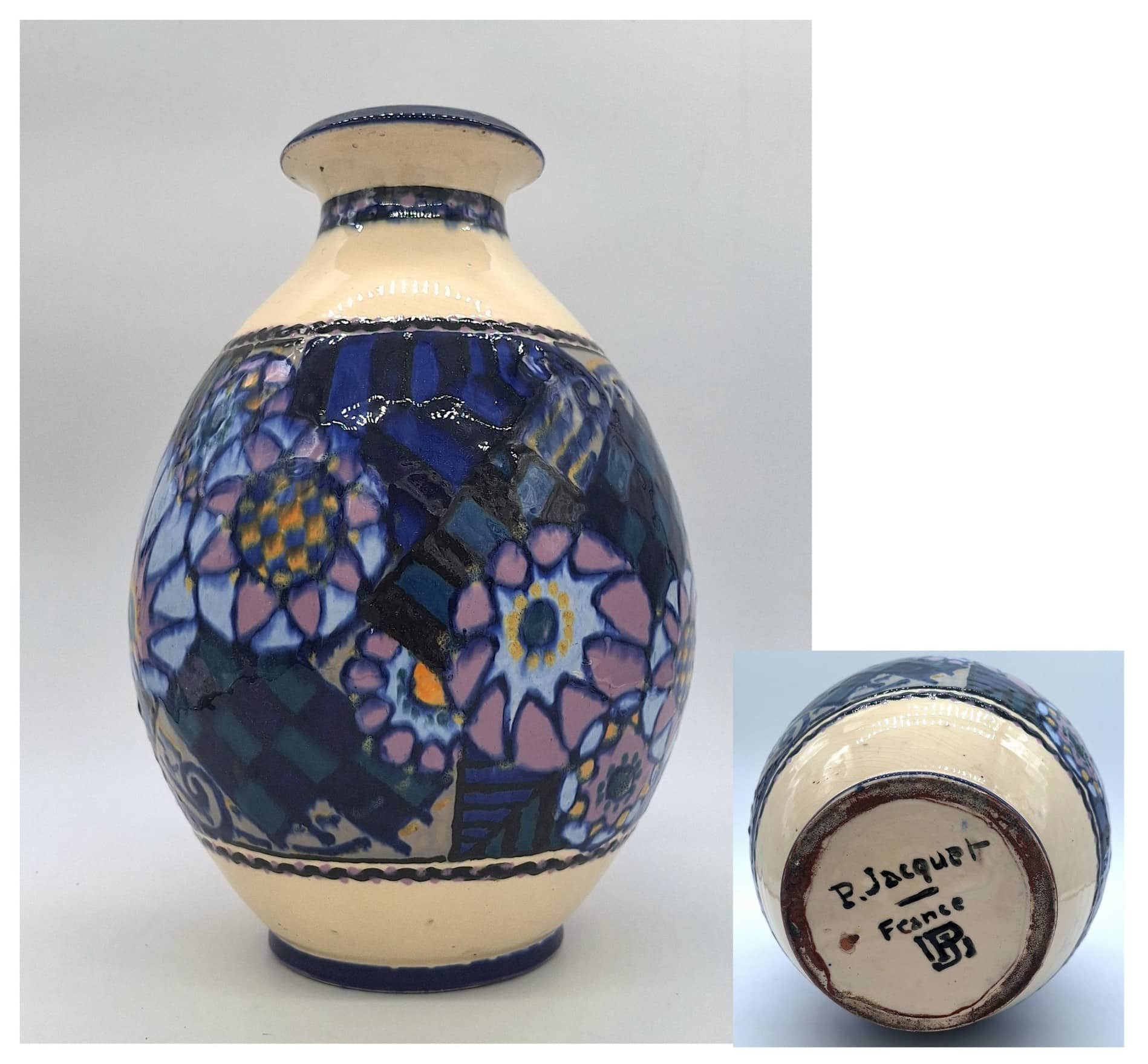
Another copy of the same period, slightly different colours and signature, Anchierri d'Orléans workshop for Jacquet
It is very difficult, if not impossible today, to understand what circumstances presided over such a choice which once again brought the Jacquet workshop to light without really crediting its author or co-author, but this 1937 prize certainly put a definitive end to the collaboration between the two men.
On sait pourtant que René Anchierri conserve un lien avec sa ville natale, où il retourne de temps à autres visiter sa famille, et profite de ses voyages pour apporter des céramiques de sa production à la boutique d’Eugène Paturel qui commercialise des vases de Paul Jacquet.
C’est d’ailleurs à cette occasion qu’il se lie plus intimement à la fille de ce dernier, Anne-Marie Paturel, qui deviendra quelques années plus tard sa femme.
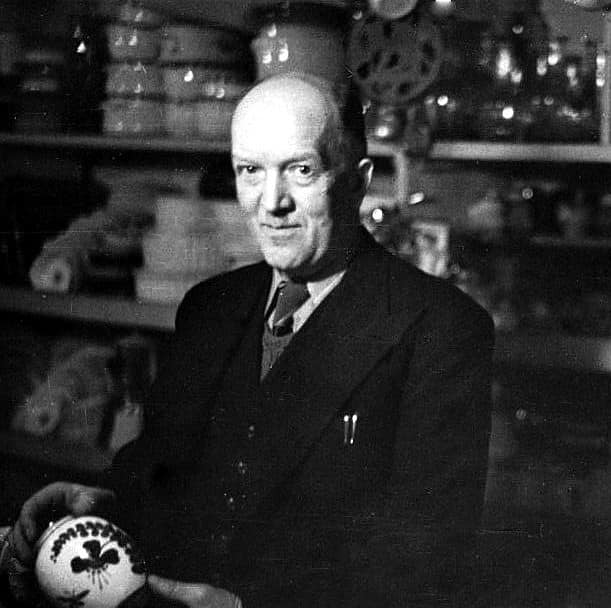
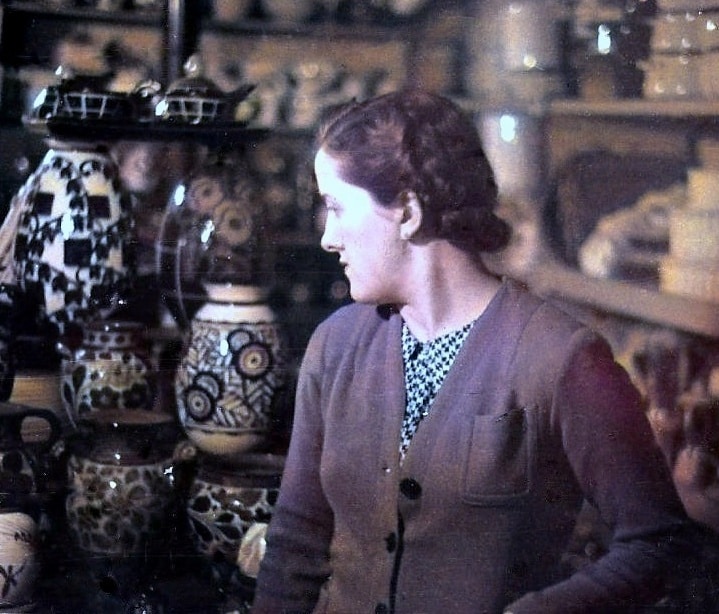
A gauche : Eugène Paturel en 1939 dans sa boutique de cadeaux, 1 rue Notre-Dame à Annecy. Il y commercialise des céramiques de Paul Jacquet et René Anchierri.
A droite : Sa fille Anne-Marie, la future fiancée de René Anchierri. (photo colorisée)
On remarque sur la gauche de la photo, des vases de Paul Jacquet.
Louis Aubort à son tour Orléans ca 1938
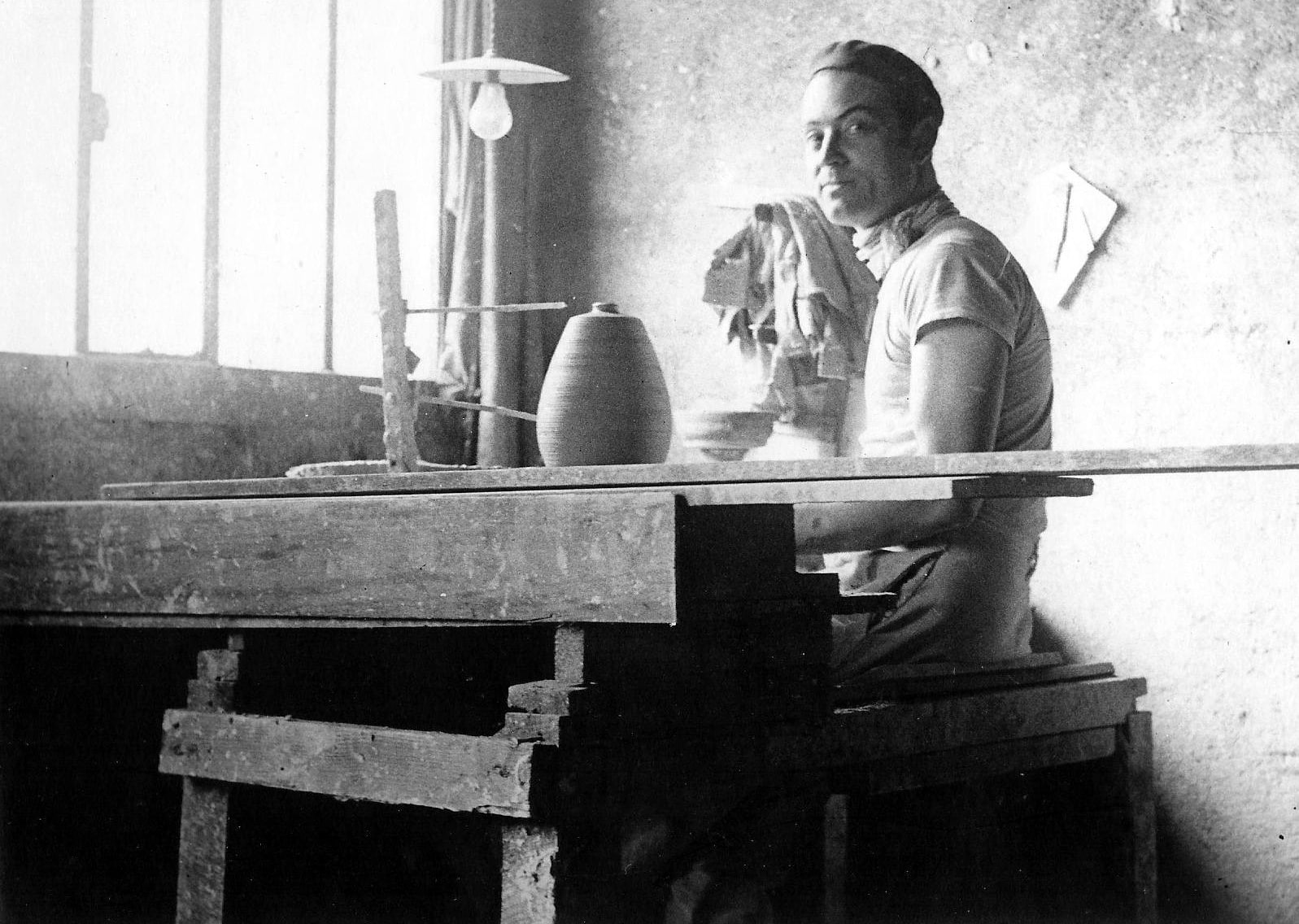
L’entreprise d’Anchierri compte désormais une trentaine d’employés, avec des tourneurs et décorateurs expérimentés comme Louis Aubort (photo), présent depuis les débuts en 1926. Mais elle va se heurter une nouvelle fois aux difficultés conjoncturelles. Cette fois-ci, c’est la guerre et le départ de René Anchierri pour rejoindre son unité provoque le licenciement du personnel et une nouvelle fermeture des ateliers.